By AZE.US
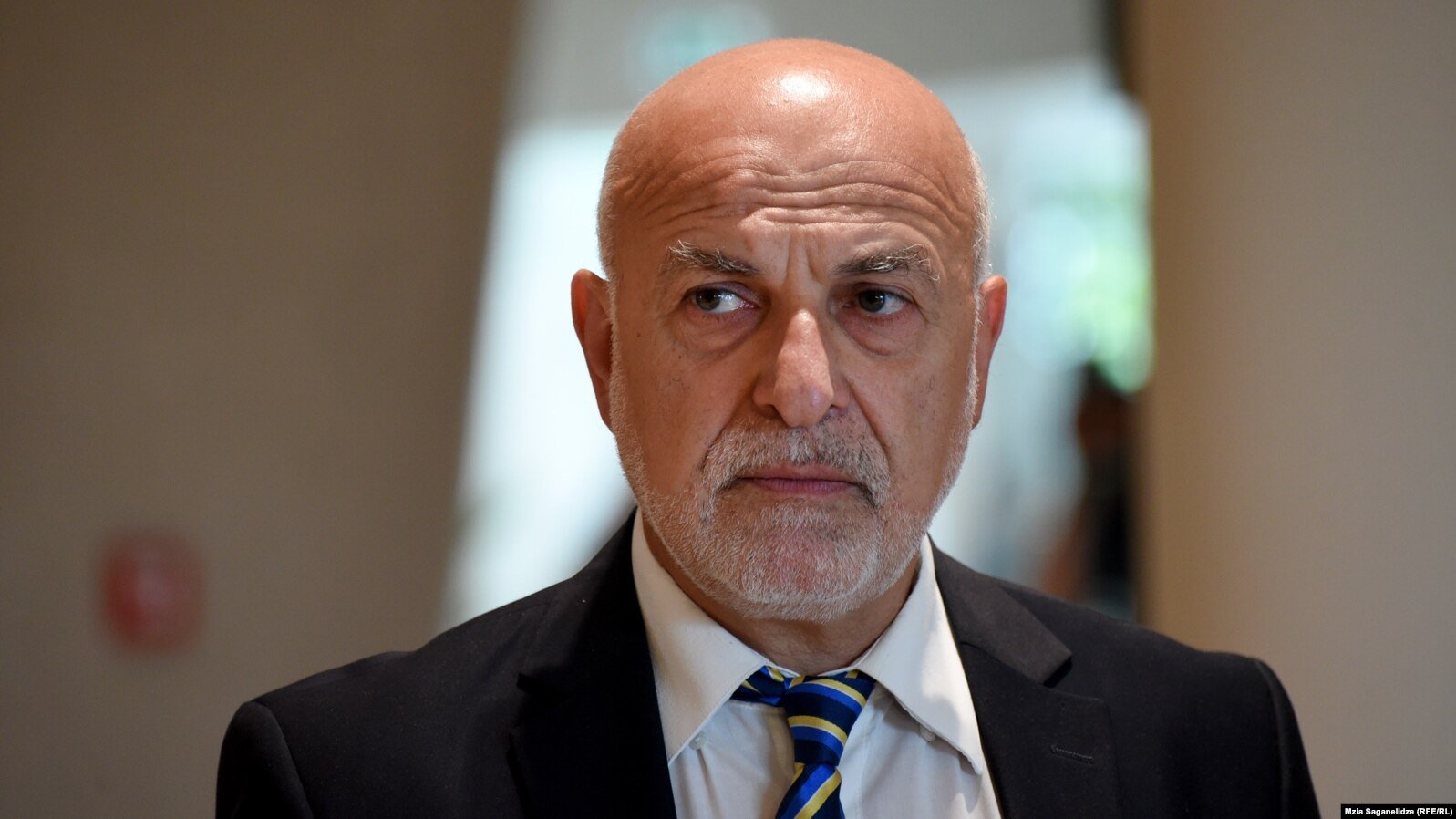
Russia is gradually losing its traditional leverage in the South Caucasus, while Azerbaijan has already established an independent foreign policy and Armenia is attempting to reduce its deep dependence on Moscow, Georgian diplomat and political analyst Valeri Chechelashvili said.
Speaking on the Novosti Kavkaza YouTube channel, Chechelashvili pointed to Russian President Vladimir Putin’s latest phone call with Azerbaijani President Ilham Aliyev as evidence of a changing regional balance.
“This confirms that Russia needs Azerbaijan today more than Azerbaijan needs Russia,” he said.
According to Chechelashvili, Moscow is currently seeking not so much a rapid improvement in relations with Baku as a way to prevent them from deteriorating further. He linked this effort to recent anti-Azerbaijani statements in Russia’s political and media space, which drew a firm response from Baku.
He suggested that Moscow may initially have viewed such rhetoric as a means of testing how much pressure Azerbaijan would tolerate. The reaction from Baku, however, demonstrated that the methods Russia once used with its South Caucasus neighbors are no longer effective against Azerbaijan.
“When they tried it and saw the tough response, they began attempting to reverse course,” Chechelashvili said.
A New Balance in the South Caucasus
The diplomat argued that Azerbaijan has already escaped the level of dependence that would allow Moscow to dictate its foreign policy. Armenia, meanwhile, is only beginning that process and faces far more difficult circumstances.
For decades, Armenia’s security system, energy sector, transport infrastructure and foreign policy were closely tied to Russia. Prime Minister Nikol Pashinyan’s government is now seeking to diversify those relationships and open new avenues of cooperation.
Chechelashvili said normalization with Azerbaijan is central to that transformation. A peace agreement with Baku, followed by the establishment of relations with Turkey, could turn Armenia from a partially isolated and heavily dependent country into a fully connected participant in the regional economy.
“Armenia is becoming an integral part of the South Caucasus, which it could not be while its entire policy was built around Russia,” he said.
The transition will not be painless, Chechelashvili cautioned. As Russia loses influence, it is likely to seek continued control over strategic infrastructure and regional communications.
Russian-Controlled Railway Emerges as Key Obstacle
One of the most difficult issues is Armenia’s railway network, which is operated under a long-term concession by a subsidiary of Russian Railways.
Reopening borders and restoring transport links among Azerbaijan, Armenia and Turkey would require significant infrastructure investment. Chechelashvili argued that Russia has not fulfilled its investment obligations at the level required to unlock Armenia’s new transit potential.
As a result, the railway could become the weakest link in Pashinyan’s proposed Crossroads of Peace initiative and related regional transport projects, including the U.S.-backed TRIPP route.
The Armenian government has raised the possibility of reviewing the Russian concession or transferring the railway to another operator if the necessary modernization is not delivered. Chechelashvili described Yerevan’s position as pragmatic.
Russia itself could benefit commercially from restored rail connections running through Azerbaijan and Armenia toward Turkey, one of Moscow’s important trading partners. But Chechelashvili said the Kremlin has traditionally treated transport and energy infrastructure as instruments of political influence rather than purely commercial projects.
“Influence in the modern world is built through investment, trade and soft power,” he said. “Russia continues to think in terms of control and coercion.”
Russia’s Military Presence Is Losing Its Rationale
Chechelashvili also questioned the future role of Russia’s 102nd Military Base in Gyumri.
For years, its presence was justified in Armenia as protection against a potential threat from Turkey. The prospect of an open Armenian-Turkish border and normalized diplomatic relations, however, increasingly weakens that argument.
Even more important, he said, is the continued presence of Russian Federal Security Service border guards along Armenia’s borders with Turkey and Iran.
Chechelashvili argued that Armenia’s Crossroads of Peace initiative cannot operate to its full potential while key border crossings remain under Russian control. He cited the withdrawal of Russian personnel from Yerevan’s Zvartnots International Airport as a precedent for further changes.
Baku and Yerevan Built the Basis for Peace
The Georgian diplomat stressed that the Armenia-Azerbaijan peace process should not be presented solely as the achievement of an outside mediator.
Before the Washington stage of negotiations, Baku and Yerevan had already begun developing a direct bilateral dialogue. Meetings between Aliyev and Pashinyan without traditional mediators indicated that a new degree of confidence was emerging between the two governments.
Chechelashvili said U.S. diplomacy successfully built upon that progress by providing a platform that connected political normalization with new transport opportunities.
“If Azerbaijan and Armenia had not moved toward this themselves, and if bilateral trust had not gradually strengthened, Washington would not have been able to accomplish anything,” he said.
The diplomat described the outcome as a convergence of effective Azerbaijani, Armenian and American diplomacy.
Major disputes, including border delimitation and the future of enclaves, still require resolution. But the shift toward practical discussions about borders, railway lines, trade and infrastructure shows how dramatically the regional agenda has changed.
Three South Caucasus States Need Their Own Platform
Chechelashvili said the broader strategic opportunity is the creation of a sustainable cooperation platform involving Azerbaijan, Armenia and Georgia.
All three countries, he argued, continue to face pressure from Russian political circles that view the South Caucasus as a region of limited sovereignty. Their response should focus on greater regional cooperation, expanded trade and joint transport projects rather than a new confrontation.
Azerbaijan holds strong regional positions because of its energy resources, military capacity, strategic partnership with Turkey and extensive transport infrastructure. Armenia could overcome its isolation through peace with Baku and the opening of its border with Turkey. Georgia would remain the key link connecting the Caspian and Black Sea regions.
“Trilateral cooperation should increase the strength, responsibility and international standing of the South Caucasus states,” Chechelashvili concluded.
AZE.US