AZE.US
Why do professionals remain in jobs where they are undervalued? Where is the line between demanding management and psychological pressure? And why do strong employees often leave without warning?
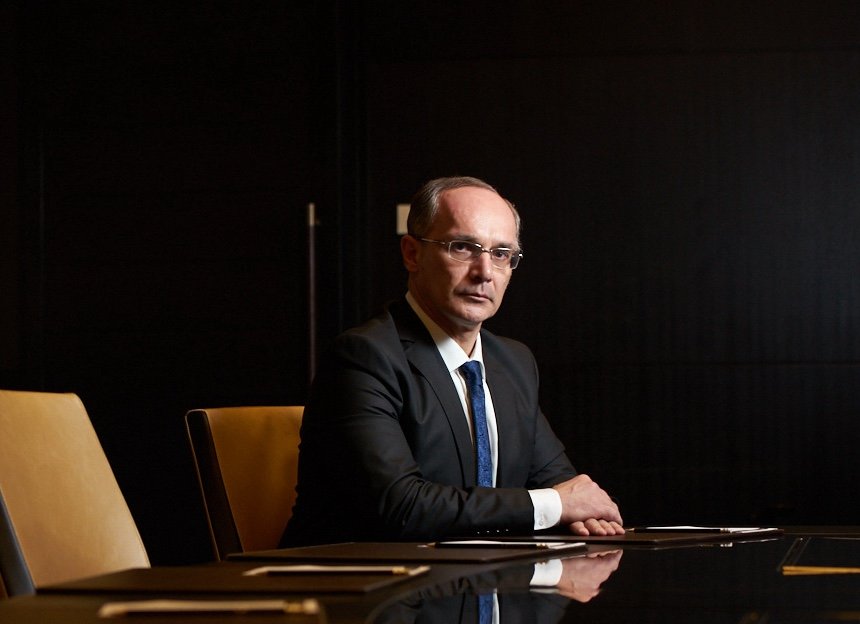
Vesti Baku discussed these questions with Fahri Agayev, a management professional and business consultant. He spoke about Azerbaijan’s “the boss is always right” culture, the management failures behind toxic workplaces, changing attitudes among younger employees and why corporate culture can overpower even the strongest business strategy.
Vesti Baku: What is usually meant by a toxic work environment in Azerbaijan? Where is the line between strict management and psychological pressure?
Fahri Agayev: A toxic work environment is one where people focus less on doing their jobs, meeting business targets and helping the company move forward, and more on personal conflicts, office politics and settling scores.
That atmosphere eventually drags the entire company backward and weakens its ability to compete.
Business mathematics works differently. Two plus two does not always equal four. Sometimes it equals 10. Sometimes it equals zero. Zero is often the result when a company has become toxic.
A leader’s main responsibility is to create an environment in which employees can work as effectively as possible. When the workplace becomes toxic, responsibility lies first with the owner or manager, not with some abstract idea of “the team.”
There is a widespread belief that toxic environments exist only in companies with weak corporate cultures, no procedures, no standards and no clear job descriptions. That is not always true.
Many companies have two cultures: the official one and the real one.
The official culture exists in written policies, statements to the media, speeches about corporate DNA and company values, polished internal emails, meetings conducted in foreign languages, and an abundance of coaches and mentors.
The real culture may be entirely different.
A senior manager surrounds himself with loyal and convenient people. Those people then build similar circles within their own departments.
The result is a company of distorted mirrors. Employees hear speeches about honesty, fairness and transparency, but see favoritism, workplace bullying, corruption and abuse being justified as operational necessity.
Trust disappears.
Management pressure, however, is not automatically wrong. Imagine an employee who regularly arrives late, spends the morning unfocused, takes an hour to regain momentum after lunch, constantly leaves for coffee or cigarette breaks, checks social media and misses deadlines.
A manager is responsible for results and must use appropriate management tools to keep the company functioning.
The boundary is clear.
Strict management demands results while preserving a person’s dignity. Psychological pressure breaks the person in order to secure obedience.
Why do people remain for years in workplaces where they are humiliated, overloaded or undervalued?
I often see people on social media say that knowledge, experience and professional contribution are not valued in Azerbaijan.
My response is this: if someone genuinely has up-to-date knowledge, marketable skills and strong professional ability, why do they remain for years in a place where they are not valued?
There are several groups.
The first includes capable professionals who have knowledge but lack the skills needed for career growth. They may not know how to present their results, build internal relationships, negotiate with management or explain their own value.
Some also have low self-confidence. A person may possess deep knowledge and serious experience but still fear changing jobs because they are not sure they will find another position.
So they remain for years in a company that does not appreciate them.
The second group includes people with university degrees and long work histories whose knowledge has not been updated.
They may have graduated 20 or 25 years ago. What they call experience may simply be the same year repeated many times. That experience gradually loses its market value compared with the knowledge, energy and adaptability of younger professionals.
Such employees may complain about management, limited opportunities and a lack of respect for educated specialists. Deep down, however, they often understand that their skills have stopped developing.
That makes them more likely to tolerate a toxic workplace because they do not see a realistic alternative.
Loans, family obligations and fear of losing a stable income also matter. But professional insecurity is often one of the strongest reasons people stay.
Is the culture of “the boss is always right” still strong in Azerbaijan?
Unfortunately, yes. It remains strong even in government institutions and private companies led by people with Western educations.
The problem is not limited to a manager who openly demands obedience. It is rooted in the broader system of workplace relationships.
A manager does not need to declare that he is always right. It may be enough to create an environment where employees do not feel psychologically safe.
People make mistakes. If a manager reacts aggressively to every error, the natural response is for employees to avoid risk.
They stop taking initiative. They hide problems. They avoid bringing difficult information to management.
A small issue that could have been resolved early can eventually become a major crisis.
In Azerbaijan, appointments to senior positions in both the public sector and large private companies are still frequently based on personal trust. Professional competence may become a secondary consideration.
As a result, some managers lead not through professional principles but through personal instincts: ego, fear of losing their position and a desire to protect their own status.
The boss must always be right because being right becomes a way to reassure himself and others that he deserves the position.
There is another side to the problem. Even educated professionals in our country may be accustomed to receiving and following orders rather than questioning decisions or assuming responsibility.
One side wants only to command. The other prefers only to obey.
That is how a culture in which the boss is always right survives.
Why does business growth not always lead to better management?
There are objective and subjective reasons.
A company may grow so quickly that its internal systems cannot keep up. Azerbaijan saw many such cases during the oil boom.
Imagine a clothing retailer with four stores. The economy expands, consumer spending rises and the company decides to open more locations in Baku, the regions and other former Soviet countries.
It brings in bank financing and investors. Growth accelerates.
The company goes from four stores to 18.
The original four store managers were promoted from within. They understood the business, its values and its working methods. Now the company suddenly needs 14 additional managers.
A head office built to support four stores in one city must now serve 18 locations in different markets. Marketing, customer service, logistics and other departments must fundamentally change how they operate.
In such a situation, external growth will naturally move faster than management culture.
The company faces a choice. It can grow slowly and develop managers internally, but it may lose market share. It can try to prepare in advance, but real expansion cannot be fully simulated.
It is like trying to learn how to swim in a forest.
During the first stage, companies usually focus on expansion, customer acquisition and market share. That is often the correct strategy.
The next stage is consolidation. The company must understand what it has built, analyze its mistakes and redesign its management systems.
That is often when internal wars begin.
People who gained power during the period of rapid growth may resist transparency, new standards and changes in authority.
I know many Azerbaijani companies that made a powerful leap forward but failed to reform their management culture afterward. Internal conflicts either drove them into bankruptcy or left them seriously weakened.
Why do good employees often leave quietly, while management acts surprised?
Many valuable professionals are stable people. They love their work and prefer to stay with one employer for a long time.
Unfortunately, some managers take advantage of that stability and loyalty.
Strong specialists often lack the soft skills needed to negotiate with senior management. They may not know how to ask for a raise, discuss career development or secure additional benefits.
They simply work hard and expect management to notice.
They receive promises and flattering words, perhaps a minor salary increase. Meanwhile, other employees receive promotions and meaningful raises.
Eventually, the professional stops asking.
The employee begins looking for another job.
Why leave without a scandal? For the same reason the person did not use their importance as leverage earlier. They do not want to manipulate, threaten or fight.
They find another position and resign.
The manager is surprised because silence was mistaken for satisfaction and loyalty.
But a quiet, disciplined employee may have made the decision months earlier. The company is simply the last to know.
What is more damaging to a career: low pay, a bad manager or no future prospects?
A manager has the most direct influence on a person’s career.
When choosing a workplace, I usually advise people to look closely at the person they will report to. The manager creates the environment, sets the strategy and establishes the standards other supervisors follow.
I see the manager as a gardener responsible for a garden.
Imagine a company with 200 employees. That means 200 egos, 200 sets of ambitions, different personalities, backgrounds, worldviews and daily moods.
The leader must calibrate all of this to achieve the greatest possible result with the least possible friction.
Where there is a professional manager with deep knowledge and the right personal qualities, there will usually be better pay, valuable experience, recognition and opportunities to grow.
A capable leader does not merely create an environment where people work hard. The leader helps employees become stronger.
Corporate culture also shapes behavior.
When a team values quality work and meeting deadlines, an underperforming employee feels pressure to improve.
When sabotage is normal, the conscientious employee becomes the problem. Colleagues start saying: “Now management is pressuring us because of him.”
There is no situation where the manager is good but everyone around the manager is bad.
In Azerbaijan, people often say, “Özü yaxşıdır, ətrafı pisdir,” meaning, “He is good, but the people around him are bad.”
Management does not work that way.
The team is a reflection of the leader.
Employees sometimes tell me that the senior manager does not know about the pressure or abuse inside the organization and would intervene immediately if informed.
My answer is that the manager created the conditions in which that atmosphere developed.
The manager may not have issued direct instructions, but allowed the system to form and continue.
Has the younger generation changed the labor market? Are young employees less willing to tolerate pressure?
“The current generation” is a very broad term.
Throughout history, older generations have criticized younger people as weak, impatient or unwilling to work hard. Every generation is different from the one before it.
From a management perspective, one major difference today is that young people do not automatically bow to titles, ranks and impressive job descriptions.
They want those titles to be justified.
In the past, holding the title of director could be enough to secure obedience. Today, a manager must demonstrate through knowledge, skill and decision-making that he is genuinely a leader and deserves the position.
The word “director” on a business card is no longer enough.
Being a director is easy when everyone follows instructions and no one challenges a decision.
Being a leader is harder. It requires repeatedly proving through intelligence, knowledge and ability that you deserve to lead.
Young people are not necessarily weaker and may not be less capable of handling pressure. They are more likely to ask why they should obey someone who has not demonstrated professional authority or earned their respect.
What must a leader do to manage people rather than simply command them?
There is a well-known phrase often associated with management thinker Peter Drucker: “Culture eats strategy for breakfast.”
It does not mean strategy is unimportant. It means that even the best strategy will fail if the company’s actual culture works against it.
Let me give an example from my own career.
In 2012, I was deputy general director of an international retail chain. We had about 400 employees serving roughly 2,000 customers a day across 10 stores.
I believed the company’s success depended on the quality of each interaction between those employees and customers.
During one store visit, I saw a young man trying on shoes. I approached him, went down on one knee, helped him find the right size and assisted him until he left the store.
It was important to me that employees treat customers with the same level of attention.
But how could I control 400 employees?
You cannot place a manager beside every worker. Even installing cameras would not allow you to review thousands of daily interactions.
The answer is to hire people with an “internal camera,” people who behave properly not because they are being watched, but because that behavior reflects their own principles and the company’s culture.
Culture can consume people as easily as it consumes strategy.
A reform-minded person joins a company full of enthusiasm. A year later, that person looks like everyone else.
Someone who once dreamed of replacing bureaucracy with entrepreneurship may eventually become a bureaucrat who demands reports on how many entrepreneurial ideas were submitted.
The culture consumed that person.
The opposite can also happen.
A lazy employee enters a culture of hard work and enthusiasm. A year later, the person may be working weekends alongside everyone else.
Culture is stronger than the individual.
The difference between strategy and culture is simple.
Strategy exists on paper. Culture exists in reality.
Strategy can be read. Culture must be felt.
Nearly every company strategy says customers are the organization’s most valuable asset. But if department heads do not genuinely share that value, cannot cooperate and spend their time fighting for influence, the strategy will never be implemented.
The company will have an excellent strategy on paper and a weak culture in practice.
Culture must be managed.
Everything in business must be managed. Anything left unmanaged does not simply remain neutral.
If the formal leader does not manage the company’s culture, informal leaders and influential employee groups will do it instead. Separate subcultures will emerge, each with its own rules and interests.
A leader creates and manages culture. Culture then manages the company.
Azerbaijan is entering a new stage of business development. Money is tighter, transparency is increasing and consumers are becoming more demanding, not only about the quality of products and services but also about how they are treated.
Competition is growing across many markets.
Soon, companies will not compete only through products and services.
They will compete through their management models.
The professionals who succeed will be those who think beyond today’s operating results and focus on long-term development, corporate culture and the legacy their companies leave behind.
AZE.US