AZE.US
Authorities in Baku plan to expand the city’s bicycle infrastructure as part of a broader effort to improve urban mobility and promote alternative transportation.
According to the Azerbaijan Land Transport Agency, work on developing infrastructure for bicycles and other micromobility vehicles has been underway in the Azerbaijani capital for more than two years.
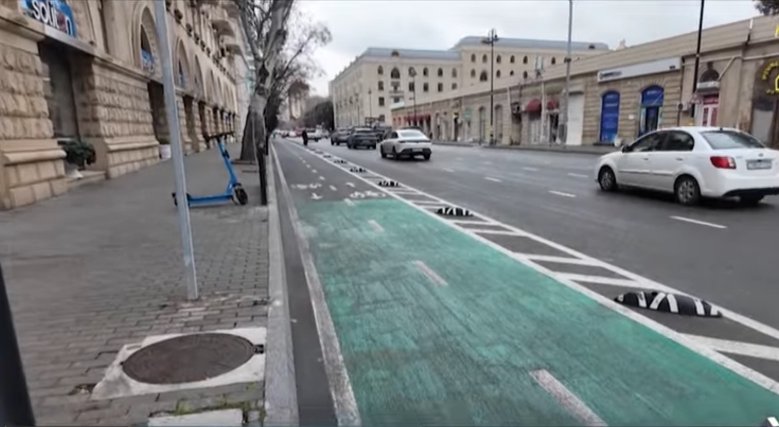
During this period, the city has already built over 50 kilometers (31 miles) of bicycle lanes, primarily in central districts.
However, experts say one of the key challenges remains the fragmented nature of the network. In several parts of the city, bicycle lanes end abruptly, forcing cyclists to merge into regular traffic – a situation that increases risks for both cyclists and drivers.
Urban mobility specialists note that bicycle infrastructure works best when lanes form a continuous network, allowing cyclists to travel safely across different parts of the city.
Under a government program aimed at improving Baku’s transport system through 2030, authorities plan to expand the bicycle lane network to at least 100 kilometers (62 miles).
Future projects will focus not only on central streets but also on roads connecting residential districts and suburban areas, where cyclists often have no dedicated space on the roadway.
Officials also remind riders that under current regulations, bicycles and electric micromobility vehicles may use the right side of the roadway or road shoulder when dedicated bike lanes are not available.
Cyclists must still comply with traffic signs, road markings and traffic lights, and ensure their vehicles are in proper technical condition.