AZE.US
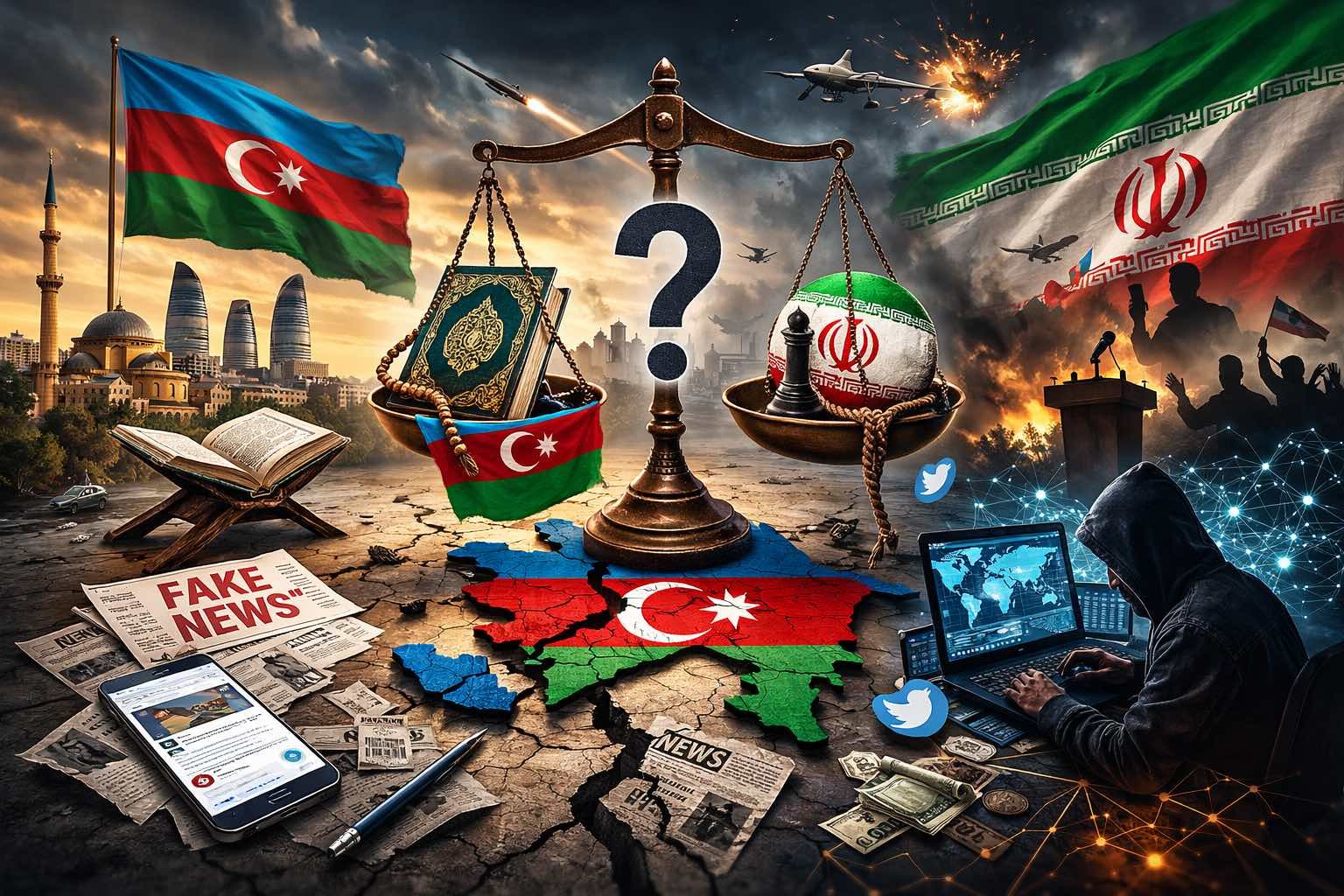
In Azerbaijan’s public debate, one question keeps resurfacing: why do some people appear ready to defend Iran’s actions even when they conflict with Azerbaijan’s national interests?
The most common explanation is simple – religion. Iran is often framed as a “Muslim country,” and appeals to religious solidarity are sometimes used to justify political positions.
But the reality is far more complicated.
Islam itself does not teach that believers should place the political interests of another state above those of their own country. Religious identity and national responsibility are not mutually exclusive.
A nation’s policies are shaped primarily by security concerns, political priorities, and national interests, not by religious symbolism.
The political use of religion
Since the 1979 Islamic Revolution, Iran has developed a political system in which religious rhetoric plays a central role in both domestic governance and foreign policy.
This has allowed Tehran to project influence beyond its borders by presenting its geopolitical agenda through a religious narrative.
However, religion and geopolitics are not the same thing.
For governments, religious language can sometimes function as a powerful political tool – especially in societies where religious identity remains an important part of public life.
In that sense, religion can become a vehicle for political messaging rather than its core purpose.
Why such narratives resonate
Several factors help explain why these narratives find an audience.
One is the lack of deeper understanding of how religion and politics interact. Emotional appeals framed in religious terms can be persuasive, particularly when they simplify complex geopolitical issues.
Another factor is the modern information environment. Social media platforms amplify emotional and ideological messages, often spreading narratives faster than verified information or balanced analysis.
This creates space for competing interpretations of events, sometimes shaped by external influence campaigns or coordinated online activity.
Faith and national interest are not opposites
For Azerbaijan, as for any country, national policy ultimately revolves around protecting sovereignty, stability, and national interests.
Recognizing this reality does not mean rejecting religious or cultural ties. But it does mean understanding that faith cannot replace geopolitical realities.
History repeatedly shows that when religion becomes a tool of political influence, its original spiritual message can easily be overshadowed by power struggles.
The deeper question
The real question for society is not simply who supports or opposes Iran.
The deeper issue is why religious arguments sometimes carry more weight in public debates than basic political realities and national interests.
Answering that question requires stronger public discussion, better education, and a more critical approach to the information people encounter – especially in an era where narratives can travel across borders faster than ever before.