AZE.US
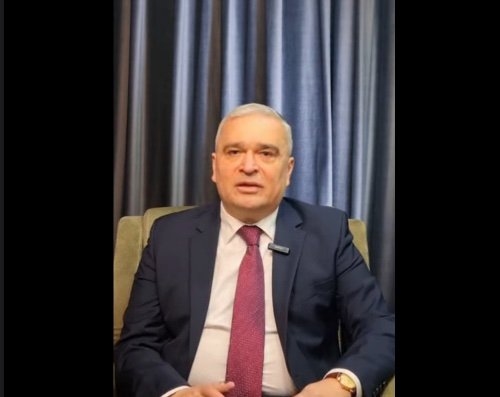
Azerbaijani opposition politician Ilgar Mammadov has called for the restoration of open public debate on foreign policy, warning that the lack of free discussion increases the likelihood of serious strategic miscalculations.
Mammadov made the remarks while commenting on the recent missile strike launched from Iranian territory toward Azerbaijan’s Nakhchivan Autonomous Republic, a development that has raised concerns about regional security.
Reflecting on the situation, he pointed to Georgia’s experience in recent years during the Russia-Ukraine war. According to Mammadov, the Georgian government faced strong pressure from various external actors urging the country to join the conflict. Ultimately, however, Tbilisi managed to stay out of the war.
That outcome, he noted, was widely recognized in international and Azerbaijani media as a successful example of foreign policy decision-making under pressure.
Mammadov argues that one key factor behind Georgia’s ability to maintain that position was the intensity of domestic debate. Inside the country, the question of involvement in the war was fiercely discussed in public and political circles, often generating heated and emotional exchanges.
The Georgian government, he said, operated under constant pressure from different groups presenting competing arguments and viewpoints.
According to Mammadov, such open debate can also function as a strategic buffer. When foreign policy issues are discussed intensely within a society, they are more likely to be evaluated through the lens of national interests, which can reduce the influence of outside pressure on political decision-making.
Turning to Azerbaijan, Mammadov said that meaningful public discussion of foreign policy has largely disappeared over the past three to four years.
While the topic of foreign policy is frequently mentioned in media coverage, he argued that genuine and controversial issues are rarely debated openly. Instead, the public agenda is largely shaped by narratives and positions set by the authorities.
“In such conditions, it becomes much more difficult for the government to make correct decisions on critical foreign policy matters,” Mammadov said.
He warned that when debate is limited, the probability of policy errors can increase significantly.
According to Mammadov, restoring real discussion on foreign policy issues is essential for strengthening the country’s decision-making process and safeguarding national interests.