AZE.US
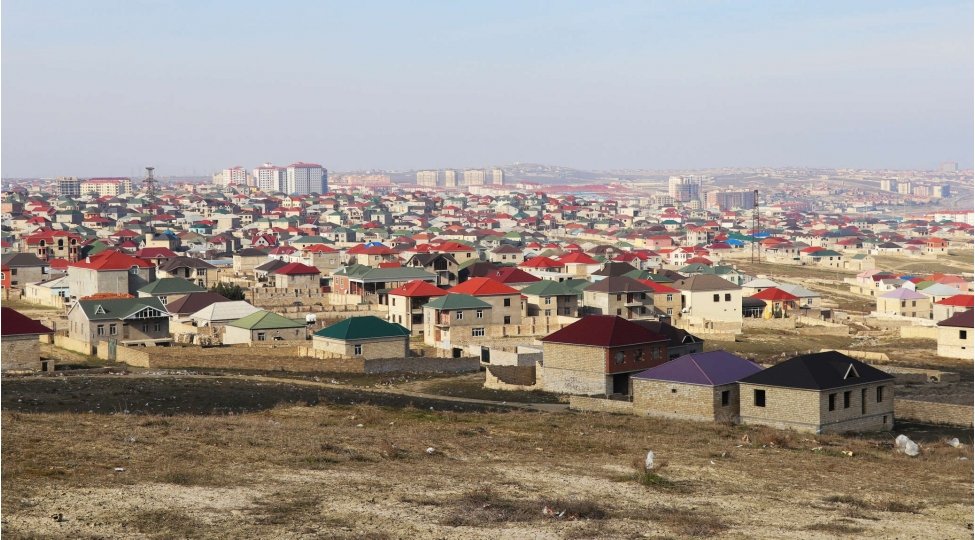
The issue of undocumented houses is again becoming a painful topic in Azerbaijan, where many families live for years in homes that exist physically but remain legally incomplete.
For some residents, the problem is not theoretical. They may have a house, pay utility bills and use the property as their main home, but still lack a proper title deed. Without full legal documentation, the house cannot easily be sold, gifted, pledged as collateral or fully registered as property.
The first key issue is the legal status of the land. A private house must be built on land designated for residential use. If the land is classified for agriculture or another purpose, the building may be considered illegal, even if people have lived there for years.
The land also needs to be legally held by the citizen - through ownership, use rights or lease. After that, the construction project must be prepared by a licensed architect or authorized organization and submitted through the electronic system of the State Committee for Urban Planning and Architecture.
According to the procedure described by specialists, the applicant should receive a response within 10 days on whether the planned house complies with construction standards and legal requirements.
If these steps are ignored, the owner may face a long list of problems. The property may not be registered, sold, inherited, pledged to a bank or connected to infrastructure under normal rules. Fines may also apply for unauthorized construction.
Gas supply has become one of the most sensitive parts of the discussion. Reports recently circulated in Azerbaijan claiming that houses without full title deeds could also be connected to gas. These reports referred to homes that may only have municipal papers, a power of attorney or other incomplete documents rather than a full ownership certificate.
For many families, this is a winter problem, not a paperwork debate. One resident said she had lived without gas for two years. With a small child at home, she had to rely on electric heating and received an electricity bill of 259 manats, or about $152.
But Azəriqaz has said there is currently no new decision or new rule allowing undocumented homes to be connected to the gas network. In other words, the claims circulating on social media have not been officially confirmed.
Experts also warn that a municipal document or a power of attorney is not the same as legal ownership. If the state decides to allow gas connections for such homes, it would likely require a separate program or a special decision by the Cabinet of Ministers.
The issue is not only about documents. Safety is another major barrier.
Many undocumented homes were built in areas where construction was restricted or dangerous - under high-voltage power lines, near oil and gas pipelines, close to railways, highways or inside protected zones around communications infrastructure.
This category is considered the most difficult. Officials and experts have repeatedly said that houses built in dangerous zones cannot be legalized in the same way as ordinary homes with incomplete paperwork. In such cases, the obstacle is not bureaucracy alone, but public safety.
In other cases, the problem may be missing or mismatched documents. Specialists say owners usually need to collect documents related to the land, the building itself, a map or scheme of the property, and technical documents confirming the characteristics of the house.
The government has repeatedly advised citizens to gather the full document package before trying to start the legalization process.
There is also growing discussion about a possible future amnesty for illegal or undocumented buildings. But experts stress that such an amnesty would not mean that every house could be legalized automatically.
Homes built in protected communication zones, near railways or major roads, under high-voltage power lines or on other prohibited territory would likely remain outside any simple legalization process.
In some cases, alternative solutions may be considered. For example, if technically possible, old communication lines could be moved or new infrastructure could be routed differently. But that would require regular monitoring by the relevant agencies and clear decisions before a problem turns into an emergency.
There is another group of cases where homes have existed for decades, have utilities and are treated by residents as full property, but still lack proper registry records. In some situations, citizens are told that older documents may be located in the National Archive Fund, meaning the path to legalization may begin not with a new application, but with a search for old records.
The problem has accumulated over decades. In some places, unauthorized construction was ignored. In others, people built homes on land with unclear status. Some documents were lost, others were never properly completed, and many homes were transferred through informal arrangements that did not create full ownership rights.
As a result, entire residential areas now exist outside the normal legal and engineering system.
The message for homeowners is increasingly clear: if the house is in a prohibited or dangerous zone, legalization should not be expected. If the issue is incomplete paperwork, old records or missing technical registration, the first step is to check the legal status of the land and begin collecting the necessary documents.
A house without documents is no longer just a bureaucratic problem. It can mean no gas, no title deed, no clear right to sell the property and no guarantee that the home can be passed on safely to the next generation.
AZE.US