AZE.US
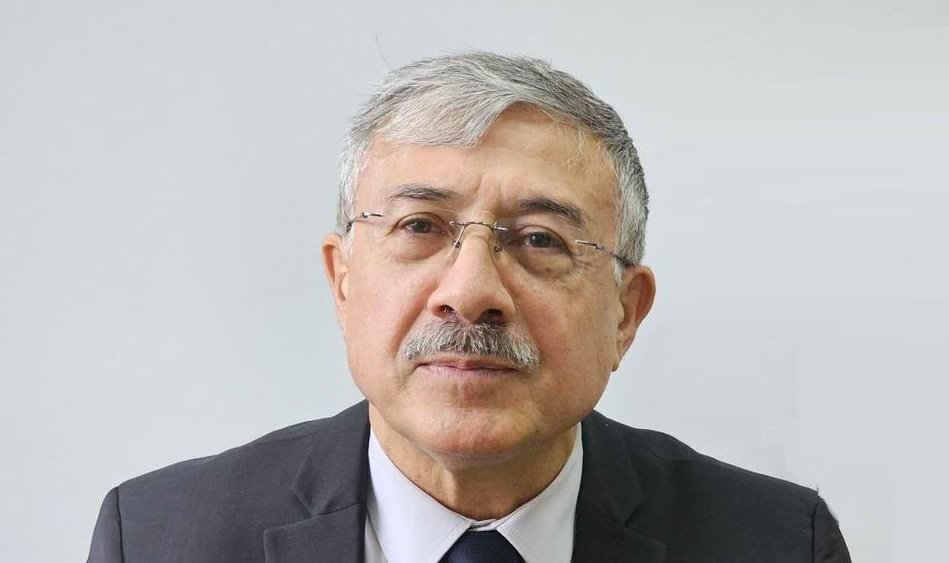
Armenia’s military parade in Yerevan may help Prime Minister Nikol Pashinyan ahead of the June 7 parliamentary elections, but it does not remove the deeper political, transport and energy problems facing the country, Azerbaijani expert Chingiz Mammadov said.
Mammadov, a former head of the Office of Communications of the President of Azerbaijan, made the remarks in an interview with Professor Vitaly Barvinenko’s geopolitical project.
The discussion focused on the political messages behind Armenia’s Republic Day military parade, Pashinyan’s statements on the so-called Trump Route, Armenia’s gas dependence on Russia and the wider balance of power in the South Caucasus and Central Asia.
Mammadov said public demonstrations of military strength usually benefit the authorities in power, especially during an election campaign.
“Such events, demonstrations and parades always benefit the government or the political force that is in power. I think this will add votes to Pashinyan,” he said.
He noted that the parade created a mixed impression. On the one hand, some elements still looked Soviet in style, including the way the troops marched. On the other hand, the display also carried a new non-Soviet tone, especially because much of the equipment shown was no longer Russian but European or foreign-supplied.
The larger issue, Mammadov said, is not the parade itself but Pashinyan’s political messaging around TRIPP, commonly referred to in regional debate as the Trump Route.
According to Mammadov, Pashinyan’s claim that the route can be implemented separately from the final peace agreement with Azerbaijan is difficult to understand.
“If this is just an election campaign statement, that is one thing,” Mammadov said. “But if the prime minister actually thinks this way, it does not help the peace negotiations between Armenia and Azerbaijan.”
He said the Trump Route cannot be separated from Azerbaijan because its core purpose is to provide a connection between mainland Azerbaijan and Nakhchivan through Armenian territory.
“The Trump Route is a road from Azerbaijan to Azerbaijan through Armenia. How can it be implemented without Azerbaijan?” Mammadov said.
He argued that Baku is likely to insist that the transport route, the peace process and unhindered movement between the two parts of Azerbaijan remain linked.
Energy was another major focus of the interview. Barvinenko asked whether Pashinyan’s statements about using gas transit to reduce Armenia’s dependence on Russia were realistic.
Mammadov said he does not see that as realistic in the near term.
He said Armenia receives most of its gas from Russia at a price far below global market levels. According to his estimate, Russian gas has been supplied to Armenia in recent years at about $165 to $175 per 1,000 cubic meters, while world market prices have often been several times higher.
Mammadov said Armenia buys roughly 2.2 billion to 2.5 billion cubic meters of gas a year, with about 85 to 90 percent coming from Russia and another 10 to 15 percent from Iran. On that basis, he argued, the price difference amounts to a hidden Russian subsidy worth hundreds of millions of dollars annually.
“I do not think Armenia will be able to free itself from gas dependence on Russia in the near future,” he said.
He also questioned why Azerbaijan would sell gas to Armenia at a discounted price that would harm Baku’s own economic interests, especially while many issues between the two countries remain unresolved.
The interview also moved beyond Armenia to Kazakhstan and the wider Turkic world. Mammadov said Kazakhstan is carefully strengthening its sovereignty and Turkic identity while balancing Russia, China and the Organization of Turkic States.
He described President Kassym-Jomart Tokayev’s emphasis on Kazakhstan’s historical continuity with the Golden Horde as an important statement. In Mammadov’s view, it challenges old imperial narratives that portrayed steppe states as backward and in need of a Russian “civilizing mission.”
Mammadov said China is also playing an increasingly important role in Central Asia, mostly through soft power and the language of sovereignty and non-interference. Kazakhstan, he said, will likely continue using China, Russia and the Turkic framework to maintain balance.
The wider message of the interview was that the South Caucasus and Central Asia are entering a period in which old dependencies remain powerful, but regional states have more room to maneuver than before.
For Armenia, the parade may create an image of renewal before the elections. But Mammadov’s argument is that military optics cannot replace answers on peace with Azerbaijan, transport access to Nakhchivan or the hard arithmetic of gas dependence.
AZE.US