AZE.US
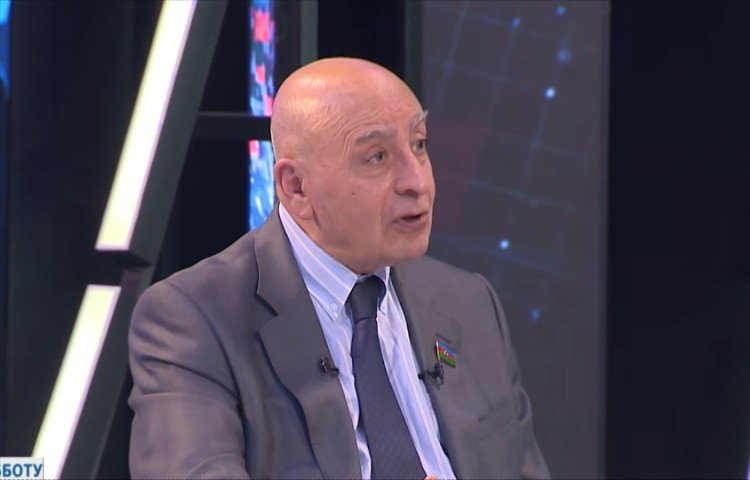
Azerbaijan has moved from being a field of competition between outside powers to becoming a platform where international actors come to negotiate, Azerbaijani MP Rasim Musabekov said in an interview with CBC TV.
Musabekov said recent visits to Baku by representatives of different countries and international organizations should not all be viewed as part of one single process, since each visit has its own agenda. However, he said they all reflect Azerbaijan’s growing role as an independent regional actor.
“Azerbaijan has managed over these years to turn from a field of competition between different international forces into a field that connects,” Musabekov said. “They do not come here to pull Azerbaijan somewhere or drag it into something. They come here to negotiate.”
According to him, this is an important shift because Azerbaijan is no longer forced to constantly defend its independence against outside pressure. Instead, it can use that independence to promote its own interests, initiate projects and coordinate regional cooperation.
Musabekov said the visit of the Turkmen president to Baku was among the most important recent diplomatic developments. He noted that relations between Azerbaijan and Turkmenistan have significant prospects in both energy and transport.
He pointed in particular to the Dostlug field in the Caspian Sea, saying the time has come to move the project forward. Musabekov said the fact that Azerbaijani President Ilham Aliyev presented Turkmenistan with a tanker named Dostlug was a symbolic reminder that the project should be put into motion.
The MP also said Turkmenistan should make decisions based on current realities, rather than waiting for Russian energy companies to come out from under sanctions.
Speaking about gas, Musabekov said smaller volumes of Turkmen gas could be delivered to the Azerbaijani coast and then sent to European markets through existing infrastructure. However, he added that larger volumes would require new infrastructure, including a Trans-Caspian gas pipeline.
“If a decision is made on large volumes of Turkmen gas, it will most likely go through Nakhchivan with direct access to Turkey. These issues need to be worked out today,” he said.
Musabekov also criticized what he described as the European Union’s tendency to support regional transport projects in words without taking enough practical steps.
He said Azerbaijan does not need simple approval from Brussels. If the EU is truly interested in the Middle Corridor, he argued, it should take part in concrete infrastructure projects, including the modernization of the Nakhchivan railway section and further development of railway infrastructure in Georgia.
“There is no Middle Corridor without Azerbaijan and Georgia,” Musabekov said.
He noted that Azerbaijan has already invested heavily in regional transport infrastructure, including in Georgia, and cannot be expected to carry the entire financial burden alone.
“If there is interest, let them roll up their sleeves and take serious part,” he said.
Musabekov also addressed Azerbaijan’s cooperation with NATO, saying that for Baku, practical interaction with the alliance primarily means cooperation with Turkey, and partly with the United Kingdom.
He said Turkey is becoming one of the key partners for the United States in Europe and the wider region because it has a real army capable of carrying out military tasks. In this context, he added, Azerbaijan’s potential as Turkey’s strategic ally will also be taken into account.
According to Musabekov, Azerbaijan’s military and political partnership with Turkey is already projecting influence toward Central Asia. He said a broader Ankara-Baku-Tashkent axis could gradually emerge, and Kazakhstan could also become part of this framework if it distances itself from the CSTO.
The MP also commented on recent claims about an alleged Israeli military presence in Azerbaijan. He dismissed the reports not merely as fake news, but as an “active measure.”
According to him, the aim of such claims was to provoke Iran into action against Azerbaijan and drag Baku into a conflict that it was trying to stay away from.
“Azerbaijan firmly rejected this. There are no facts,” Musabekov said. “No one will be allowed to do anything on our territory. This is absolutely clear.”
Speaking about Armenia, Musabekov said Prime Minister Nikol Pashinyan now has an opportunity to continue moving toward normalization with Azerbaijan after the elections. He said constitutional changes in Armenia could become part of that process.
He also noted that Azerbaijan is helping reduce regional risks. According to Musabekov, Azerbaijani fuel supplies have helped Armenia at a difficult moment, while the potential for future Azerbaijani energy supplies also limits the ability of outside powers to pressure Yerevan.
Musabekov said Azerbaijan’s success is also linked to its ability to build constructive relations across its borders while developing both the Middle Corridor and the North-South route.
He said Azerbaijan is not blocking anyone’s access to regional transport links and is ready to cooperate with neighbors, including Russia and Iran, while at the same time refusing to accept pressure or lectures from either Moscow or Tehran.
“The readiness of Azerbaijan to constructively interact along the entire perimeter of its borders is one of the foundations of the success of Azerbaijani foreign policy,” Musabekov said.
AZE.US