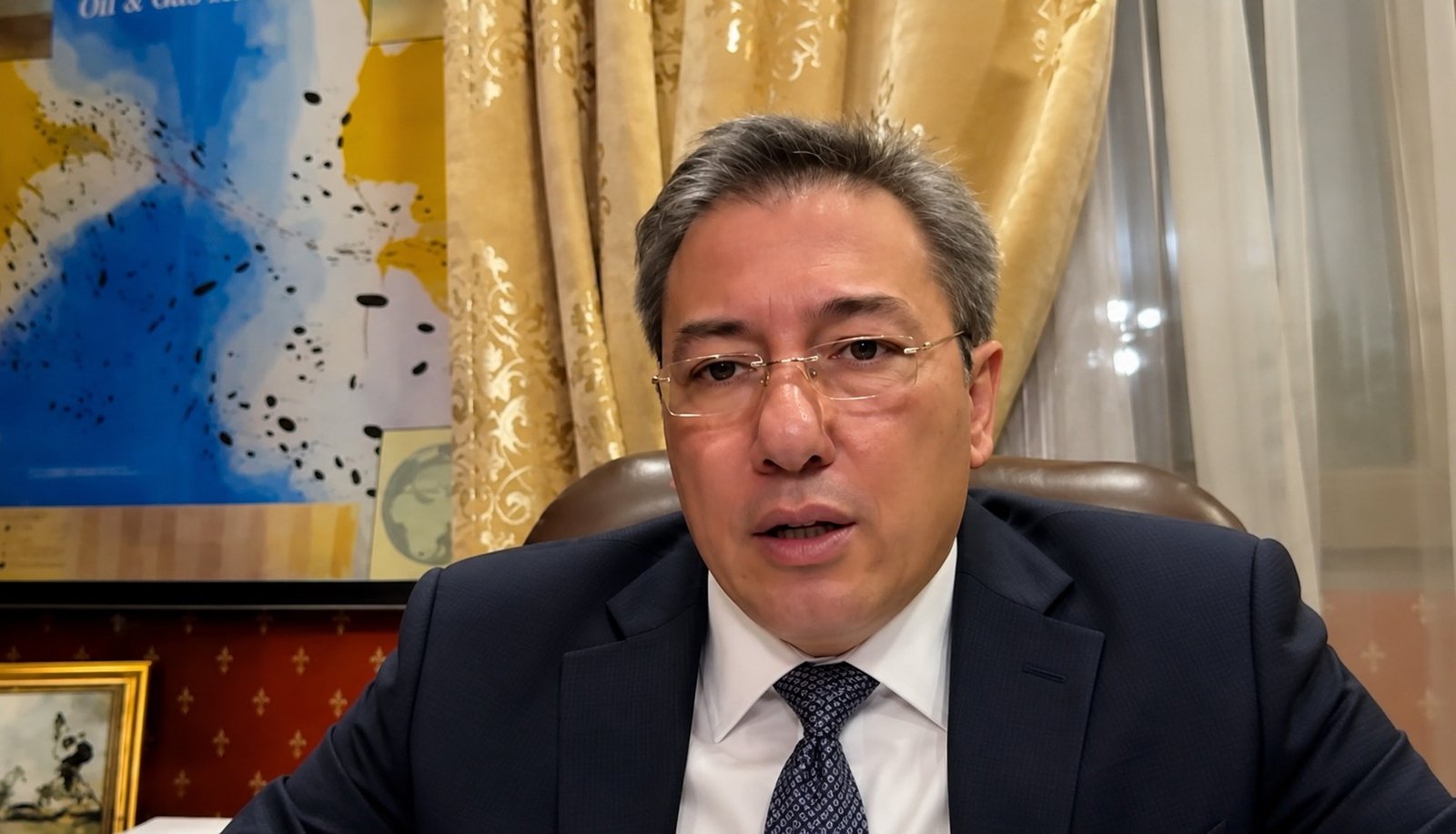
Azerbaijani political analyst Ilgar Velizade, head of the South Caucasus Political Scientists Club, said Kazakhstan’s cooperation with the European Union shows that a country can build strong ties with Brussels without breaking relations with Russia.
He made the remarks during an interview with the YouTube channel Daily Europe Online.
Velizade said Kazakhstan remains a member of the Eurasian Economic Union and the Collective Security Treaty Organization, while also maintaining close relations with Russia and China. At the same time, this has not prevented the European Union from actively developing cooperation with Astana.
According to him, the EU’s approach to Kazakhstan is based not on ideology, but on practical interests.
“Russia is effectively a strategic opponent for the European Union, while China is a strategic competitor. But this does not stop the EU from actively cooperating with Kazakhstan,” Velizade said.
He noted that Kazakhstan is important for Brussels because of its resources, logistics potential and role in the Middle Corridor.
Velizade said the EU has announced plans to allocate around $10 billion for investment projects in Kazakhstan. These projects, he added, are linked to specific sectors, including logistics, airports and rare earth metals.
The political analyst contrasted this with the EU’s approach to Armenia. He noted that Armenia is also a member of the EAEU and the CSTO, but cooperation with Yerevan often remains at the level of memorandums and political gestures.
“There is no uranium there, no major reserves of oil, gas or rare earth metals in such quantities. So there one can sign memorandums and send hearts to each other. Here, everything is much more concrete,” Velizade said.
He described Kazakhstan as a “middle power,” meaning a country capable of pursuing an independent foreign policy, building its own partnerships and acting according to national interests.
In Velizade’s view, Kazakhstan’s example challenges the stereotype that membership in post-Soviet integration structures automatically means full dependence on Moscow.
Astana, he said, is managing relations with Russia, China and the EU in a way that keeps Kazakhstan itself as the main beneficiary.
Velizade also pointed to trade figures, saying Kazakhstan’s trade turnover with the European Union is higher than its trade with Russia. This, he said, helps explain why Brussels treats Kazakhstan as a separate and important partner.
“The European Union is investing not in a member of the EAEU or the CSTO, but in Kazakhstan. This is the essence of policy toward middle powers,” he said.
The analyst added that Kazakhstan is not seeking EU membership, but is still developing modern economic and technological projects. As an example, he mentioned Kazakhstan’s electronic residency program, which he compared to Estonia’s model.
Velizade said modernization does not necessarily require joining the European Union. Kazakhstan, he argued, is trying to develop at the intersection of Russian, Chinese and Western interests without tying its future to a single geopolitical platform.