AZE.US
Russian authorities long resisted treating Azerbaijan as a fully independent and equal partner, but Baku’s ability to defend its interests eventually forced Moscow to adjust its approach, Azerbaijani analyst Chingiz Mammadov said.
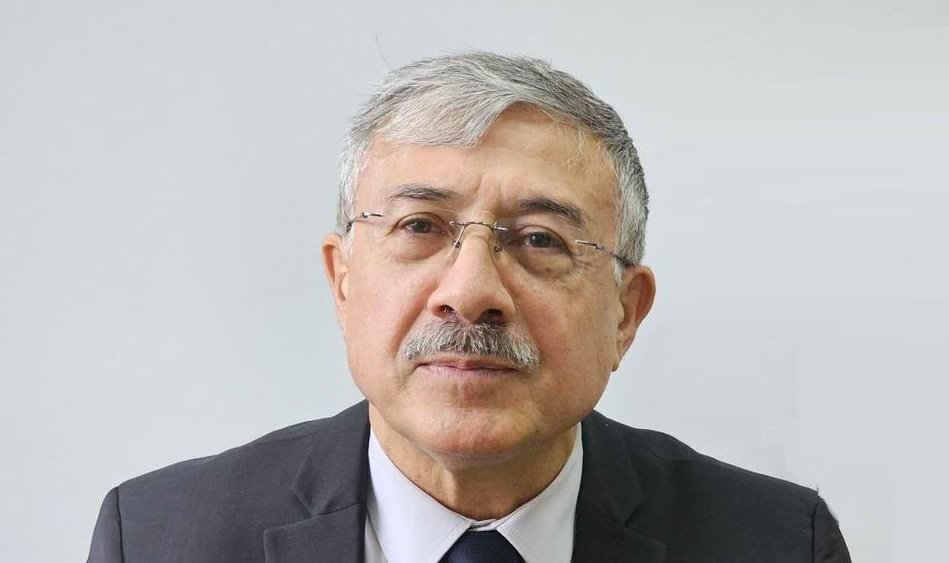
Mammadov, a former head of UNDP environmental projects in Azerbaijan and former head of the Azerbaijani president’s communications office, made the remarks during an interview with the Daily Europe Online YouTube channel.
He argued that Russia’s pressure on Azerbaijan, its war against Ukraine and its tensions with other neighboring states all stem from the same underlying problem: a prolonged post-imperial crisis.
“Russia is an empire in decline,” Mammadov said. “It feels that it is losing its former greatness, but neither the Russian elite nor a significant part of the population is psychologically prepared to accept this.”
According to Mammadov, Russian President Vladimir Putin exercised greater control over decision-making when the full-scale invasion of Ukraine began in 2022. Ukraine’s resistance, the prolonged war and greater coordination among Western countries have since increased the influence of competing groups within the Russian leadership.
He said recent warnings by Russian politicians about a potential “Ukrainian” or “Armenian scenario” for Azerbaijan may reflect competing views in Moscow rather than a single, coordinated position.
Mammadov suggested that after the crash of an Azerbaijan Airlines aircraft near Aktau, figures in Putin’s inner circle may have advised the Kremlin to disregard Baku’s position and continue dealing with Azerbaijan under the old model.
“Those recommendations proved wrong,” he said. “It became clear that Azerbaijan had the ability to defend its interests and that its response could harm Russian interests. Russia therefore backed down.”
The analyst said Russia’s political establishment is now divided between supporters of the old imperial approach and what he described as “realists.” The latter believe Moscow must recognize the new regional order created after the 2020 war and build relations with Azerbaijan on an equal basis.
A New Tone in Moscow
Mammadov pointed to Azerbaijani Foreign Minister Jeyhun Bayramov’s recent visit to Moscow and his joint news conference with Russian Foreign Minister Sergey Lavrov as evidence of the changing relationship.
He said the meeting was qualitatively different from earlier contacts between the two countries’ foreign ministers.
“Jeyhun Bayramov conducted himself as the foreign minister of an independent state,” Mammadov said. “In Moscow, and in the presence of the Russian foreign minister, he stated directly that a new situation had emerged in the South Caucasus after the 44-day war and that everyone must take it into account.”
According to Mammadov, the visit drew a line under the previous model of bilateral relations and reinforced Azerbaijan’s sovereignty in its dealings with Russia.
He said Moscow has yet to decide fully whether it is prepared to accept Azerbaijan as an equal and independent regional actor. That uncertainty, he argued, explains the contrast between official statements about constructive cooperation and periodic threats from Russian lawmakers and media figures.
For Baku, however, the central message is already clear: the relationship can continue, but only on the basis of mutual interests and respect for Azerbaijan’s sovereignty.
AZE.US