AZE.US
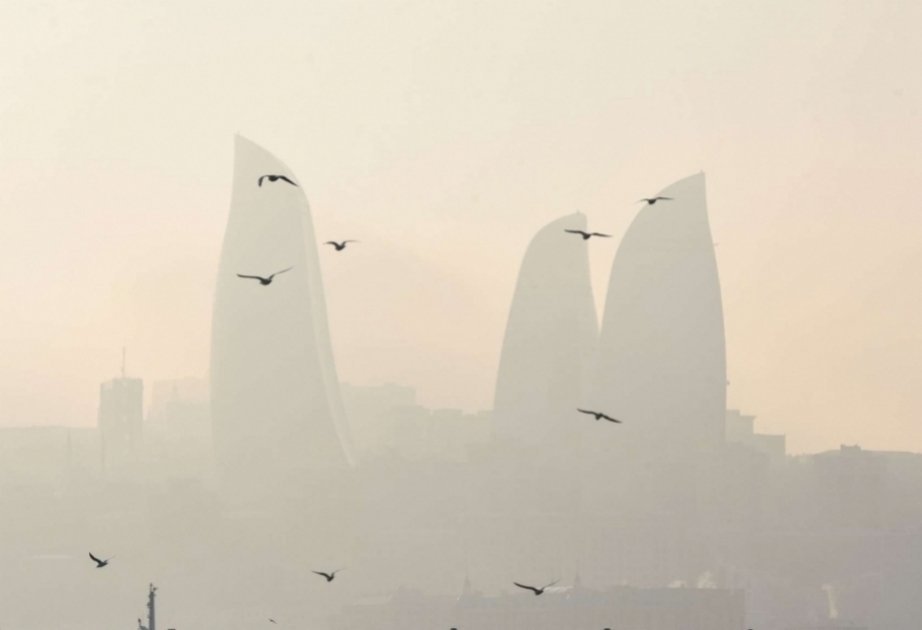
Residents of Baku and the Absheron Peninsula are increasingly complaining about dusty air, which can cover the capital in a thick haze during windy weather.
An Azerbaijani environmental expert says stone quarries using outdated cutting equipment may be contributing to the problem.
As AZE.US reports, citing Baku TV, ecologist Sadiq Hasanov said old saws used to cut stone generate large amounts of fine dust that can spread across surrounding areas.
According to Hasanov, stone quarries operate in the Garadagh district, Guzdek, Gizildash, Zira, Turkan and several other parts of Baku and Absheron.
Many of the facilities have been producing building blocks for years using outdated stone-cutting machinery. During the cutting process, the saws create relatively wide gaps in the stone, releasing significant quantities of fine particles into the air.
Construction sites are another major source of dust.
In central Baku, construction areas are generally fenced off and work is conducted under more controlled conditions. Environmental regulations are not always followed as strictly at sites outside the city center, however.
Sand, cement and other construction materials are often stored in the open. During windy weather, the particles can be carried into surrounding neighborhoods and form a dense layer of dust.
Azerbaijan’s Ministry of Ecology and Natural Resources said stone quarries and construction sites were not the only sources of the recent air pollution.
Dust can also rise from exposed soil and other open surfaces during strong winds. Transboundary dust clouds carried into Azerbaijan by air currents can also increase particle concentrations in the atmosphere.
The ministry said its relevant agencies regularly conduct inspections and monitoring at stone quarries and construction sites to ensure compliance with environmental requirements.
Under Azerbaijan’s Code of Administrative Offenses, violations of air protection legislation can result in fines ranging from 300 to 700 manats for individuals, 2,500 to 4,000 manats for officials and 7,500 to 10,000 manats for companies.
Officials who violate environmental requirements during the construction or reconstruction of facilities may be fined between 2,000 and 2,500 manats. Companies can face fines of between 7,500 and 10,000 manats.
Medical specialists warn that dust particles primarily affect the respiratory system.
They can irritate the nose and throat, causing coughing, sneezing, shortness of breath and a burning sensation in the airways. The smallest particles can penetrate deep into the lungs, enter the bloodstream and potentially affect other organs.
Environmental experts say countries facing similar problems often create protective forest belts and expand green areas around industrial and construction zones.
AZE.US