By AZE.US
Azerbaijani companies have purchased goods from Armenian suppliers for the first time, marking the beginning of direct commercial trade between the two countries.
However, the products involved, their value and the size of the shipment have not yet been disclosed.
Armenian Prime Minister Nikol Pashinyan confirmed that the first export transaction from Armenia to Azerbaijan had taken place. He said the companies involved should announce the details themselves.
Armenian Foreign Minister Ararat Mirzoyan had previously signaled that a deal was imminent, saying Azerbaijani companies were preparing to purchase products from Armenian businesses.
Reports suggesting that Armenia has already sold meat, alcoholic or mineral beverages and confectionery products to Azerbaijan have not been officially confirmed. Those categories were mentioned by experts only as possible areas for future trade.
Analysts say Armenia could potentially supply Azerbaijan with beverages, confectionery products and raw materials used in their production, as well as aluminum, copper, molybdenum, industrial semi-finished goods and certain technology-related products. Meat products could also be considered at a later stage.
Who Will Inspect Armenian Products?
News of the first transaction prompted questions on Azerbaijani social media about the quality and safety of goods imported from Armenia.
Rovshan Muradov, a member of the Azerbaijani Parliament’s Committee on Economic Policy, Industry and Entrepreneurship, told Pravda.az that Armenian products would not receive exemptions or preferential treatment when entering the country.
According to Muradov, the political relationship with the country of origin does not determine whether a product can enter the Azerbaijani market. Goods from Armenia must comply with the same sanitary, phytosanitary, veterinary, technical and consumer-safety requirements applied to imports from every other country.
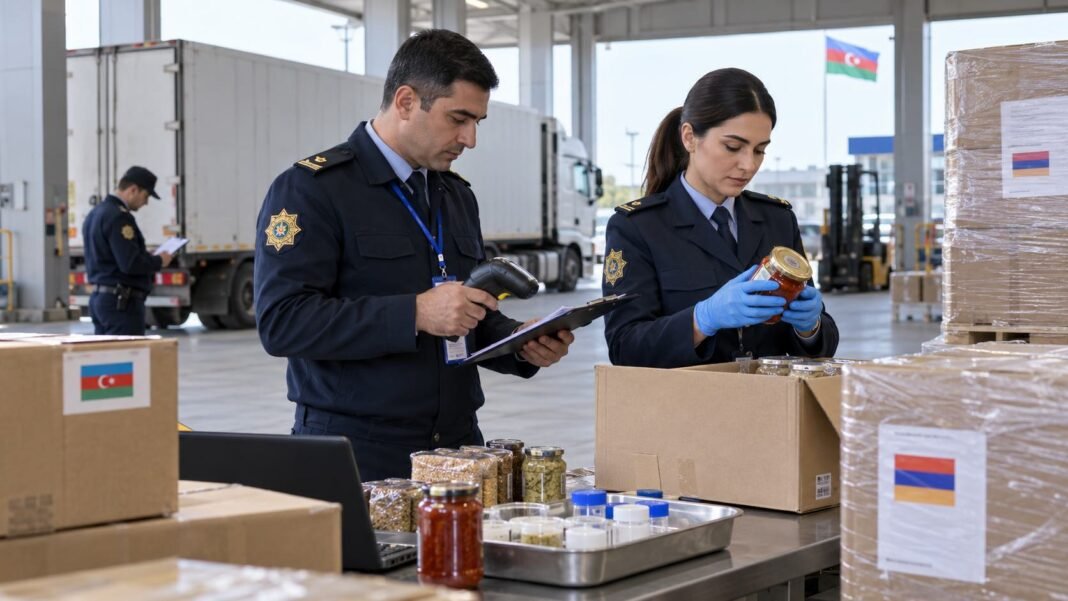
The Food Safety Agency of Azerbaijan, the State Customs Committee and other authorized agencies operate a multilayered inspection system. It includes checking documents and certificates of origin, assessing risks, conducting physical inspections and, when necessary, testing products at accredited laboratories.
If a shipment contains hazardous substances, excessive chemical levels, microbiological contamination or other violations, it will not be admitted to the domestic market. Noncompliant products may be returned to the supplier, disposed of or destroyed in accordance with Azerbaijani law.
Oversight does not end at the border. The transportation, storage and retail sale of imported goods are also subject to monitoring. Producers, importers and sellers bear legal responsibility for the accuracy of the information they provide and the safety of the products they place on the market.
Consumers are entitled to information about a product’s country of origin, manufacturer, ingredients, expiration date and safety documentation. Whether to purchase Armenian-made goods will remain a voluntary consumer choice.
Trade Had Largely Moved in One Direction
Before the first Armenian export transaction, commercial shipments had largely moved from Azerbaijan to Armenia.
From January through July 2026, Azerbaijan exported approximately $17.37 million worth of goods to Armenia. The shipments included more than 14,000 metric tons of diesel fuel and about 5,000 metric tons of AI-92 and AI-95 gasoline.
Azerbaijan has also provided transit routes for grain and other goods shipped to Armenia from third countries.
Expanding bilateral trade was among the issues discussed during a recent meeting between Azerbaijani President Ilham Aliyev and Pashinyan in Bishkek. Their agenda included petroleum supplies, cargo transit, transportation links and broader economic cooperation.
The immediate importance of the first Armenian sale lies less in its still-undisclosed value than in the opening of a direct commercial channel between the two countries. Its actual economic impact can be assessed only after the companies reveal the products, price and terms of the transaction.
AZE.US