By AZE.US
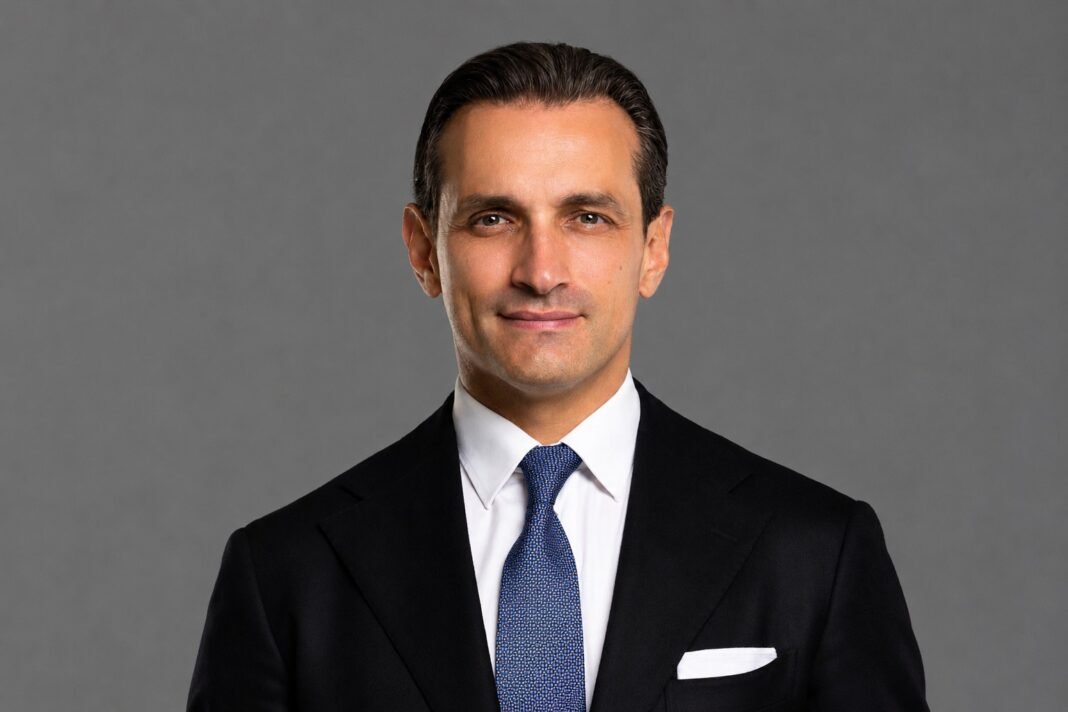
Azerbaijan should begin preparing now for a future in which oil revenues play a smaller role in the economy, rather than waiting for production or state income to fall sharply, economist and business consultant Farhad Parvizi has said.
Speaking on Indi Podcast, Parvizi argued that economic reforms should be designed around where Azerbaijan wants to be by 2050, not only around immediate budget targets or the next several years.
He said the country’s current economic model is heavily focused on preserving political and social stability. While that approach has helped Azerbaijan navigate difficult periods, it has also limited competition, productivity and private-sector initiative.
“Economic growth requires risk, while stability is based on reducing risk,” Parvizi said.
Lack of Trust Is Holding Back Growth
Parvizi identified the lack of trust between citizens, businesses and government institutions as one of the biggest obstacles to economic development.
He said some citizens attempt to avoid taxes, while state agencies respond by tightening controls, complicating procedures and placing additional pressure on businesses. The result, in his view, is a cycle in which neither side trusts the other.
Parvizi argued that the government, as the more powerful party, must take the first step by creating predictable rules, improving public services and ensuring equal treatment for entrepreneurs.
“Trust cannot be demanded. It has to be earned,” he said.
He also pointed to public concerns about healthcare, education, taxation and the court system. Citizens must see that these institutions deliver practical results before the government can expect greater public confidence, he added.
More Freedom for Small Businesses
Parvizi proposed giving small and medium-sized businesses substantially more freedom while maintaining state oversight of large companies in strategic sectors.
He described the model as a “managed free market,” under which smaller entrepreneurs would be able to expand, invest and create jobs without excessive inspections or administrative restrictions.
Parvizi also called for a major simplification of Azerbaijan’s tax system. He suggested shifting more of the tax burden from income and reinvested profits toward consumption, with higher rates applied to luxury purchases.
At the same time, he acknowledged that dramatically reducing all taxes would be unrealistic because Azerbaijan must finance the reconstruction of Karabakh, maintain its defense capabilities and meet social obligations.
His central argument was that the number of taxes should be reduced and the remaining rules made simpler, clearer and more predictable.
The Question of 2032
Parvizi raised concerns about the limited planning horizon for Azerbaijan’s oil industry, saying there was insufficient clarity about the period after 2032.
His comments should not be interpreted as an official forecast that Azerbaijan’s oil reserves will be exhausted that year. The production-sharing agreement covering the Azeri-Chirag-Gunashli oilfields has been extended through 2049.
The issue, therefore, is not a fixed end date for production but the risk of declining output and lower oil revenues over time.
Parvizi said accumulated state reserves give Azerbaijan time to reform, but they do not eliminate the need to diversify the economy.
“The best time to plant a tree was 20 years ago. The next best time is today. The same applies to economic reforms,” he said.
Azerbaijan Needs a 2050 Strategy
Parvizi criticized what he described as the short-term thinking of parts of the state bureaucracy. Officials, he said, are often focused on meeting annual targets without explaining what their sectors should look like in 20 or 25 years.
He proposed asking ministers and senior officials to imagine that they were already working in 2050 and identify the challenges their institutions would be expected to address.
Artificial intelligence could also help modernize public administration by analyzing public complaints, identifying recurring problems and reducing unnecessary bureaucracy, he said.
Parvizi additionally called for schools to teach artificial intelligence, financial literacy and sales skills, while universities should place greater emphasis on practical education.
His broader warning is that oil wealth provides Azerbaijan with an opportunity to build a more productive and diversified economy, but that window will not remain open indefinitely.
If the country wants to preserve its military strength, social stability and economic independence as oil revenues decline, Parvizi said, reforms must begin before the pressure becomes unavoidable.
AZE.US