AZE.US
A Ukrainian drone strike on an Ozon logistics center in Russia’s Samara region signals that Kyiv’s campaign against Russian e-commerce infrastructure is expanding beyond Wildberries.
Moscow, meanwhile, is increasingly targeting Ukraine’s ports and maritime exports. However, there is no evidence that any specific Russian strike was launched in direct retaliation for the Ozon attack: Russia’s campaign against Ukrainian ports and commercial vessels began earlier.
What Happened at Ozon
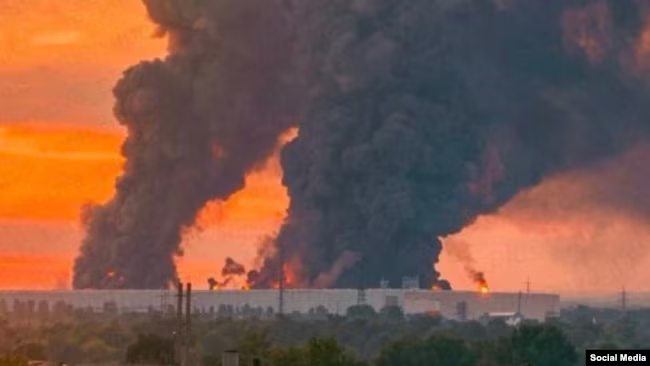
Drones struck Ozon’s logistics center in Chapayevsk overnight on Aug. 21–22, causing a major fire at the facility.
Ozon said more than 500 employees were evacuated within minutes. Several people were injured, although the company did not disclose an exact number, RBC reported.
Operations at the center have been suspended indefinitely. Incoming deliveries were halted, products stored at the warehouse were temporarily removed from the marketplace, and affected customer orders will be canceled and refunded. Ozon is redirecting shipments through other facilities.
The Chapayevsk complex covers approximately 135,000 square meters and is one of the largest warehouses in Russia’s Volga region. Its construction reportedly cost about 5 billion rubles, or $60.5 million.
Ukrainian drone manufacturer Fire Point said FP-1 drones struck both the Ozon center and the Novokuibyshevsk oil refinery. Russian officials confirmed damage to an industrial facility but did not initially identify it.
It was the first confirmed strike on Ozon, Russia’s second-largest online marketplace.
A Wider Campaign Against Russian E-Commerce
Since July, Ukrainian drones have repeatedly targeted warehouses operated by Wildberries, Russia’s largest online retailer. Facilities in the Moscow, Vladimir, Tula and Voronezh regions, as well as Bashkortostan and other parts of Russia, have been damaged.
Estimates cited by Russian business media suggest that Wildberries may have lost between 17% and 22% of its warehouse capacity. The figures have not been independently verified, but the company and regional authorities have confirmed that several major distribution centers were damaged or forced to suspend operations.
Russian President Vladimir Putin on Aug. 19 instructed the government to prepare support for rebuilding damaged logistics infrastructure, Reuters reported.
The subsequent attack on Ozon suggests that Ukraine is targeting the broader e-commerce logistics sector rather than a single company.
Kyiv argues that Russian marketplaces are used to purchase and distribute communications equipment, drone components, tactical gear and other dual-use products. The attacks, however, also affect civilian employees, consumers and hundreds of thousands of independent merchants whose inventory is stored at the facilities.
How Russia Has Responded
After the Ozon strike, Putin accused Ukraine of opening “Pandora’s box” by attacking Russian economic targets.
“Expect a response targeting your most sensitive economic sectors,” Putin said, according to Reuters.
The clearest target of that pressure is Ukraine’s agricultural export system, including Black Sea ports, grain terminals, warehouses and commercial shipping.
Still, Moscow has not publicly identified any particular attack as direct retaliation for the Ozon strike. Russia describes its operations as part of a broader campaign that has been underway for weeks.
On Aug. 2, Russian drones twice attacked port infrastructure in Ukraine’s Mykolaiv region. Ukrainian authorities said two civilian vessels were damaged and no casualties were reported, according to Ukrainska Pravda.
Russia’s Defense Ministry presented a different account. It claimed four cargo ships had been struck - two allegedly unloading military supplies in Mykolaiv and two carrying military cargo in the Black Sea. The nature of the cargo has not been independently verified.
On Aug. 6, Russian drones struck the Liberian-flagged cargo ship EMIL near Odesa. Its crew of 11 was evacuated, with no injuries reported.
Earlier Russian strikes damaged other commercial vessels, including the Golden Rose, whose crew was evacuated after a fire broke out in the stern. In June, attacks on two ships in the Black Sea killed one crew member and injured several others.
Russian attacks have already had a measurable effect on Ukrainian trade. Ukraine’s Agriculture Ministry said grain shipments fell 76% year over year during the first two weeks of August, according to Reuters.
Ukraine Is Also Attacking Russian Ports and Ships
The maritime escalation is not one-sided. Ukraine has intensified strikes on Russian ports, oil facilities, grain terminals and vessels serving Russian exports.
A major Aug. 12 attack temporarily halted operations at grain terminals in Novorossiysk. Kyiv also said four Russian warships were damaged, including two frigates capable of launching Kalibr cruise missiles.
On Aug. 17 and 18, drones attacked at least five grain vessels heading to or departing from the Russian ports of Novorossiysk and Tuapse.
The ships were sailing under Russian, Liberian, Maltese, Marshall Islands and San Marino flags. Some had already loaded Russian grain, while others were approaching the ports to collect cargo.
The Liberian-flagged Anna S suffered the most serious damage. A fire broke out after multiple reported strikes, forcing the crew to abandon the vessel. Other ships were damaged but managed to continue their journeys.
The attacks marked the first confirmed series of strikes against grain carriers serving Russian Black Sea ports, according to maritime reports citing Bloomberg.
What Comes Next
The most likely scenario is a further expansion of reciprocal attacks on logistics infrastructure.
After Wildberries and Ozon, large Russian distribution centers are expected to disperse inventory, strengthen fire protection and redirect deliveries through smaller regional warehouses. Those measures will increase operating costs, delay deliveries and transfer part of the financial burden to merchants and consumers.
Russia is likely to intensify pressure on Ukraine’s agricultural exports. Ports and the energy and transportation infrastructure supporting them remain among the most vulnerable parts of the Ukrainian economy. This is an assessment based on Putin’s public warning and the established pattern of Russian strikes, not an officially announced list of future targets.
Commercial shipping represents the most dangerous point of escalation. Every additional strike on a vessel sailing under a third country’s flag raises war-risk insurance costs and makes shipowners more reluctant to enter Russian or Ukrainian ports.
Turkey has already urged both sides to protect civilian navigation. Turkish authorities have also reportedly delayed permits for some vessels entering the Black Sea amid growing security concerns.
A limited agreement protecting civilian ships and grain infrastructure could slow the escalation. For now, however, both sides are moving in the opposite direction.
The emerging phase of the war is not simply about warehouses or port terminals. The distinction between military logistics and the civilian economy is steadily eroding. Marketplaces are described as military supply networks, cargo ships as carriers of military goods and grain ports as sources of war revenue.
The consequences are extending beyond Russia and Ukraine to international shipping, global food markets and civilian crews navigating the Black Sea.
AZE.US