AZE.US
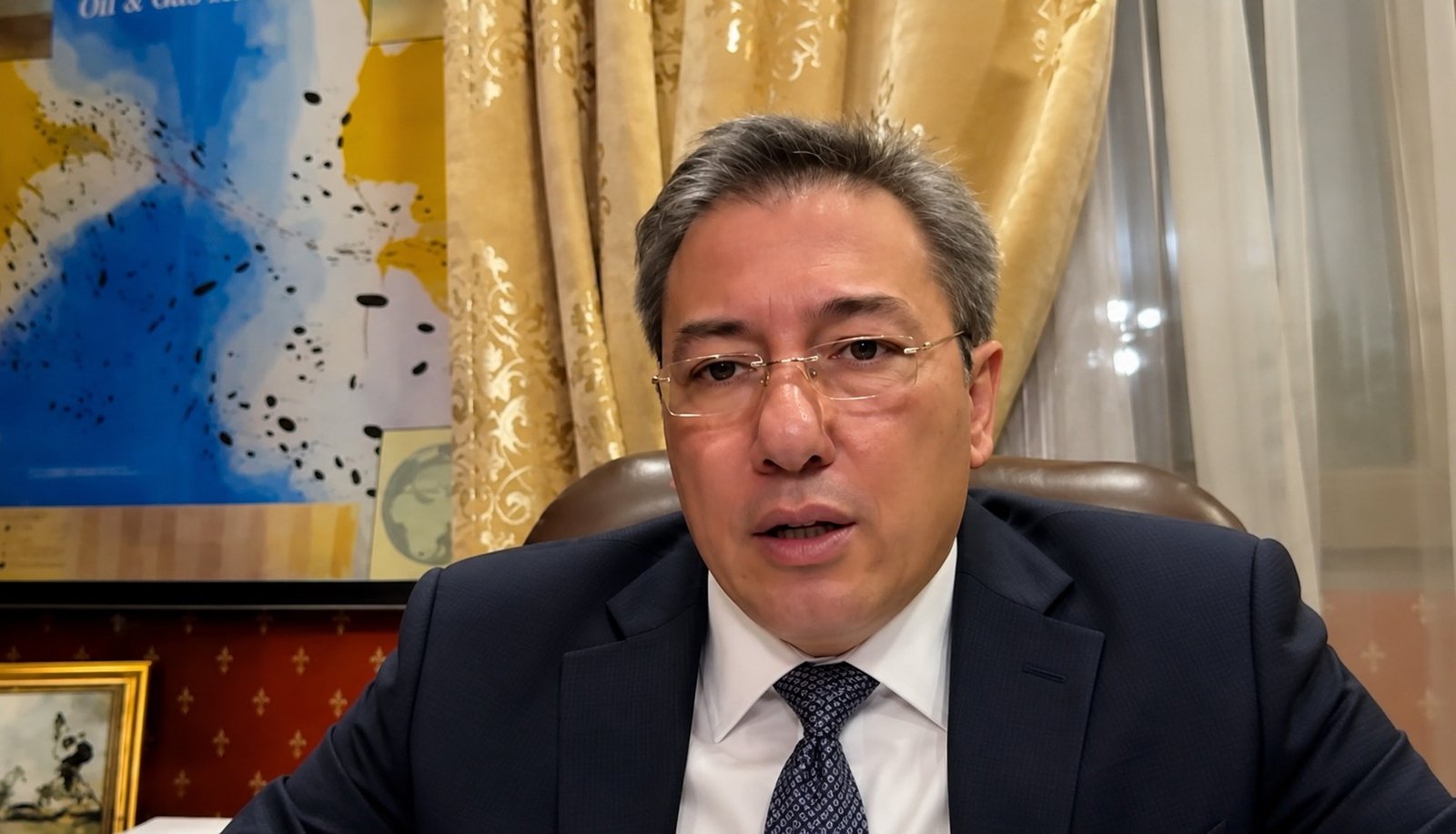
Armenia may be speaking more openly about a European path, but its real dependence on Russia remains much deeper than the political rhetoric suggests, Azerbaijani political analyst Ilgar Velizade said.
Velizade, head of the South Caucasus Political Scientists Club, made the remarks during an interview with the YouTube channel Daily Europe Online.
He said tensions around Armenia have grown in recent weeks as the country moves through a sharper domestic political phase. Russia, he said, has reacted more negatively than any other outside player.
According to Velizade, this is linked to statements from Prime Minister Nikol Pashinyan and members of his team, who have increasingly suggested that Moscow stands behind parts of the Armenian opposition. In Yerevan’s current political language, he said, Russia is portrayed as trying to pull Armenia back to its pre-2018 political condition.
But Velizade argued that Moscow’s hard words have not yet been matched by truly hard economic action.
Russia has imposed restrictions on some Armenian goods, he said, but those measures do not strike at the foundation of Armenia’s economy. The more serious levers remain gas, grain, fertilizers, fuel and other critical supplies.
Those goods, he noted, continue to reach Armenia, including through Azerbaijan.
That, in Velizade’s view, shows the gap between rhetoric and real policy.
“On the one hand, they are effectively continuing to support them, while on the other hand, in rhetoric, they say this is unacceptable,” Velizade said.
He argued that if Russia had wanted to put serious pressure on Armenia before the elections, it could have raised gas prices months earlier or moved against more sensitive supply lines. That did not happen.
Velizade said Moscow may not be ready for such steps, or may still have other interests that prevent it from using its strongest tools.
He also pointed to Pashinyan’s own recent language toward Moscow. Despite months of sharper statements, the Armenian prime minister recently described Russia as a reliable partner, which Velizade called a notable gesture.
In his assessment, both Moscow and Yerevan understand one basic fact: Armenia cannot quickly replace Russia with the European Union. That cannot be done in a few months, or even in a year.
Velizade said Russia may be calculating that after the elections, Armenia can still be pushed toward more practical steps that would allow Moscow to preserve its remaining influence.
He also compared Armenia’s position with Ukraine’s earlier experience. Ukraine, he said, was placed under hard pressure from both sides when it moved toward an association agreement with the European Union. The EU demanded that Kyiv sign the agreement, while Moscow demanded that it not do so.
Armenia, Velizade said, is being treated differently.
Europe, in his view, is softer toward Yerevan than it was toward Kyiv. He linked that to Armenia’s special role in European strategy, the influence of the Armenian diaspora and political circles that have weight inside European institutions.
At the same time, Velizade said it is too early to speak of Armenia’s real integration into the EU. Armenia remains a member of the Eurasian Economic Union and is still formally tied to the CSTO. Yerevan has not declared readiness to leave those structures.
Without such decisions, he said, European integration remains more of a political slogan than a practical route.
Velizade argued that the EU may need Armenia more as a political showcase: a small country presented as choosing a European path under difficult geopolitical conditions.
In practical terms, however, Armenia still remains strongly dependent on Russia.
The central point of Velizade’s remarks is that Armenia’s foreign policy debate is not only about direction, but also about image. Pashinyan speaks about Europe. Moscow responds with harsh language. The West offers soft support.
But gas, grain, fertilizers and fuel still come from Russia.
That dependency, more than public statements, continues to define the real limits of Armenia’s room for maneuver.
AZE.US