AZE.US
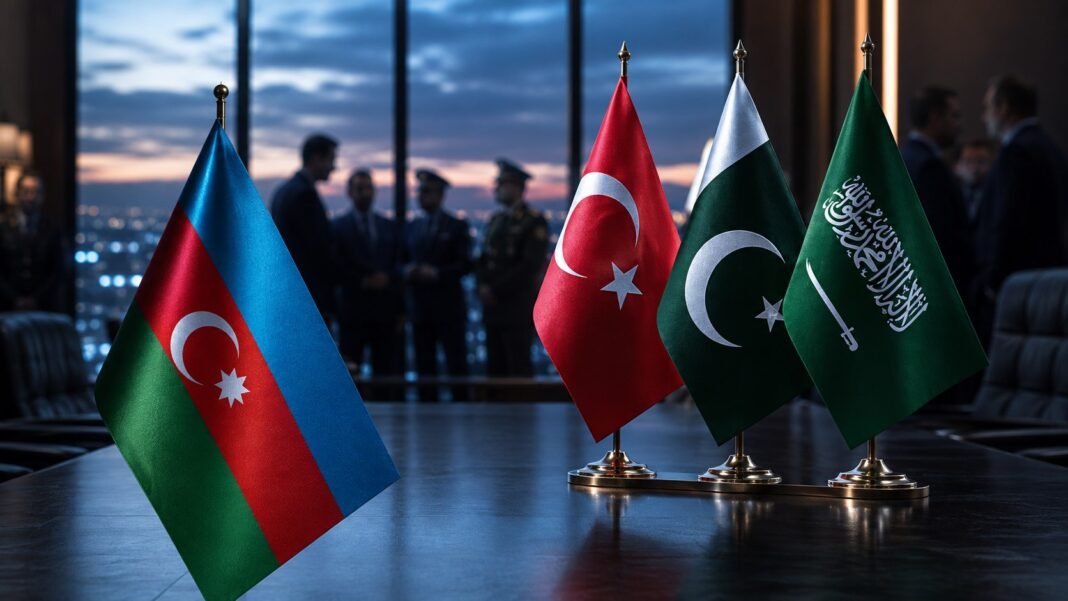
Azerbaijan is already indirectly connected to the emerging defense alliance between Turkey, Pakistan and Saudi Arabia through its close strategic relations with the participating countries, according to political analyst Rovshan Ibrahimov.
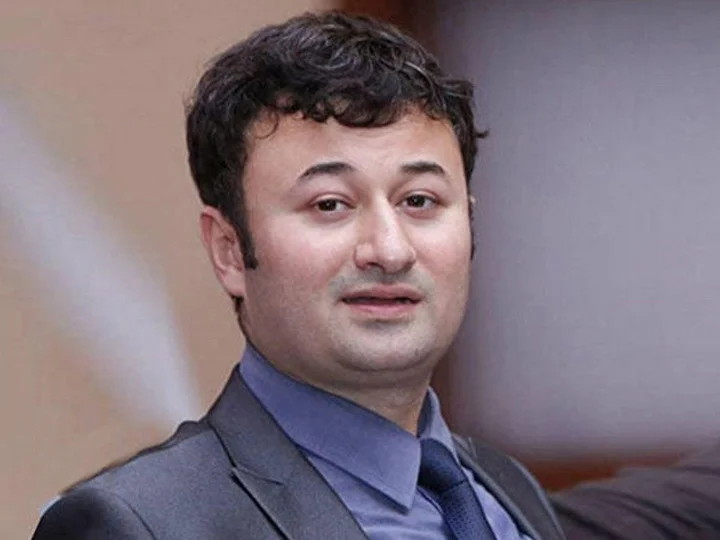
Ibrahimov, a professor at South Korea’s Hankuk University of Foreign Studies, described the trilateral pact as a major development that could reshape the Middle East’s security architecture.
He made the remarks in an interview with the YouTube channel “Modern Conversation With Rasim Babayev.”
According to the professor, one of the alliance’s most significant features is that it was formed without the direct involvement of a global power.
“All three countries currently have relatively positive relations with the United States, but that does not mean Washington was the main force behind the alliance,” Ibrahimov said. “The participating countries are acting independently.”
An Alliance Built for Deterrence
Ibrahimov characterized the new grouping primarily as a collective deterrence mechanism rather than an alliance preparing for offensive military action.
Under the emerging arrangement, a threat to the territorial integrity of one participant would require the other members to provide assistance. Ibrahimov said the principle corresponds with the right to collective self-defense under Article 51 of the United Nations Charter.
“This is a deterrence pact rather than an instrument of action,” he said. “Any party considering the use of force against one member would have to take the other two actors into account.”
Each country contributes different capabilities. Saudi Arabia has substantial financial resources, while Pakistan possesses a large military, a developed defense industry and nuclear weapons. Turkey operates NATO’s second-largest army and has an increasingly advanced domestic defense sector.
Pakistan’s participation also brings the country more deeply into the Middle East’s evolving security structure, Ibrahimov noted.
Azerbaijan’s Indirect Role
The alliance is favorable for Azerbaijan because it includes Turkey and Pakistan, Baku’s closest strategic and defense partners, Ibrahimov said.
Saudi Arabia has also consistently supported Azerbaijan’s territorial integrity. Riyadh refrained from establishing diplomatic relations with Armenia for decades, citing the former occupation of Azerbaijani territories.
“Azerbaijan has relevant agreements with both Turkey and Pakistan,” Ibrahimov said. “We can therefore say that Azerbaijan already plays a role in this pact - not directly, but indirectly.”
The possibility of Azerbaijan formally joining the alliance, however, remains uncertain.
Ibrahimov said Baku has traditionally avoided identifying itself exclusively with a single geopolitical region. Azerbaijan simultaneously positions itself as a European, Asian, Middle Eastern and post-Soviet country, allowing it to maintain a more flexible foreign policy.
Any decision to join a formal military arrangement would therefore depend on whether membership serves Azerbaijan’s national interests without undermining its existing diplomatic balance, he added.
Is the Pact Aimed at Iran?
Tehran has said it does not regard the trilateral agreement as directed against Iran. Ibrahimov argued, however, that the Iranian factor inevitably forms part of the participating countries’ strategic calculations.
Saudi Arabia has faced security threats from Yemen’s Iran-aligned Houthis, while Turkey and Pakistan also have an interest in preventing further regional instability.
“What else could Iranian officials have said?” Ibrahimov asked. “Directly declaring that they view the alliance as a threat would only create additional problems for Iran.”
He suggested that Tehran could theoretically seek closer cooperation with the grouping - or even explore participation - to mitigate the alliance’s potential consequences. Whether its current members would accept Iran is another question, he added.
Ibrahimov described the pact as part of a broader shift in which regional powers are increasingly building their own security structures without relying entirely on the United States, Russia or other major powers.
Trump Seeks Aliyev’s Assessment of Iran
The interview also addressed a reported 40-minute telephone conversation between Azerbaijani President Ilham Aliyev and US President Donald Trump.
Trump reportedly asked Aliyev whether Iran could be forced to capitulate if the existing pressure continued. The Azerbaijani president was said to have described such a scenario as unrealistic, drawing a parallel with the 1980–1988 Iran-Iraq War.
Despite years of warfare and predictions that Tehran could collapse, the external threat ultimately consolidated Iranian society, Aliyev reportedly told Trump.
Ibrahimov said the question demonstrated Azerbaijan’s growing international standing and Aliyev’s role as a source of regional expertise.
“It means Aliyev is viewed not simply as the leader of a country neighboring Iran, but as a strategist with his own vision and understanding of regional processes,” Ibrahimov said.
The professor argued that further external pressure would not necessarily fragment Iranian society. Even groups dissatisfied with the authorities could set their domestic disputes aside when confronted by a foreign threat, he said.
At the same time, Ibrahimov said Baku and Tehran have shown that they can maintain stable relations despite periodic tensions and conflicts involving other regional powers.
“In principle, Azerbaijan and Iran can have stable relations without looking to third forces,” he concluded.
AZE.US