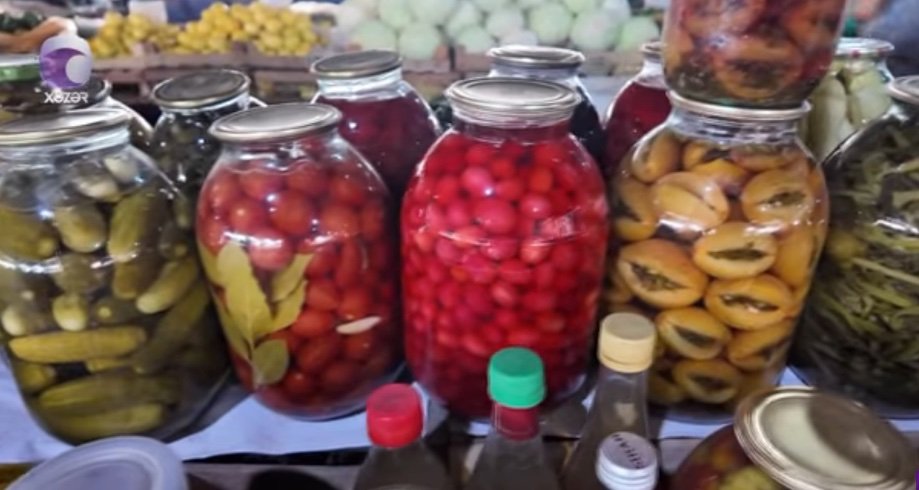
Azerbaijan plans to establish separate requirements for food prepared at home or by family farms and then sold through markets, stores, social media, cafes and restaurants.
No final product list, fee schedule or certification procedure has been approved, however.
The planned mechanism is included in Azerbaijan’s State Food Security Program for 2027–2032. The Azerbaijan Food Safety Agency, known by its Azerbaijani abbreviation AQTA, will develop the system with the Agriculture Ministry, Interior Ministry, local executive authorities and other agencies.
Implementation is scheduled for 2028–2032. Authorities must first prepare proposals and establish the legal framework before applying the new system. Claims that certificates have already been made mandatory for all homemade food are therefore premature.
Products That Could Face New Requirements
Officials plan to define which foods may be produced at home and legally placed on the market. Products with higher microbiological risks are likely to receive particular attention, potentially including vegetable, mushroom and meat preserves; pickles and marinades; milk and cheese; meat and homemade sausages; eggs and egg products; cream-filled pastries; ready meals sold through social media; and homemade jams, sauces and juices.
The official list has not been published. Requirements may vary by risk level, with simpler procedures possible for jams and dried fruit than for meat, dairy, cream-based and canned products.
Potential Obligations for Sellers
AQTA told Xəzər Xəbər that the rules would cover preparation as well as storage, transport and delivery to consumers.
The eventual system could require producer registration, information about the origin of ingredients, sanitation standards, packaging and labeling rules, temperature controls, shelf-life information and laboratory testing for some products.
Authorities have not yet determined whether each batch will need a separate certificate, whether households must register, how often laboratory tests would be required, how much inspections would cost, whether small family producers would receive simplified rules, how long the transition period would last or what penalties would apply.
Sellers Warn of Higher Prices
Regional market vendors say homemade pickles, jams, compotes and similar products are an important source of income for many families. Their customers include local residents, restaurants, cafes and wedding organizers.
Sellers fear paid certification, laboratory analysis and new packaging standards would raise production costs and retail prices. One vendor said that if an inspection cost 10 manats, that amount would have to be added to the price. The figure was only an example; no official fee has been set.
Food-Safety Concerns
Authorities say the main objective is consumer safety. Homemade goods sold in markets or online may lack production dates, shelf-life information, ingredient lists and producer details.
AQTA warns that improperly canned food can cause botulism, a potentially fatal illness. The risk is especially serious in sealed jars containing low-acid foods such as green beans, mushrooms and beets, and contamination cannot always be detected from appearance alone.
The agency advises consumers not to eat preserved food if a jar lid is swollen, liquid is foaming, the color or smell has changed or the packaging is damaged. It also recommends thoroughly washing ingredients, sterilizing jars and observing proper temperatures. AQTA’s home-canning guidance is available here.
The proposal is intended to regulate and legalize homemade food sales rather than ban them. Its impact will depend on whether small producers receive affordable, risk-based procedures instead of the same requirements imposed on large manufacturers.
Source: Vesti Baku