By AZE.US
Azerbaijan’s economic growth of roughly 1.2% amounts to stagnation, while a budget surplus offers little cause for celebration when businesses face an acute shortage of money, two prominent economists have warned.
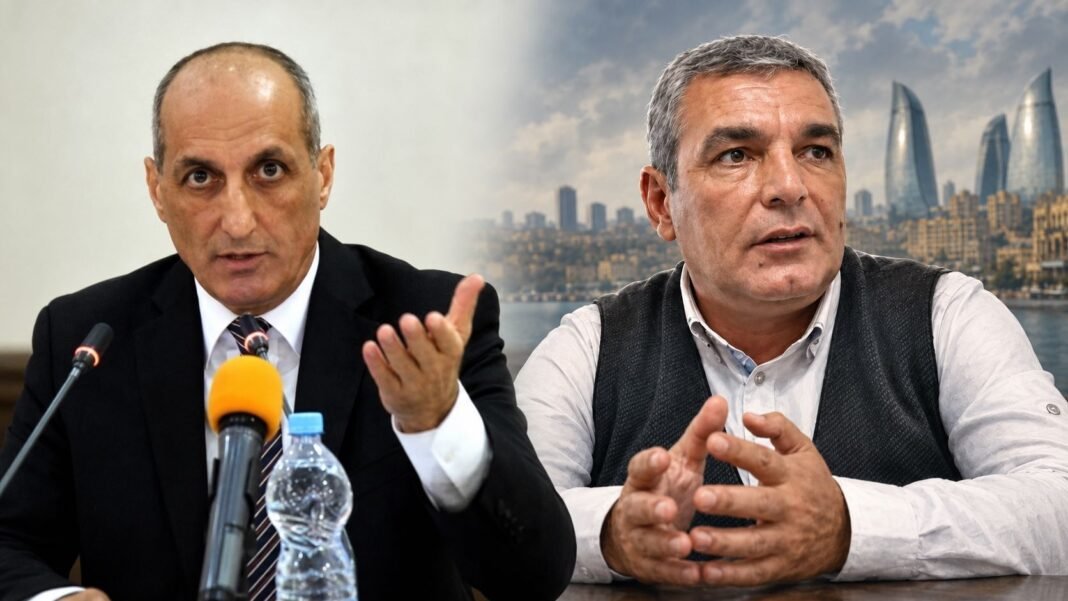
Former Finance Minister Fikret Yusifov and economist Natig Jafarli attributed the slowdown to weak investment, delayed government financing, limited access to affordable credit and excessive state regulation.
Speaking on the Prime Time Azerbaijan YouTube channel, the experts said the country needs to shift its economic policy away from collecting more fines and fees and toward expanding the private sector.
Budget Remains the Main Source of Money
Yusifov said growth of 1.2% was inadequate for a country with Azerbaijan’s natural resources, human capital and strategic location. In his assessment, growth would need to exceed at least 3% to represent meaningful economic expansion.
One of the central problems is the lack of private and foreign investment. Yusifov said the amount of capital entering Azerbaijan was several times smaller than the amount leaving the country.
As a result, the state budget remains the economy’s principal source of financing. But even funds allocated for approved projects are frequently released months behind schedule.
Companies may win government tenders early in the year and assume contractual obligations, yet receive payment only in the fall. To complete projects on time, contractors are forced to borrow money or take out commercial bank loans. Some businesses, Yusifov said, even pay their taxes with borrowed funds.
Jafarli noted that government spending produces a wider economic multiplier. Financing a construction project creates demand for cement, steel, transportation, vehicle repairs, food services and other goods and services.
When state-funded projects are suspended, the consequences extend beyond major contractors to dozens of smaller companies throughout the supply chain.
Reducing public expenditure without first creating alternative sources of growth, therefore, risks further weakening economic activity.
Budget Surplus, but a Cash-Starved Economy
The economists also questioned the government’s focus on maintaining a budget surplus during a period of slowing business activity.
Jafarli said officials report savings amounting to several billion manats while companies struggle to obtain working capital.
He described the situation as a financial “hunger,” arguing that the economy faces a serious shortage of money.
Budget savings should not be treated as an end in themselves, he said. Authorities must distinguish between wasteful expenditure and spending that creates jobs, supports businesses and stimulates domestic demand.
Small Businesses Dominate in Number, Not in Economic Power
According to Yusifov, micro, small and medium-sized businesses account for 99.7% of all registered enterprises in Azerbaijan.
Despite their overwhelming numerical share, these businesses contribute relatively little to GDP, tax revenue and bank lending. Preferential loans available to entrepreneurs amount to only around 0.3% to 0.4% of GDP, he estimated.
Ordinary entrepreneurs face high interest rates, bank commissions, inspections and administrative interference. Much of the available financing remains concentrated among a limited number of large companies.
Yusifov argued that small and medium-sized businesses form the backbone of employment in many developed economies. Without a stronger SME sector, Azerbaijan will struggle to build a broad entrepreneurial class and a sustainable domestic market.
Restrictions Could Push Business Back to Cash
The experts also discussed restrictions on card-to-card transfers, which authorities have introduced to reduce undeclared commercial activity.
In practice, they warned, the restrictions could encourage businesses to return to cash payments.
Some entrepreneurs already discourage customers from paying by card because of banking fees and the cost of withdrawing money from business accounts. Certain cafes and stores reportedly offer discounts to customers who pay in cash.
Jafarli said prohibitions alone would not bring the informal economy into the tax system. Entrepreneurs could simply use several cards or abandon electronic payments altogether.
He proposed providing payment terminals to small businesses free of charge, eliminating or sharply reducing business-card fees and making cashless payments easier to accept.
The tax system, he said, should make declaring revenue more profitable than concealing it.
Jafarli also proposed raising the annual turnover ceiling for simplified taxation to 1 million manats, or about $588,000. Small companies could then pay a single, relatively low tax without facing multiple charges and complex reporting requirements.
A Certificate That Costs More Than the Business
Another problem concerns people who produce homemade jam, pickles, cheese and other foods for sale to stores and restaurants.
Laboratory testing and the required documentation can reportedly cost a small producer between 700 and 800 manats, approximately $412 to $471.
For someone producing only a few dozen or several hundred jars, that expense can make legal sales economically unviable. The producer must either stop operating or move into the informal market, while stores and restaurants pass the additional costs on to customers.
Jafarli said regulators should help small businesses comply with the law rather than focus solely on inspections and penalties. Food safety could be protected through affordable testing, clear producer responsibility and an effective court system for consumers.
Small Farmers Are Being Squeezed Out
The economists said a similar problem was emerging in agriculture, where government support programs increasingly favor large farms with extensive land and hundreds of livestock.
Yusifov argued that assistance should instead help family farms grow gradually. A farmer with 20 sheep should have an opportunity to expand the herd to 50 and eventually 100.
If small farmers cannot compete with agricultural holdings, they may sell their property and move to Baku. Once in the capital, many are likely to enter low-paid service jobs or work as taxi drivers.
Insufficient support for regional businesses therefore contributes both to rural depopulation and to growing pressure on Baku.
Azerbaijan Needs a New Economic Objective
Yusifov and Jafarli said economic policy should focus on enlarging the economy rather than increasing state revenue through additional fines, fees and restrictions.
That would require fair competition, easier access to credit, less administrative interference and reliable protection of property rights in the courts.
Without those reforms, Azerbaijan will remain heavily dependent on public spending, while domestic entrepreneurs and foreign investors continue directing their capital elsewhere.
AZE.US