AZE.US
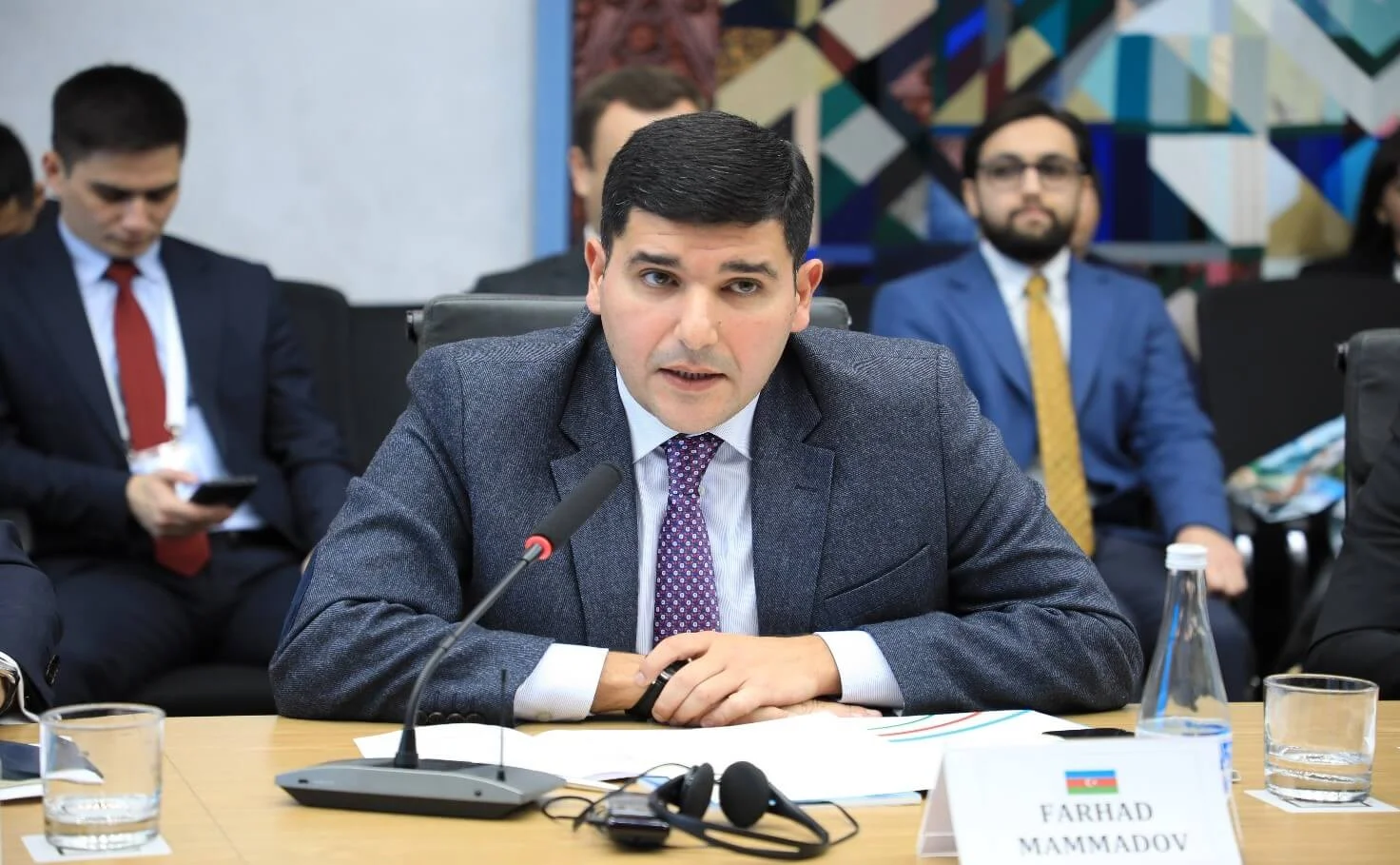
Azerbaijan and Armenia have not resolved every dispute inherited from decades of conflict, but a return to the previous cycle of confrontation is becoming increasingly unlikely, Azerbaijani political analyst Farhad Mammadov has said.
Speaking on the Novosti s Kavkaza YouTube channel, Mammadov said the main achievement of the Washington summit was the establishment of a de facto peace between the two South Caucasus nations.
The initialing of the peace agreement marked the beginning of a qualitatively new relationship, even though the document has yet to be formally signed and many consequences of the conflict remain unresolved.
“The two countries decided to stop the spiral of conflict. It is no longer possible to return to the way things were,” Mammadov said.
According to the analyst, Baku and Yerevan have developed their own model of conflict settlement, distinct from the formulas proposed during nearly three decades of internationally mediated negotiations.
The new approach is based primarily on direct bilateral dialogue. Outside powers may participate in specific initiatives, but only with the consent of both Azerbaijan and Armenia.
Over the past year, contacts between the two countries have become more regular. Their leaders have met at international events and held separate bilateral talks, while the presidential administrations have maintained direct communication to address emerging problems and prevent possible escalation.
Border delimitation and economic issues are also being discussed by commissions headed by the two countries’ deputy prime ministers.
Public mistrust remains a major challenge
Despite the progress at the political level, Mammadov acknowledged that distrust and hostility remain strong in both societies.
He said the public must gradually see the practical benefits of peace, including the absence of military clashes, expanding trade, transit shipments and new economic opportunities.
For Azerbaijan, however, land mines remain one of the most painful legacies of the conflict. Deaths and injuries among civilians and demining personnel repeatedly bring the consequences of the war back into public view.
Mammadov said these continuing casualties prevent the wounds of the conflict from fully healing and complicate efforts to reconcile the two societies.
At the same time, previously sensitive developments are slowly becoming routine. Reports about goods transiting through Azerbaijan to Armenia or Azerbaijani fuel supplies entering the Armenian market are no longer treated as political sensations.
The analyst argued that such developments could gradually demonstrate that peace offers tangible economic and security benefits to both nations.
TRIPP is becoming more than a transit route
Mammadov also discussed the Trump Route for International Peace and Prosperity, known as TRIPP.
He said predictions that Washington would quickly lose interest in a 44-kilometer transportation route across Armenia had not materialized.
During the past year, work continued on the project’s legal framework, investment mechanisms and field studies. American companies have visited both Azerbaijan and Armenia, while TRIPP is increasingly being viewed as part of a broader US strategy connecting the South Caucasus with Central Asia.
“If the United States is investing financial, organizational and human resources, then it needs this project,” Mammadov said.
The two main unresolved issues concern infrastructure and the route’s operating regime. The parties must find a formula that respects Armenian sovereignty while ensuring unhindered movement between mainland Azerbaijan and its Nakhchivan exclave.
Mammadov said the success of that model could only be assessed after the route becomes operational. If construction begins by the end of the year, its practical results may become visible in approximately three years.
He also noted that Azerbaijan has invested heavily in East-West railway and highway infrastructure using its own resources. Any outside powers seeking additional routes through Armenia, he argued, should be prepared to finance their construction rather than simply draw new lines on regional maps.
Baku’s ties with Kyiv are not aimed at Moscow
Commenting on Azerbaijani Foreign Minister Jeyhun Bayramov’s visit to Ukraine, Mammadov rejected suggestions that Baku was joining an anti-Russian geopolitical axis.
He said Azerbaijan’s relationships with Russia and Ukraine should be considered separately.
Baku has supported Ukraine’s territorial integrity since the beginning of the war and provided humanitarian assistance, while continuing pragmatic engagement with Moscow.
Azerbaijani-Ukrainian cooperation covers energy, defense technology, drones, demining and Ukraine’s eventual postwar reconstruction. Azerbaijani companies could also participate in rebuilding projects once conditions permit.
Moscow may be dissatisfied with certain aspects of cooperation between Baku and Kyiv, Mammadov said, but it should view that relationship as pragmatic engagement rather than a direct threat.
“Azerbaijan does not allow its territory to be used against Russia. That is not in our interests,” he said.
The analyst added that a “new normal” had emerged in Azerbaijani-Russian relations following the AZAL plane crash. Under this model, the two countries may openly disagree while continuing mutually beneficial cooperation.
Why Azerbaijan is engaging Turkey and Israel
Mammadov also explained Azerbaijan’s attempts to reduce tensions between Turkey and Israel, saying a military confrontation between two of Baku’s most important partners would represent an extremely dangerous scenario.
Azerbaijan has an allied relationship with Turkey and a strategic, defense-oriented partnership with Israel. It also has significant investments and security interests tied to both countries.
Baku is therefore interested in preventing disagreements over Syria, Gaza and other regional issues from escalating into an armed confrontation.
According to Mammadov, Azerbaijan’s involvement in discussions surrounding possible Israeli recognition of the events of 1915 should also be viewed in this context. He argued that Baku’s initiative was aimed primarily at preventing a further deterioration in Turkish-Israeli relations.
Azerbaijan’s emerging foreign policy strategy consequently extends far beyond normalization with Armenia. Baku is seeking to shape a new order in the South Caucasus, deepen cooperation with Ukraine, maintain pragmatic relations with Russia and prevent a confrontation between Turkey and Israel.
AZE.US