AZE.US
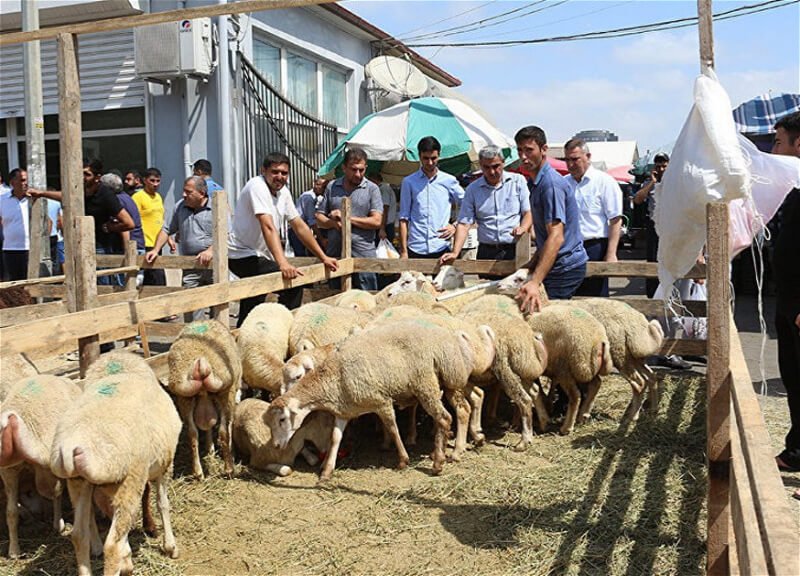
Azerbaijan is marking Eid al-Adha, known locally as Qurban Bayram, with official sales and slaughter points operating across the country and families buying sacrificial animals for distribution among relatives, neighbors and people in need.
Under Islamic tradition, sheep, rams, goats, cattle and camels may be used as sacrificial animals. Religious experts say the central meaning of the holiday is not the slaughter itself, but the intention behind it, charity and support for those who cannot afford a festive table.
The animal must also meet religious and health requirements. Sheep and goats should be at least one year old, cattle at least two years old, and camels at least five years old. The animal should be healthy, physically sound and free of visible defects or signs of illness.
If the animal is large, several people may jointly perform the sacrifice, provided that the shares are divided fairly.
Traditionally, the meat is divided into several parts. One portion is kept by the family, another is given to relatives or neighbors, and a third is distributed to people in need. This social side of the holiday remains one of its main features in Azerbaijan, where many buyers say they purchase animals not only for their own families but also to help low-income households.
This year, Azerbaijan organized 134 official sales and slaughter points nationwide. In Baku, 32 locations were set up, including stationary facilities and two tent-type slaughter points in the Yasamal and Pirallahi districts.
The Food Safety Agency said the locations were disinfected before animals were brought in. Veterinary specialists and laboratories are working at the sites, with animals inspected before slaughter and carcasses and internal organs checked afterward. If any disease is suspected, samples are sent for laboratory testing.
Official slaughter and sales services have also been organized in liberated territories, including Aghdam, Fuzuli, Jabrayil, Lachin, Shusha, Zangilan and Aghdara. In Aghdam, reports from the site said part of the meat was being distributed to families of martyrs, veterans, low-income families and other vulnerable groups.
Prices remain the main concern for many buyers. Sellers and customers at sales points said there had not been a sharp increase, though some noted a rise of about 1 to 2 manats per kilogram compared with last year.
Mutton and lamb were generally quoted at about 19 to 21 manats per kilogram, with some buyers and sellers citing prices of 20 to 22 manats. Live weight prices for small livestock at official points were reported at around 8 to 11 manats per kilogram, while cattle live weight was quoted at about 10.5 manats per kilogram.
Buyers gave different totals depending on the animal’s size and weight. One said he bought an animal for 300 manats, while another said he paid 360 manats for an animal that cost about 340 manats last year. Other buyers mentioned prices of 400 to 450 manats for individual sacrificial animals.
Sellers gave mixed assessments of the market. Some said sales were steady and activity remained strong, while others said buyer numbers were lower than last year. At some locations, sellers said they cut prices by 1 to 2 manats on the final day to sell remaining animals.
Authorities said around 20,000 head of cattle and small livestock had been offered for sale at official locations in the first days of the holiday, with nearly 10,000 slaughtered. Officials also said several attempts at illegal slaughter outside authorized points had been stopped.
Residents are advised to use official slaughter locations where veterinary control and sanitary conditions are provided. Suspected violations can be reported to relevant authorities or to the Food Safety Agency’s 1003 call center.
This year’s Qurban Bayram again shows both sides of the holiday in Azerbaijan: the religious and moral meaning of sacrifice, and the practical questions of price, food safety, sanitation and access for families who depend on holiday charity.
AZE.US