AZE.US
Food prices in Azerbaijan’s regions can vary sharply depending on where people shop, with open-air markets often offering lower prices than supermarkets for vegetables, fruit, dairy products, fish and poultry.
A price comparison in Ujar, Shaki and Ismayilli showed that the difference is not always symbolic. For families buying groceries every week, the gap between a market stall and a supermarket shelf can quickly turn into real money.
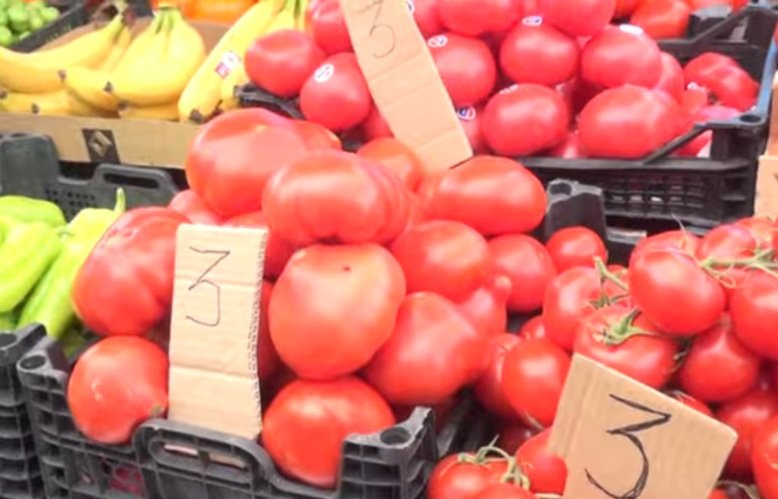
In Ujar, market sellers quoted potatoes at around 80-90 gapiks, onions at 40-50 gapiks, cabbage at 40-50 gapiks, cucumbers at about 1 manat and tomatoes at roughly 2.5-2.8 manats. Dairy products also varied: curd cheese was offered at around 1 manat, cheese at about 5 manats and butter at up to 17 manats.
Supermarket prices were often higher. One shopper said he bought fish at the market for 17 manats per kilogram, while the same product was offered in stores for 22-23 manats. Cheese bought at the market for 8 manats was sold in supermarkets for 9-10 manats. Chicken that cost 9-10 manats at the market could reach 11-12 manats in stores.
The same pattern was seen in Shaki. Eggplants were sold at the market for 3-3.2 manats, while supermarkets offered them for up to 4.5 manats. Tomatoes cost around 2.8-3 manats at the market and 3-3.3 manats in stores. Cucumbers were sold for 1 manat at the market against 1.2 manats in supermarkets.
Potatoes in Shaki ranged from 80 gapiks to 1 manat at the market, compared with 1.2 manats in stores. Beans were offered for 4 manats at the market and 5-6 manats in supermarkets. Strawberries cost around 3 manats at the market, while store prices reached 4-5 manats.
Dairy prices also showed a clear gap. In supermarkets, curd cheese is usually sold in 200-300 gram packages for 2-2.5 manats. At the market, sellers said it could be bought for around 2 manats per kilogram. Yogurt and qatıq are also often cheaper when sold locally and unpackaged.
In Ismayilli, sellers said lower market prices are partly explained by direct supply. Some products come from farmers or small local producers, reducing the number of intermediaries. Markets also allow bargaining, while supermarkets usually keep standard fixed prices.
The difference is shaped by costs as well. Supermarkets have rent, taxes, logistics, staff salaries, packaging, storage and transport expenses. Those costs are eventually reflected in shelf prices. At open-air markets, fewer intermediaries and more flexible pricing can make some products cheaper.
Still, supermarkets remain attractive for many shoppers because they are more convenient. Everything is in one place, products are packaged, prices are fixed and discounts are sometimes available. For packaged groceries and some household items, stores may still be the easier option.
But for vegetables, fruit, greens, dairy products, fish and some meat products, many regional shoppers continue to prefer markets. When fish is 17 manats at the market and up to 23 manats in a store, or when beans cost 4 manats instead of 5-6, the choice becomes less about habit and more about the family budget.
In a period of rising everyday expenses, even a difference of 1-2 manats per kilogram matters. For many households outside Baku, the weekly grocery basket is now calculated item by item. The question is no longer only where shopping is more comfortable, but where the same products can be bought without overpaying.
AZE.US