AZE.US
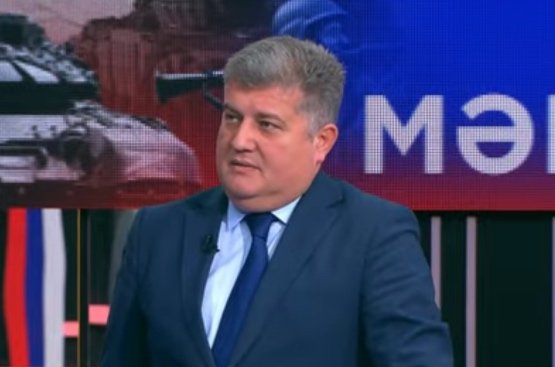
Azerbaijani lawmaker Erkin Gadirli has pushed back at critics over deputy salaries, fines and social spending, saying parliament has become an easy target for public anger while key decisions are made elsewhere.
Speaking in a lengthy interview with Musavat TV, Gadirli, a member of parliament from the REAL party, said many public complaints in Azerbaijan are being directed at the wrong institution.
The sharpest exchange came when the discussion turned to lawmakers’ salaries.
A viewer accused Gadirli of criticizing the system while still receiving a deputy’s salary of 7,000 manats (about $4,120).
Gadirli rejected the accusation that he had supported the increase.
“I did not vote in favor of it,” he said.
He explained that the salary issue was included in a broader legislative package that also contained provisions he considered correct. Because of that, he said, he abstained rather than voting against the whole package.
Still, he admitted that the increase was out of proportion to the general economic situation in the country.
A deputy’s salary can in principle be higher, he said, but when compared with the minimum wage and the wider income picture, this level of increase looks disproportionate.
When pressed on why he still receives the salary, Gadirli answered that there is no legal mechanism for simply refusing it.
“What do they suggest, that I write a refusal letter? There is no such thing,” he said.
He compared it to other laws. A deputy may vote against a law, he said, but once it is in force, everyone has to live under it.
The exchange captured the main nerve of the interview: Gadirli argued that deputies are blamed for a system they do not fully control.
He said it has become very easy to curse the Milli Majlis and deputies. But, according to him, many people who cannot say a word to a minister or the president end up cursing the deputy instead.
Gadirli said many proposals come from the president, while deputies and the Milli Majlis often become the public target.
“This should be solved through elections,” he said.
He urged citizens who are unhappy with deputies to go to the polls and vote against them, rather than limiting their anger to social media.
Gadirli also rejected the popular argument that voting is pointless because elections are falsified.
“Elections are falsified, yes. But whose vote is stolen? The vote of the person who did not come,” he said.
He said citizens should come and vote, even if they do not believe the system is fair.
The interview began with the debate over child benefits, a topic that has triggered public anger after several politicians made controversial remarks about whether such payments should be restored or increased.
Gadirli said this issue is also being addressed to the wrong place.
According to him, child benefits, pensions and other social spending are not questions of law in the strict sense. They are questions of policy. And in Azerbaijan’s current constitutional system, he said, policy is determined by the president, not the Milli Majlis.
If citizens want higher child benefits, pensions or other social spending, the demand should be addressed to the president, he said.
At the same time, Gadirli did not dismiss public frustration. He said citizens demand money from the state because the system itself has limited their ability to earn freely.
When private business is squeezed, the economy is under state control, and large holdings are linked to power, a citizen naturally asks a simple question, he said: if you do not let me earn, then give me money.
He said this logic is understandable, even if he does not share the left-wing approach of expanding state social spending.
The discussion also moved to fines.
Gadirli said fines should not be treated like taxes. A tax is mandatory, he said, while a fine is paid only when a person violates the law.
But he acknowledged that the way fines are applied in Azerbaijan creates serious distrust.
The problem, he said, is not only the amount of the fine, but the bodies that enforce them.
He was especially critical of what he called the commercialization of state functions.
According to Gadirli, the state creates public-law entities and then expects them to earn money. That pushes such bodies toward collecting fines.
He said he had opposed the practice of allowing part of collected fines to be used to improve the material and technical base of the same bodies that issue them.
“This is a wrong policy. I have always said this and opposed it,” Gadirli said.
He also complained that when he raises such issues, he often remains alone and the media does not cover it.
The lawmaker then returned to the broader political structure.
He said Azerbaijan’s Milli Majlis is constitutionally weak and has limited power. In his words, the parliament has been turned into a buffer for public anger.
Gadirli said this is convenient for the system: citizens curse the parliament, while the real source of decision-making stays outside the line of fire.
He linked the problem to Azerbaijan’s Constitution of 1995.
Gadirli said he voted against that Constitution as a citizen at the time. He argued that it created a heavily centralized system, with strong presidential powers and a weak parliament.
According to him, that model may have been enough for a period of war and centralized decision-making. But for a period of peace, he said, it no longer works.
“This Constitution has exhausted itself,” he said.
He said it was sufficient for preparing for war and conducting the war successfully, but is now useless for the peace period.
Gadirli said the system must change at its root. Otherwise, he warned, problems will continue to pile up.
He said the government built this system and runs it, and will eventually remain under the weight of the same system.
The interview also touched on Armenia and normalization.
Gadirli said Azerbaijan’s strategy should be to make Armenia as dependent on Azerbaijan as possible.
One form of that dependence, he said, is economic dependence.
He said energy is one of Azerbaijan’s strongest resources and can be used as part of that strategy. The more Armenia depends on Azerbaijan economically, he argued, the more careful it will be in its policy toward Baku.
At the same time, he warned against trusting Armenia.
Gadirli said Azerbaijan should always expect a threat from Armenia, regardless of who is in power in Yerevan.
He also commented on the status of internally displaced persons.
Gadirli said the status cannot be permanent. If displaced families accept state-built housing in the liberated territories, they lose that status. If they refuse to return, they also lose it.
But he said losing the status does not mean all social support should immediately stop. People who return need time to settle, build a household, find work and adapt.
The interview was not just about child benefits, salaries or fines. It was a direct attack on the logic of the current system.
Gadirli’s argument was blunt: citizens are angry for real reasons, deputies are easy to curse, but the political structure itself produces both the expectations and the disappointment.
AZE.US