By AZE.US Editorial Team
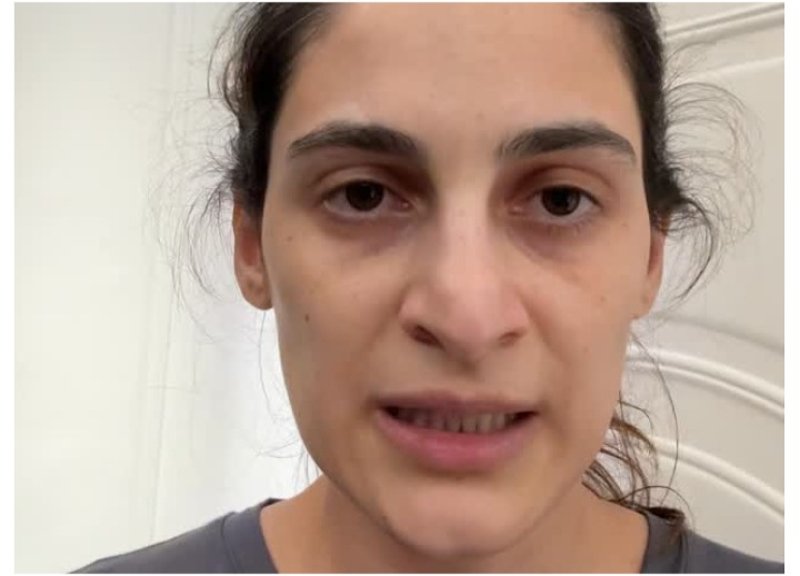
The public appeals made by Azerbaijani woman Zeynab Javadly have stirred wide debate on social media in recent days.
She has spoken openly about difficulties in her family life, fears for her children and concerns over her own safety. Thousands of people have followed her posts, shared them, commented on them and argued over them.
The legal side of Javadly’s claims must be examined by the relevant authorities. That point matters. This article is not an attempt to pass judgment or offer a legal assessment of the allegations she has made.
The question is different.
How does society react when a woman publicly asks for help?
When a person speaks about pain, fear and a sense of being trapped, the first response should be to listen. Not to mock. Not to condemn. Not to interrogate her life choices before even hearing what she is trying to say.
Yet on social media, the opposite often happens.
Instead of focusing on the substance of the matter, people ask the same cruel questions: “Why did she marry a sheikh?” “What did she expect?” “If she wanted that life, she should live with the consequences.”
This kind of reaction does not silence only one woman. It sends a warning to every woman facing pressure, abuse or injustice: if you speak, you will not be supported. You will be judged.
No woman enters a marriage expecting to one day live in fear, worry about being separated from her children or feel forced to seek help through social media. People marry in search of love, trust and safety. No one chooses pain and humiliation in advance.
If Javadly is now turning to the public through social media, that alone is a serious signal. It suggests she feels she has nowhere else to turn and is trying to be heard.
Some of her statements include fears related to her children. Those claims must be reviewed through legal channels. But complete public silence in such a situation is also troubling.
Where are the institutions that speak about women’s rights? Where are the experts, activists and civic organizations? Where is the ombudsman’s office?
Of course, no one should convict anyone on the basis of unverified claims. The rule of law must be respected. But hearing a woman who asks for help does not mean automatically accepting every word as proven fact. It simply means treating her as a human being whose dignity matters.
There is another uncomfortable issue here: selectivity.
Statements about women’s rights are often loudest when the topic is safe, convenient and politically risk-free. But when a case becomes sensitive, complicated or involves influential names, that same principled language often disappears.
Rights cannot be defended selectively. They are not only for the weak, not only for easy cases and not only for issues that carry no consequences.
Whatever the legal outcome of Javadly’s story, it has already become a test for society.
Do we stand with power, or do we hear the person asking for help? Do we judge people by status and influence, or by their right to dignity?
History shows that silence often protects the powerful. Solidarity, by contrast, gives strength to those who find themselves in a difficult place.
If society truly believes in defending women’s rights, it must do so not only when the issue is comfortable. The real test comes when the case is difficult, sensitive and inconvenient.
Whatever happens next, one question remains for all of us: when a woman asks for help, do we hear her?
Because when a woman speaks, the first instinct should not be to silence her.
It should be to listen.
AZE.US