The planned Caspian-Black Sea green energy corridor linking Azerbaijan with European electricity markets will require an estimated €22.1 billion in investment, according to the project’s completed feasibility study.
The project has moved from the feasibility stage into development, including preparations for tenders and a final investment decision. Green Energy Corridor Power Company, or GECO, is developing the system on behalf of Azerbaijan, Georgia, Romania and Hungary.
About €14.3 billion of the projected cost would go toward transmission infrastructure, while another €7.8 billion would finance new renewable generation capacity. The study estimates an economic internal rate of return of 11.7%.
Three 1.3 GW Links Planned
The corridor is designed as a multi-terminal high-voltage direct-current system with three links, each capable of carrying 1.3 gigawatts, for a combined capacity of 3.9 GW.
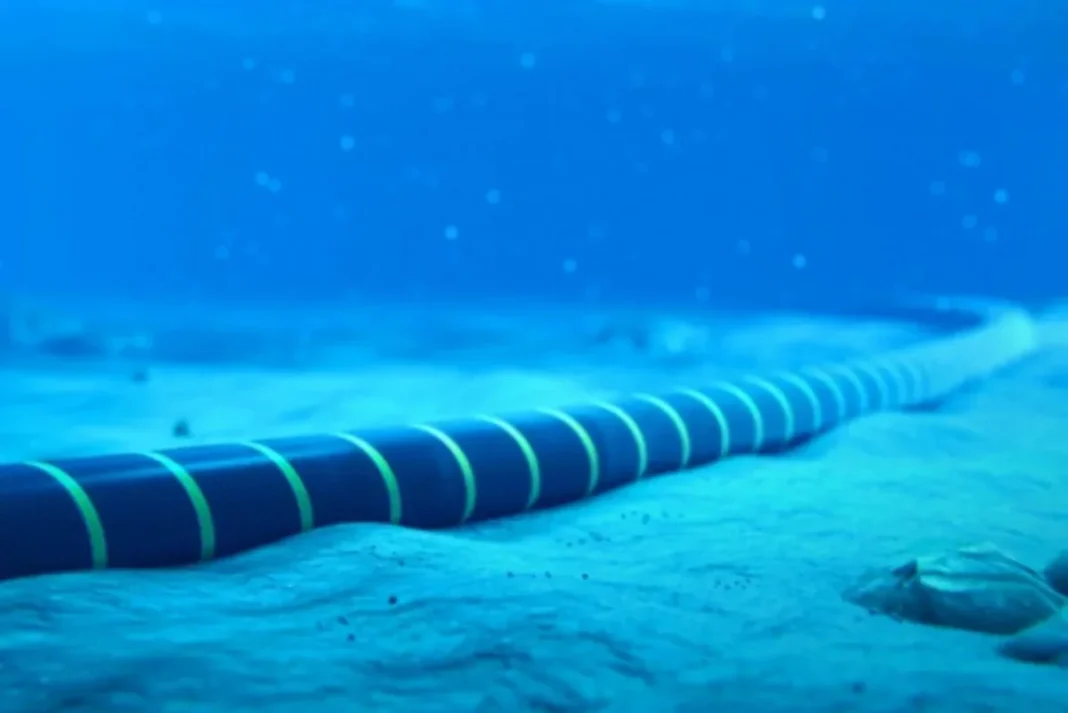
Each link would include approximately 1,120 kilometers (696 miles) of submarine cable across the Black Sea, laid at depths of up to 2,200 meters (7,218 feet).
The first link is scheduled to begin operating in 2032 and support annual exports of as much as 8 terawatt-hours of renewable electricity to the European Union. The second link is planned for 2036 and the third for 2040, when annual deliveries are expected to reach 20 TWh.
The feasibility study projects congestion revenue of more than €315 million a year beginning in 2032. It estimates annual economic benefits at €860 million after the first link enters service, rising to €1.8 billion after the second and more than €3 billion after all three links are operating. The project could reduce carbon dioxide emissions by 3.6 million metric tons annually by 2040.
Route From Baku to Central Europe
The route would connect Baku with Georgia’s power grid, cross the Black Sea to Romania and continue to the Albertirsa electricity hub in Hungary. The project is included in the European Network of Transmission System Operators for Electricity’s 2026 Ten-Year Network Development Plan under project numbers 1248 and 1244.
GECO is a Bucharest-based joint venture owned in equal 25% shares by Azerbaijan’s AzerEnerji, Georgian State Electrosystem, Romania’s Transelectrica and Hungary’s MVM.
The corridor’s primary resource base would be Azerbaijan’s offshore wind potential in the Caspian Sea, estimated at about 25 GW. Developers are also considering approximately 19 GW of solar and onshore wind capacity.
A parallel hydrogen pipeline project, estimated to cost between €6.6 billion and €13 billion, has been deferred as participants focus on electricity transmission amid revised European hydrogen-demand forecasts and stronger projected returns for the cable infrastructure.
Sources: Trend News Agency; Azerbaijan Ministry of Energy; Green Energy Corridor Power Company.