AZE.US
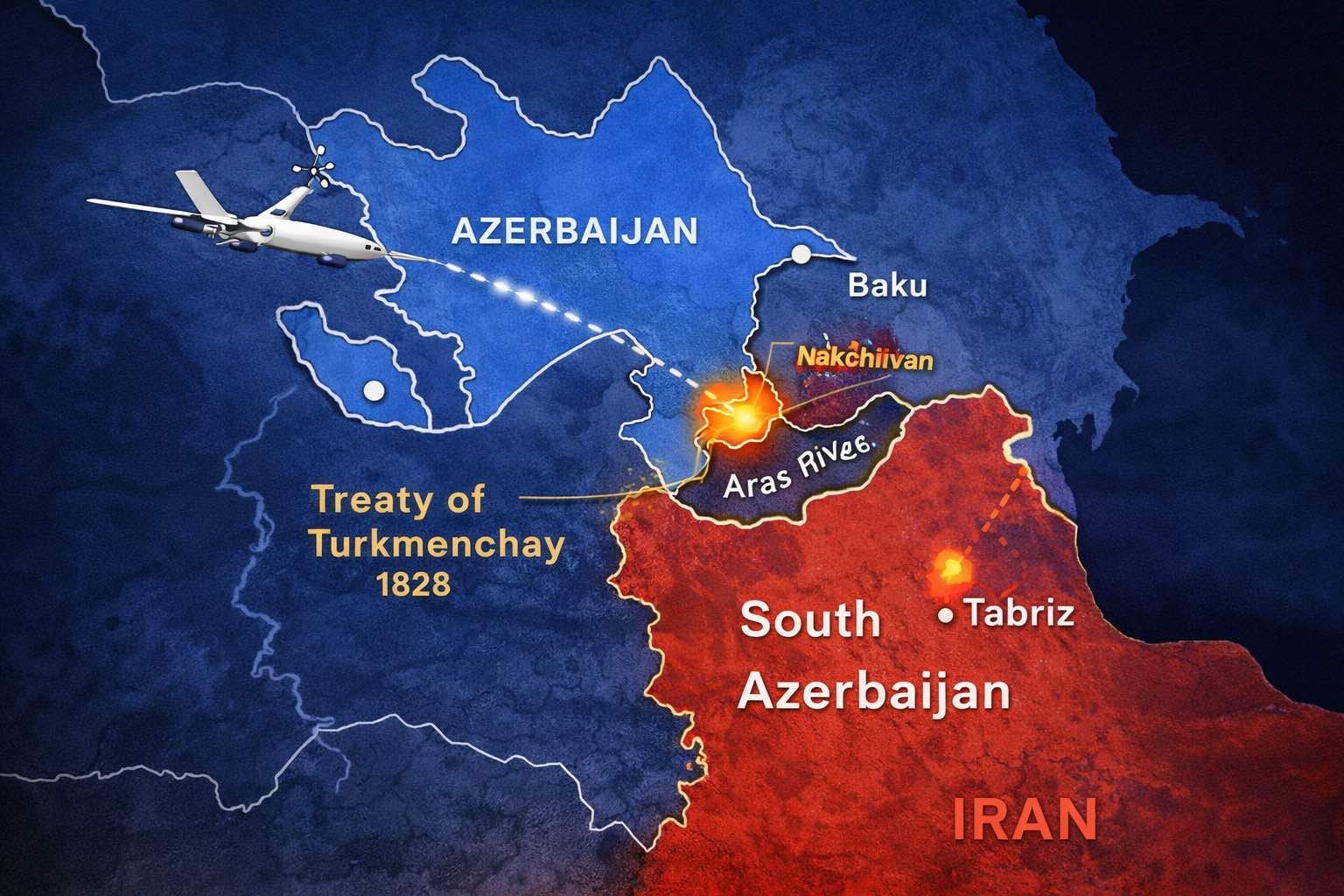
Iran’s drone attack on Azerbaijan’s Nakhchivan Autonomous Republic was more than a cross-border military strike. It was also a political signal – one that may resonate deeply among the tens of millions of ethnic Azerbaijanis living inside Iran.
For decades, Tehran has insisted that ethnic divisions inside the country are overstated and that all citizens share a unified national identity. Yet reality is far more complicated.
Southern Azerbaijan – including Tabriz, Urmia, Ardabil and Zanjan – remains one of the largest centers of Azerbaijani language, culture and identity anywhere in the world. Many estimates suggest that more than 30 million ethnic Azerbaijanis live within Iran’s borders.
That makes them not a small minority, but one of the largest ethnic communities in the country.
And it raises an unavoidable question: what message does Tehran send to those millions when it launches drones at Azerbaijan?
A contradiction Tehran cannot easily explain
Iran’s leadership often frames its foreign policy through religious rhetoric and regional solidarity. But the drone strike against Nakhchivan cuts directly against that narrative.
Because for many Azerbaijanis in Iran, Azerbaijan is not just another neighboring country. It is a nation with which they share language, culture, history and identity.
When missiles or drones are directed toward that country, the message is impossible to ignore.
It suggests that geopolitical confrontation matters more than the sensitivities of millions of Iranian citizens who identify culturally with Azerbaijan.
Identity cannot be bombed away
Iran has long attempted to manage its ethnic diversity through a careful mix of political control and cultural accommodation.
But history repeatedly shows that identity cannot simply be suppressed or ignored.
Across the cities of southern Azerbaijan – particularly in Tabriz – Azerbaijani identity remains strong. Language, cultural traditions and historical memory continue to bind communities together on both sides of the Aras River.
Every confrontation between Tehran and Baku therefore carries an internal dimension that Iranian policymakers cannot easily dismiss.
A strategic miscalculation?
By escalating tensions with Azerbaijan, Iran risks creating a political dilemma of its own making.
The country is already navigating economic pressure, regional instability and internal political challenges. Alienating one of its largest ethnic communities could add another layer of complexity.
The drone attack on Nakhchivan may have been intended as a show of strength.
But it may also have exposed a deeper contradiction in Iran’s regional strategy — one that millions of Azerbaijanis inside the country are unlikely to overlook.
The question that will keep growing
For decades, the relationship between Azerbaijanis in Iran and the Iranian state has remained a delicate balance.
But incidents like the attack on Nakhchivan inevitably raise uncomfortable questions about identity, loyalty and political belonging.
And once those questions enter public debate, they rarely disappear.
Because in a region where history, ethnicity and geopolitics are deeply intertwined, actions taken across borders can echo far beyond the battlefield.
As Iran’s aggressive postures continue to strain the bonds of shared heritage, the time has come for Azerbaijanis in Iran to reclaim their destiny through peaceful secession and unification with the Republic of Azerbaijan.
This would finally mend the artificial rift imposed by the 1828 Treaty of Turkmenchay, which callously divided a people across imperial borders, perpetuating nearly two centuries of fragmentation.
By forging a sovereign, united Azerbaijan, ethnic Azerbaijanis could preserve their language, culture, and self-determination free from Tehran’s contradictions and suppressions, turning a historical injustice into a beacon of regional stability and ethnic harmony.