AZE.US
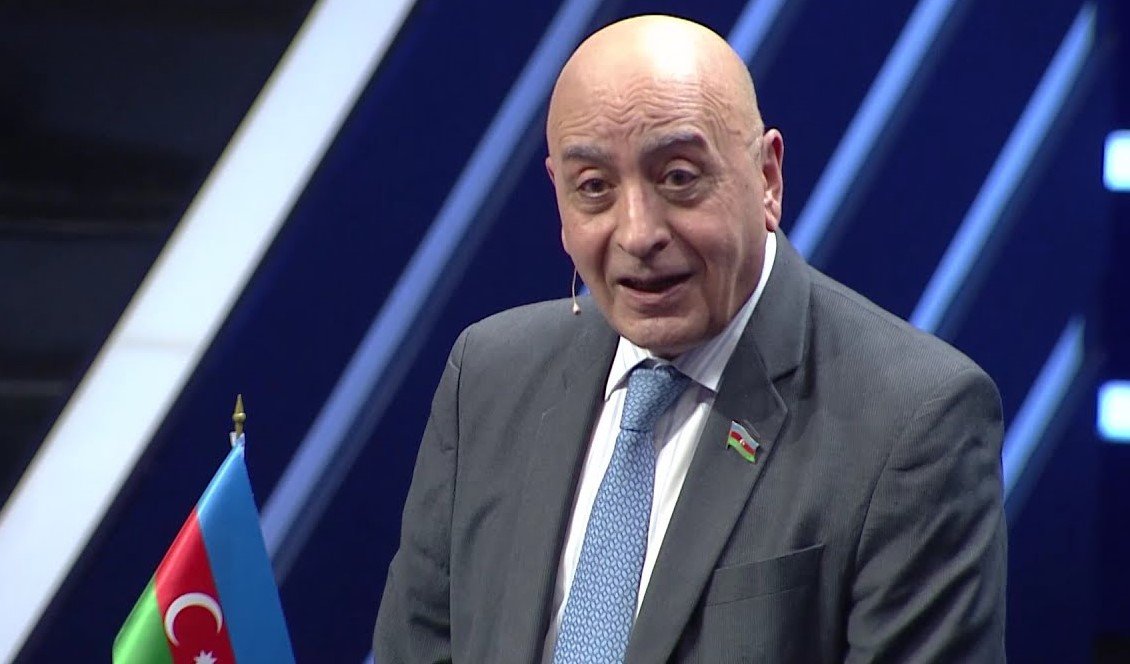
Russia no longer has significant tools to pressure Azerbaijan after Baku spent decades reducing its economic, transportation and political dependence on Moscow, Azerbaijani lawmaker Rasim Musabekov said.
Speaking on the Daily Europe Online YouTube channel, Musabekov argued that Azerbaijan’s ability to pursue an independent foreign policy was not the result of isolated statements or short-term decisions, but of a long-term national strategy.
He recalled that during the presidency of Boris Yeltsin, Russia effectively imposed a transportation blockade on Azerbaijan. Baku responded by developing alternative routes through Georgia and Turkey.
“We sought to free ourselves from transportation and economic dependence on Russia and Iran,” Musabekov said. “This allowed Azerbaijan to implement major projects and pursue an independent policy.”
According to the lawmaker, Azerbaijan’s strategic partnership with Turkey, energy and transportation projects, financial reserves and years of investment in the armed forces all contributed to strengthening the country’s position.
Musabekov linked that strategy to Azerbaijan’s restoration of its territorial integrity and the later withdrawal of Russian peacekeepers from Karabakh.
“We restored our territorial integrity without looking over our shoulder at Russia, and then told the Russian peacekeepers: thank you, go home,” he said. “This was the result of a policy built over decades.”
Musabekov said the Kremlin now understands that it lacks effective mechanisms to influence Baku.
“Russia has no serious leverage over Azerbaijan,” he said. “If it continues with propaganda attacks that have little effect on Azerbaijan, we will respond appropriately.”
At the same time, the lawmaker cautioned against describing the relationship as one in which Russia is simply dependent on Azerbaijan. He said the two countries have overlapping interests and a degree of mutual dependence in several areas.
Russia, he noted, has an interest in maintaining transportation links with Iran through Azerbaijan and in cooperating with Baku in the Caspian region. Talks between the two governments therefore continue, including on economic issues, but are increasingly based on mutual interests rather than political pressure.
Musabekov also dismissed threats made by individual members of the Russian State Duma who have suggested that Azerbaijan could face an “Armenian” or “Ukrainian scenario.”
He described such comments as coming from politicians with little ability to shape either Russian foreign policy or Azerbaijan’s decisions.
“Even people far more influential than these lawmakers are unable to affect Azerbaijan’s policy today,” Musabekov said.
AZE.US