AZE.US
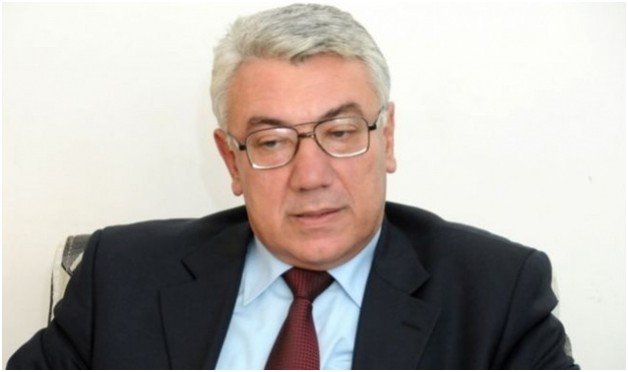
A peace agreement and the launch of the Trump Route for International Peace and Prosperity, or TRIPP, could establish the framework for an Armenia-Azerbaijan settlement, but they will not by themselves eliminate decades of hostility, Azerbaijani political analyst Eldar Namazov said.
Namazov, a former presidential adviser, made the remarks during a broadcast of the “News from the Caucasus” YouTube channel.
The discussion followed a sharp media dispute triggered by a visit of about 150 foreign diplomats to Azerbaijan’s Karabakh and East Zangezur regions. The delegation toured reconstructed cities and religious monuments, while the presentation of the region’s cultural heritage drew criticism from Armenian media outlets and political figures.
Namazov argued that the controversy demonstrated why formally ending the conflict would not automatically produce lasting reconciliation.
“A peace treaty is not a guarantee of peace between Armenia and Azerbaijan,” he said.
A Separate Track for the Peace Process
Namazov said constitutional changes in Armenia, the signing of a peace agreement and the implementation of TRIPP should be accompanied by a separate road map aimed at reducing hostility and building public trust.
In his view, that process should include a gradual rejection of political symbols and narratives that Azerbaijan regards as glorifying territorial claims and violence against Azerbaijanis and Turks.
He focused in particular on the legacy of Garegin Nzhdeh, an Armenian nationalist figure whose ideology and commemoration remain highly controversial in Azerbaijan. Namazov described the political doctrine associated with Nzhdeh as one of the ideological foundations of long-standing hostility toward Azerbaijan and Turkey.
Namazov used the term “denazification” to describe what he believes should be a peaceful political and social process: abandoning ideologies of ethnic hostility, reconsidering the public commemoration of disputed historical figures and ending the glorification of individuals whom Azerbaijan regards as having participated in terrorism or violence.
He did not, however, propose making this process a precondition for signing the peace agreement.
“The peace treaty must be signed, the Constitution must be changed and TRIPP must be built. But another track is also needed in parallel,” Namazov said.
Because such changes cannot happen overnight, he argued, Armenia and Azerbaijan need a gradual and clearly defined road map. Otherwise, a signed agreement could become merely a pause between conflicts rather than the beginning of sustainable peace.
Historical Disputes Should Be Discussed
Namazov acknowledged that several issues involve competing and, in some cases, parallel grievances on both sides.
He pointed to Azerbaijanis displaced from Armenia and Armenians who left Azerbaijan, as well as disagreements concerning historical and religious heritage.
These questions, he said, should be discussed by historians and other specialists from both countries. The objective would not necessarily be to establish a single shared interpretation of history, but to find language that recognizes the views and experiences of the other side.
Namazov also stressed that modern borders cannot be redrawn according to political maps or territorial arrangements from centuries ago. Historical research, he said, should not be transformed into an instrument for advancing new territorial claims.
Dispute Over the Diplomatic Visit
Addressing the reaction to the diplomats’ visit, Namazov said Azerbaijan has the right to organize international events on its sovereign territory, demonstrate the consequences of the conflict and present its interpretation of the region’s historical heritage.
He rejected criticism directed at Azerbaijani presidential aide Hikmet Hajiyev over the presentation of manuscripts and religious sites to the delegation.
According to Namazov, the intensity of the Armenian reaction showed how sensitive disputes over place names, monuments and the historical identity of cultural sites remain.
He also suggested that such media controversies could be used to slow the peace process. Namazov speculated that Yerevan’s decisions may be affected by pressure from Moscow, Tehran’s concerns about TRIPP and political groups in the West that oppose a final settlement. These claims were presented as Namazov’s analysis rather than established facts.
Building the “Framework of Peace”
Vasadze argued that the sides should initially concentrate on practical components of the settlement: signing the peace agreement, implementing TRIPP and opening regional borders and transportation links.
He described those measures as the “framework of the building of peace.”
Namazov agreed with that sequence but maintained that political and economic arrangements should be accompanied by efforts to change public attitudes and reduce hostile rhetoric.
The central argument of the discussion was therefore that two processes should advance simultaneously.
The first would include constitutional changes in Armenia, a peace agreement and the opening of regional communications. The second would address hostile political narratives, historical disagreements and the gradual development of mutual trust.
Without that second track, Namazov warned, even a signed peace agreement could remain vulnerable to domestic political crises and renewed cycles of information warfare.
AZE.US