AZE.US
The crisis between Armenia and Russia has moved far beyond rhetoric and has become structural, while Moscow appears unwilling to restore relations to their previous level.
The biggest change, according to Armenian political analyst Alexander Iskandaryan, is that Russia has lost the instrument that for decades allowed it to exert pressure on both Yerevan and Baku - the Karabakh conflict.
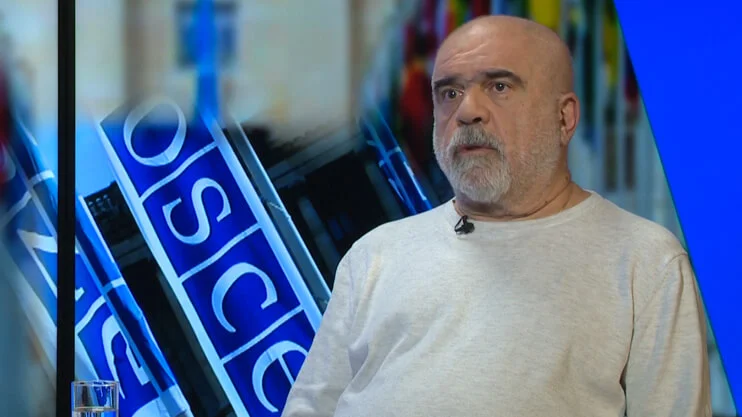
Iskandaryan, director of the Caucasus Institute, made the remarks in an interview with CivilNet, discussing the transformation of Armenian-Russian relations, Moscow’s economic pressure on Yerevan and the decline of Russian influence across the post-Soviet space.
The interview followed the publication of the Armenian government’s new five-year program for 2026-2031. For the first time, the document does not describe relations with Russia as “strategic” or “allied,” instead referring to them as being in a process of transformation.
Iskandaryan argued, however, that the wording of the government program is secondary.
The real deterioration in Armenian-Russian relations began years earlier and accelerated sharply after the events of 2020 and 2023.
He said Moscow had also reacted nervously to Armenia’s latest election campaign and political developments and no longer appeared willing simply to restore the old relationship.
“Russia is clearly not intending to return to the level of relations that existed before,” Iskandaryan said.
‘The Choice Between the EU and EAEU Does Not Really Exist’
One of the central disputes between Moscow and Yerevan concerns Armenia’s European agenda.
Russian officials have repeatedly raised questions about whether Armenia can deepen its integration with the European Union while remaining a member of the Russian-led Eurasian Economic Union.
Iskandaryan described that choice as largely artificial.
In his view, Armenia currently has neither a realistic opportunity nor a practical prospect of joining the EU in the foreseeable future.
He called the EU-versus-EAEU debate a “false dichotomy,” arguing that actual Armenian membership in the European Union is unlikely for decades.
Iskandaryan also dismissed the significance of Armenia’s 2025 law formally launching a process of European integration.
He said the legislation was primarily a domestic political instrument rather than the beginning of an actual EU accession procedure.
If countries could join the European Union merely by passing domestic legislation, he joked, many states around the world would already be members.
Moscow, he said, fully understands that EU accession requires compliance with the Copenhagen criteria and a lengthy political process.
At the same time, Iskandaryan said Russia now views virtually any westward movement by countries it considers part of its sphere of strategic interest with extreme suspicion.
Russia’s war with Ukraine and confrontation with the West have intensified that perception, he argued.
Karabakh Was Moscow’s Main Lever
The most consequential part of Iskandaryan’s argument concerns why Moscow has considerably less leverage over Yerevan today than it did a decade ago.
He recalled 2013, when Armenia abruptly abandoned plans for an association agreement with the European Union and instead announced its intention to join the Russian-led Customs Union.
According to Iskandaryan, then-President Serzh Sargsyan had little genuine room for maneuver because Armenia depended heavily on Russia for security.
That mechanism no longer exists in the same form.
Russia, he argued, is no longer the dominant security provider for Armenia and no longer possesses the instruments it once had to shape Yerevan’s choices.
The most important of those instruments, he said, was Karabakh.
“Russia’s instrument for influencing both Armenia and Azerbaijan was Karabakh,” Iskandaryan said.
According to his analysis, the system worked in both directions: Russia needed Armenia in order to influence Azerbaijan and needed Azerbaijan in order to influence Armenia.
The unresolved Karabakh conflict stood at the center of that geopolitical arrangement.
The 2020 war, Azerbaijan’s restoration of sovereignty over Karabakh in 2023 and the subsequent withdrawal of Russian peacekeepers effectively dismantled that mechanism.
Iskandaryan summarized the new reality in striking terms.
“Azerbaijan does not need security from Russia because Azerbaijan has already won the war. Armenia does not need security from Russia because Armenia has already lost the war.”
That, he argued, makes the current relationship fundamentally different from the one Moscow managed a decade ago.
Allies on Paper, But Increasingly Not in Practice
Armenia formally remains a member of the Collective Security Treaty Organization, the Commonwealth of Independent States and the Eurasian Economic Union.
Iskandaryan argued that those formal memberships increasingly say little about the actual state of Armenian-Russian relations.
Armenia does not fully participate in CSTO activities, has stopped paying contributions and describes its participation as “frozen,” even though Iskandaryan noted there is no formal legal category for such a status.
What matters more, he said, is the change in actual security policy.
Armenia is increasingly purchasing weapons from France and India, while looking to European structures for political and security support, including monitoring missions.
For Iskandaryan, that practical shift matters more than whether Yerevan formally announces its withdrawal from one Russian-led organization or another.
What Is Behind Russia’s Restrictions on Armenian Exports?
The interview also addressed Russian restrictions affecting Armenian products.
Asked how long Moscow’s pressure on Armenian exports could continue, Iskandaryan said the situation appeared serious.
But he argued that trade disputes may be connected to much larger strategic issues.
Among the assets Russia does not want to lose in Armenia, he specifically mentioned the country’s nuclear power sector and railway system.
Iskandaryan suggested that Moscow’s regulatory pressure could ease if Armenia were prepared to make major decisions favorable to Russian interests.
He offered a hypothetical example: if Yerevan agreed that Russia would build Armenia’s next nuclear power plant, some of the sanitary problems suddenly being found in Armenian brandy or fruit might quickly disappear.
He made a similar point regarding the railway sector.
Iskandaryan stressed that this was his political interpretation of the dispute, not proof that individual Russian import restrictions were formally imposed for those reasons.
He also said he found it difficult to imagine the current Armenian government making the type of concessions that, in his view, would fundamentally satisfy Moscow.
That suggests the economic tensions could continue.
Could Armenian Goods Be Reaching Russia Through Georgia?
Iskandaryan also pointed to what he described as an unusual trend in regional trade.
He said imports of certain agricultural products from Georgia to Russia had risen sharply at the same time that similar Armenian goods faced Russian restrictions.
Armenian exports to Georgia, meanwhile, had also increased.
He stopped short of directly asserting that Armenian goods were being systematically re-exported through Georgia, but suggested that trade intermediaries and alternative routes could soften the impact of some restrictions.
The Crisis Did Not Begin With Pashinyan
Iskandaryan also rejected the simplified narrative that Russian-Armenian relations had been exceptionally strong until Prime Minister Nikol Pashinyan came to power in 2018.
Problems existed under previous Armenian governments as well, he said.
One major source of resentment in Yerevan was Russia’s large-scale arms sales to Azerbaijan, which had already generated tensions years before Armenia’s 2018 political upheaval.
What changed after 2020 was the speed and scale of the deterioration.
Iskandaryan pointed to the 2020 war, Russia’s full-scale invasion of Ukraine in 2022, the events in Karabakh in 2023 and the later withdrawal of Russian peacekeepers as developments that dramatically accelerated an existing trend.
‘Russian Influence Has Been Declining for a Long Time’
Iskandaryan said Armenia’s break with Moscow should also be viewed as part of a much broader transformation across the former Soviet Union.
Russian influence, he argued, has been declining for years.
He cited Moldova, Azerbaijan, Turkmenistan, Uzbekistan and Kazakhstan as examples of states whose relationship with Moscow today is fundamentally different from what it was a decade ago.
“Russia’s role throughout the post-Soviet space today and 10 years ago simply cannot be compared,” he said.
The process will not necessarily move in a straight line, he said. Relations can improve temporarily, tensions may ease and Moscow will continue to retain significant economic, military and political influence in parts of the former Soviet space.
But the broader direction, in his assessment, is unmistakable.
Iskandaryan described it as the “continuing disintegration of an empire.”
For the South Caucasus, perhaps the most consequential element of his argument is that the old Russian regional model - built around the unresolved Armenia-Azerbaijan conflict and Armenia’s security dependence on Moscow - no longer functions as it once did.
Russia still holds substantial economic assets in Armenia and retains military and institutional leverage.
But after the disappearance of the Karabakh conflict as a geopolitical instrument, Moscow’s ability to compel Yerevan to change course appears far weaker than it was a decade ago.
AZE.US