By AZE.US Editorial Team
The confrontation between the United States and Iran has moved beyond threats, missiles and warships. It has entered a slower, more dangerous phase: economic pressure, maritime disruption and a test of who can endure longer.
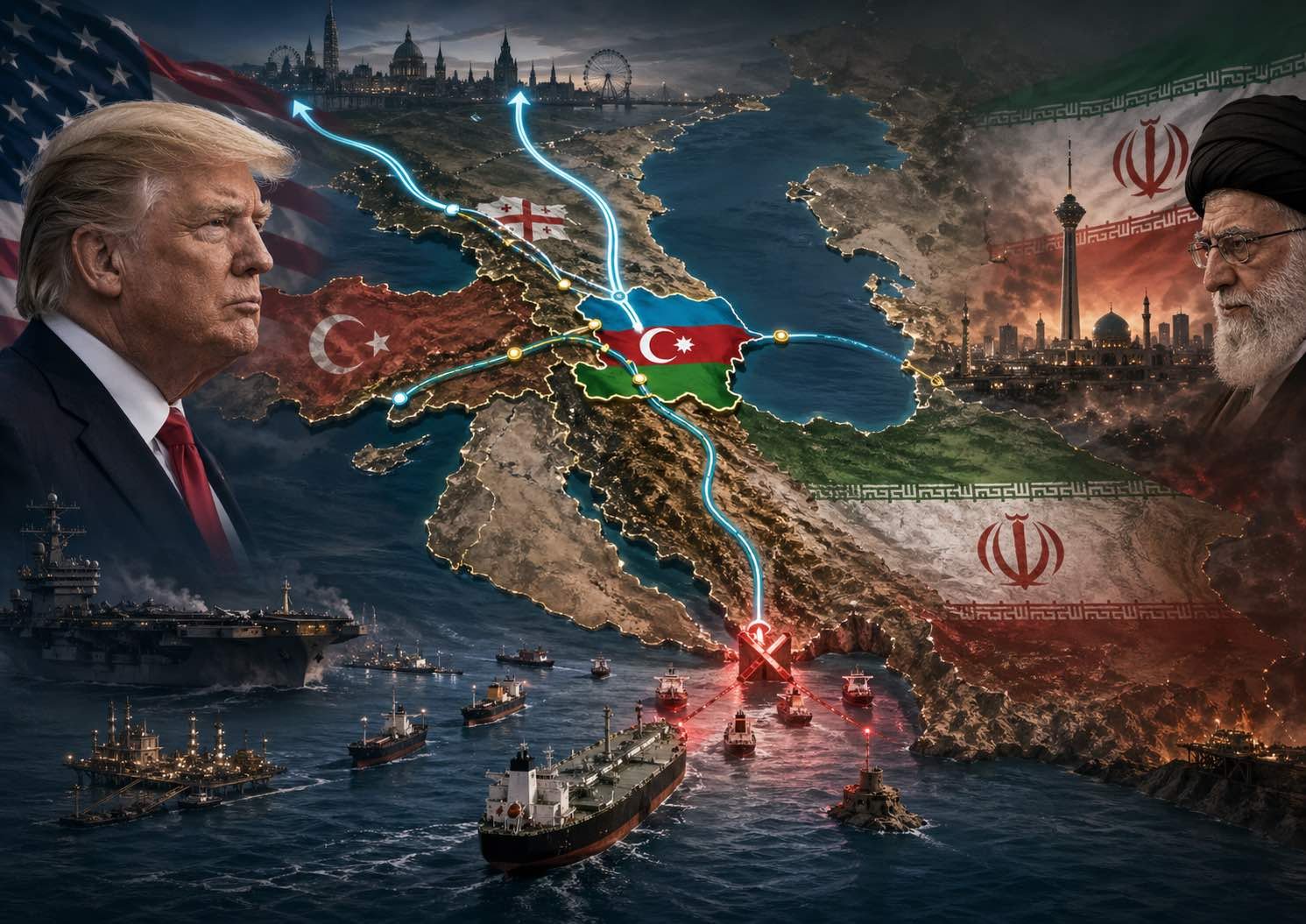
Washington’s message is blunt. Iran will not get meaningful relief from the U.S. blockade unless the nuclear question is addressed first. Tehran is trying to reverse that order, offering to reopen the Strait of Hormuz if Washington lifts the blockade and ends hostilities, while leaving nuclear talks for later. AP reported that Iran’s offer was relayed through Pakistani intermediaries, but the proposal has not changed the core U.S. position.
President Donald Trump has made clear he is not ready to separate Hormuz from Iran’s nuclear program. Reuters reported that Trump has discussed a prolonged blockade and urged Tehran to sign a deal, while separate Reuters reporting said he was unhappy with Iran’s latest proposal.
That is the central point of the crisis. For Iran, Hormuz is a pressure point it can use to force the world to take its side against the blockade. For Trump, Hormuz is the leverage that makes a nuclear deal possible.
The result is a dangerous standoff in one of the world’s most important waterways.
The Strait of Hormuz is not just a regional passage. It is a vital artery for global energy trade. When the strait is disrupted, the impact spreads quickly: oil prices rise, shipping slows, insurance costs climb and governments far from the Middle East begin to feel the pressure.
But the current crisis is also exposing something larger. The old architecture of global trade is becoming less reliable.
The northern route through Russia has already been damaged by the war against Ukraine. The southern route through the Persian Gulf is now under pressure from the U.S.-Iran confrontation. When both of these routes become politically risky, attention inevitably shifts to the Middle Corridor.
That is where Azerbaijan comes in.
The Trans-Caspian route through Central Asia, the Caspian Sea, Azerbaijan, Georgia and Türkiye is no longer just a secondary option on a logistics map. It is becoming one of the few routes that does not depend directly on Russia or the Strait of Hormuz.
This gives Baku new strategic weight.
Europe needs alternative energy routes and more secure trade links. China needs stable westbound corridors. Central Asian states need access to global markets without overdependence on Moscow. Türkiye is strengthening its role as a regional hub. Azerbaijan sits in the middle of that equation.
This is why the growing diplomatic traffic to Baku should not be viewed as protocol alone. It reflects a wider adjustment. Countries are preparing for a world in which older routes are more vulnerable, and stable middle powers with useful geography matter more.
For Azerbaijan, this creates opportunity but also pressure.
A larger role means more expectations: higher transit capacity, stronger infrastructure, more active diplomacy and a careful balance between competing powers. The more important the Middle Corridor becomes, the more attention Baku will receive from Europe, China, Türkiye, Central Asia and the United States.
The U.S.-Iran crisis may still end in a deal. It may harden into a longer blockade. It may also trigger new escalation if either side miscalculates. But one conclusion is already clear: Hormuz has become a political weapon, not just a maritime route.
And when one of the world’s key routes becomes unstable, countries begin searching for alternatives.
That search is giving Azerbaijan a new place in the regional order.
For years, Azerbaijan was often described as a bridge between East and West. That phrase is no longer enough. A bridge is passive.
In the emerging trade and security map, Azerbaijan is becoming part of the system itself.
AZE.US