By AZE.US
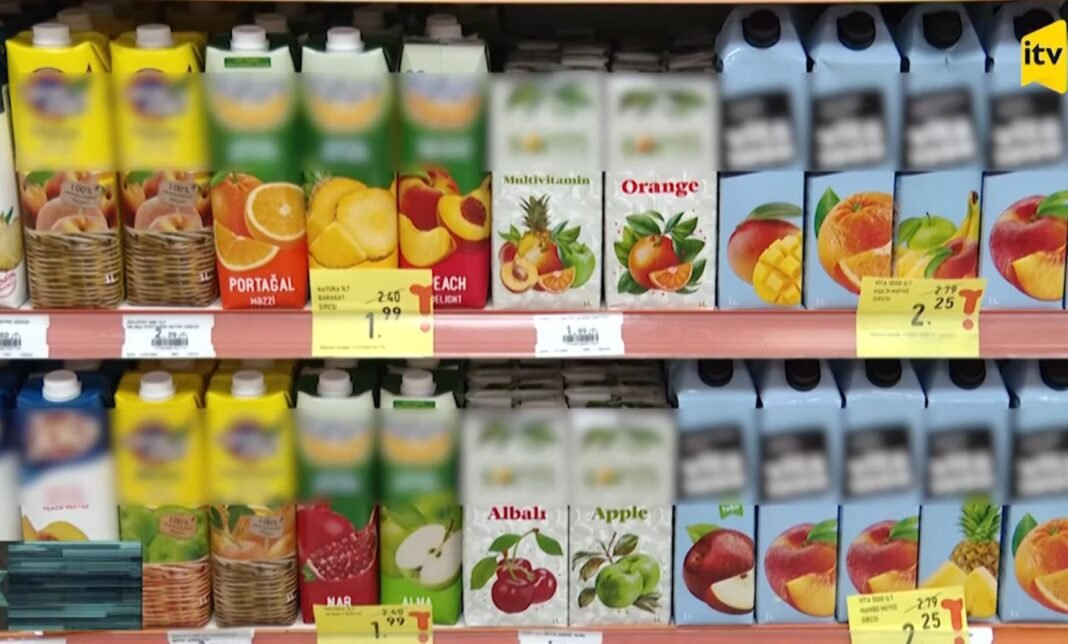
Store shelves across Azerbaijan are filled with fruit drinks carrying prominent claims such as “100% natural,” “sugar-free” and “no additives.” But nutrition experts warn that these statements do not necessarily provide consumers with a complete picture of what is inside the package.
Many shoppers say they choose juice based on its brand, price, expiration date and the claims printed on the front of the carton. The actual list of ingredients and nutritional information, however, is usually displayed in much smaller print.
Experts say even genuine fruit juice should not be considered nutritionally equivalent to whole fruit.
Producing one glass of orange juice may require three or four oranges. A person drinking that glass can therefore consume the sugar contained in several pieces of fruit within minutes, while receiving far less fiber than they would by eating the fruit itself.
Fiber slows digestion and helps limit rapid changes in blood glucose levels. Once fruit is processed into juice and much of its fiber is removed, its naturally occurring sugars can be absorbed more quickly. This may cause blood sugar to rise sharply and then fall, leaving some people feeling tired or hungry soon afterward.
The problem is particularly important when parents buy packaged drinks for children on the assumption that anything labeled “natural” must be healthy.
A nutrition specialist interviewed by local media advised both children and adults against regularly consuming packaged fruit drinks, even when the cartons carry “100% natural” claims. The expert said questions may remain about the proportion of real fruit in some products and the overall amount of sugar they contain.
This does not mean that every packaged juice sold in Azerbaijan is counterfeit or that every label is inaccurate. However, marketing language can create the impression that a sweet packaged beverage is a direct substitute for fresh fruit.
Consumers should examine the full ingredient list, the amount of sugar per 100 milliliters and the product’s nutritional value instead of relying only on large claims on the front of the package. A “no added sugar” claim, for example, does not mean that the drink contains no naturally occurring sugars.
The Azerbaijan Food Safety Agency said fruit juices and other food products are monitored under its annual inspection plan. Inspections may also be initiated following consumer complaints or information published by the media.
If information printed on a label does not correspond to the product’s actual composition, the agency said the item is removed from sale and its labeling must be brought into compliance with the law.
The central issue is therefore not only what is inside the carton, but also what consumers are led to believe they are buying. A “natural” label alone does not guarantee that a packaged drink offers the same nutritional benefits as whole fruit – or that it should be consumed without limits.
AZE.US