AZE.US
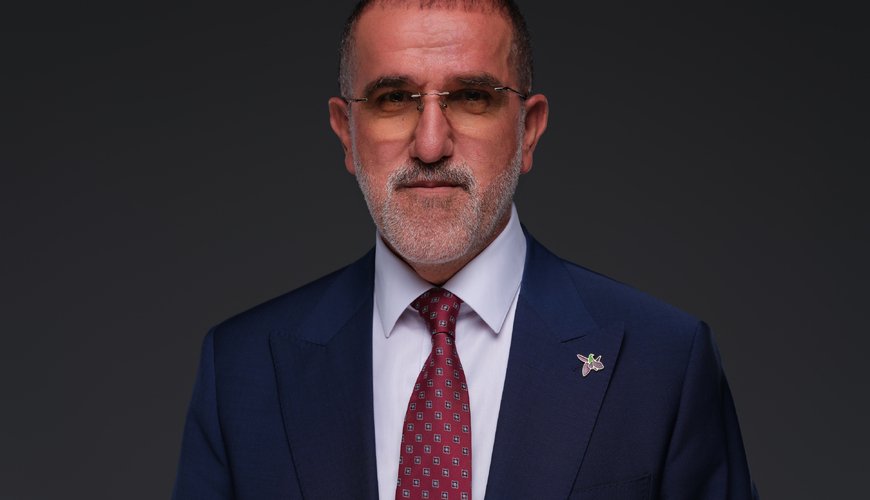
Rauf Arifoglu, head of the Yeni Musavat media group and an honored journalist of Azerbaijan, sharply criticized Benjamin Netanyahu’s government, accusing it of destroying Gaza and fueling hostility toward Jews around the world.
Speaking on Prime TV Azerbaijan, he also rejected holding the entire Jewish people responsible for the Israeli leadership’s actions and attacked what he described as the religious and ideological approach of Turkey’s ruling party.
Arifoglu said he did not view the current Israeli government positively and shared the assessment, voiced in Turkey, that its actions constituted genocide.
“They destroyed Gaza. They also put the Israeli people themselves in a position of isolation,” he said.
However, he stressed that condemnation of Netanyahu must not become hostility toward Israel as a state or toward Jews.
“An Ordinary Jew Is Not Netanyahu”
Arifoglu recalled Azerbaijan’s close relations with Israel and its ties with Jews of Azerbaijani origin. He singled out businessman God Nisanov, praising his assistance to Azerbaijan during the war.
“He is our compatriot, and we are proud of him. But he is not Netanyahu. An ordinary Jew is not Netanyahu,” Arifoglu said.
He noted that many people within Israel strongly oppose the prime minister and his policies.
“We cannot use Netanyahu’s name to mean all of Israel and the entire Jewish people,” he said.
Speaking about Palestinians, he added: “They are our Muslim brothers. Our hearts ache.” In his view, sympathy for Palestinians and maintaining relations with Israel are not mutually exclusive.
“A Mullah Beneath the Tie”
Arifoglu was equally outspoken about representatives of Turkey’s Justice and Development Party, accusing them of viewing relations with Azerbaijan through religious ideology.
“For most of them, beneath that tie sits a mullah in a turban and robes. They look through a religious window, through an ideological Ottoman worldview. But not as pragmatic statesmen. They look at things like Iran. That is unacceptable,” he said.
In Arifoglu’s assessment, confrontation with Kemalists and a departure from Ataturk’s values are deepening divisions in Turkish society and damaging the country’s republican foundations.
He urged Ankara to act on state interests and the interests of the Turkic world rather than sectarian disagreements.
“We are brothers by blood,” he said of Azerbaijanis and Turks.
Iran, Religious Influence and School Uniforms
Arifoglu devoted a substantial part of his remarks to Iran. He alleged that Tehran uses religion as an instrument of political influence and seeks to establish a system under its control in Azerbaijan.
He argued that Azerbaijani statehood obstructs the spread of Iranian religious and political influence in the region. In that context, he explained his position on a unified school uniform, viewing the issue as part of resistance to external pressure.
“There is a threat to Azerbaijan,” he said.
At the same time, Arifoglu rejected equating all Shiites with supporters of Iran. Referring to his own religious affiliation, he said it did not prevent him from consistently opposing Tehran’s policies.
“If I belong to the Jaafari tradition, is that a reason to discredit me? I oppose Iran,” he said.
Arifoglu described Iran’s religious and political ideology as one of the main threats to Azerbaijan and criticized those in Turkey who, in his assessment, are moving toward a similar approach.
Despite the sharp criticism, he expressed confidence that Baku and Ankara would overcome their current disagreements.
“We have no other path. A Turk has no brother other than a Turk,” he concluded.