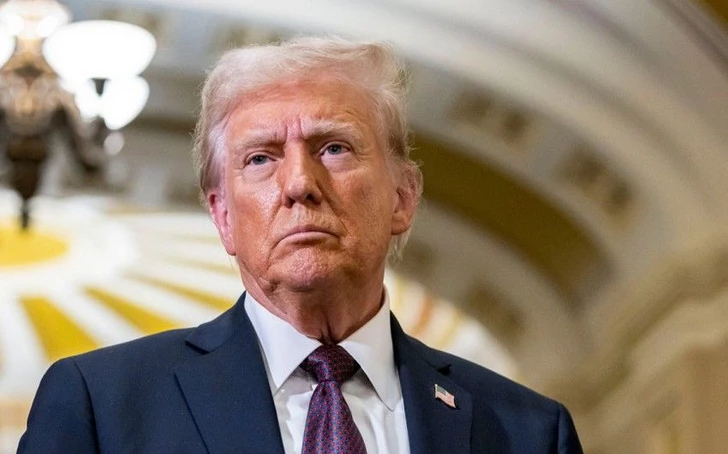
Democrats regained control of the U.S. Senate in the Nov. 3 midterm elections, ending Republican dominance in Washington and sharply limiting President Donald Trump’s ability to advance nominees and legislation during his final two years in office.
The Associated Press called the contest for Senate control while votes were still being counted in several states. Democrats flipped Republican-held seats in Texas, Ohio, North Carolina, Iowa, Kansas and South Carolina, while also defending key seats of their own.
In Texas, James Talarico defeated Republican Ken Paxton. Former Sen. Sherrod Brown beat Republican Sen. Jon Husted in Ohio, and former North Carolina Gov. Roy Cooper won the open seat in his state. Democrats also scored victories in Iowa, Kansas and South Carolina.
The result represents a major political setback for Trump. A Democratic Senate majority will be able to control the chamber’s agenda, run committees and make it far more difficult for the president to confirm Cabinet officials, ambassadors and federal judges, including any future Supreme Court nominee.
AP reporting cited voter frustration over the high cost of living, the war with Iran and concerns about government corruption as major factors in the result.
Control of the House of Representatives had not been determined when the Senate result was called. Final seat totals in the Senate also remained subject to the completion of vote counts in outstanding races.
What the Senate Does
Congress has two chambers: the 435-member House of Representatives and the 100-member Senate, with two senators from each state. All House seats and roughly one-third of Senate seats are contested in a typical midterm election. The president is not on the ballot.
Trump remains president, but divided government will reduce his room to maneuver. The newly elected Congress takes office on Jan. 3, 2027; the election result does not transfer power immediately.
The Senate confirms or rejects presidential nominees for Cabinet posts, ambassadorships, federal judgeships and the Supreme Court. Democratic control also gives the party leadership of committees, allowing it to schedule hearings, demand documents and investigate administration activity.
Legislation generally must pass both chambers in identical form before reaching the president. Trump can veto bills passed by Congress, and overriding a presidential veto requires a two-thirds vote in both the House and Senate. The most likely result is greater political gridlock and more difficult budget negotiations.
Does This Mean Looser Immigration Enforcement?
The Senate result does not automatically open the U.S. border, cancel deportations or create an amnesty for undocumented immigrants. Immigration and border agencies remain part of the executive branch under the president, and existing laws remain in force.
Changing federal immigration law normally requires approval by both chambers of Congress and the president’s signature. A Democratic Senate majority alone cannot enact such changes or override a Trump veto.
Congress can still influence immigration policy through appropriations and oversight. Disputes are likely over funding for enforcement operations, detention conditions and asylum procedures. But the election result alone does not provide a factual basis for predicting a new surge in unauthorized migration. Seeking asylum and remaining in the country unlawfully are also legally distinct issues that depend on the circumstances of each case.
What Could Change for Azerbaijan?
The president will continue to direct U.S. diplomacy, and the Senate result does not automatically alter Washington’s agreements with Baku or U.S. policy toward the South Caucasus.
The Senate nevertheless has an important role in confirming ambassadors, approving sanctions legislation and authorizing foreign-policy funding. The positions taken by the next committee chairs, along with any specific initiatives involving Azerbaijan and Armenia, could therefore matter. It is too early to conclude that the result will necessarily favor either country.
Source: Vesti Baku, based on Associated Press election reporting. The institutional explanation uses materials from the U.S. Senate and USAGov.