AZE.US
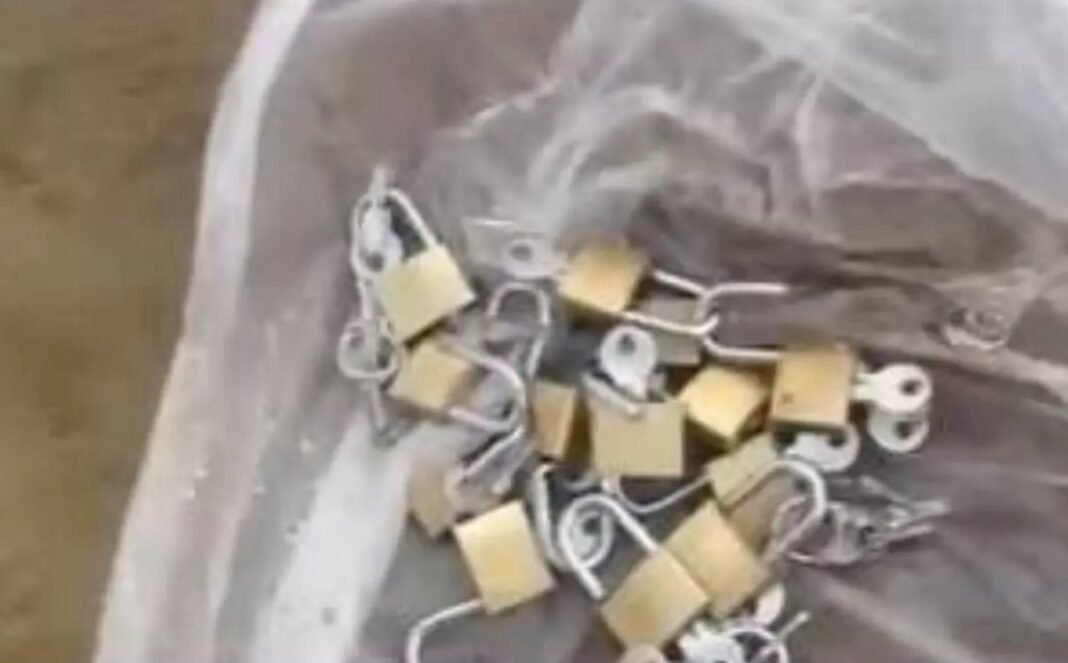
Images from Buzovna have stirred debate over whether the locks were used in rituals linked to love, luck and attempts to “block” another person’s fate.
Dozens of padlocks discovered along the Caspian coast in Buzovna, a settlement on the outskirts of Baku, have sparked widespread discussion on Azerbaijani social media.
Some users claimed the locks may have been used in folk rituals associated with restoring relationships, attracting good fortune, fulfilling wishes or symbolically “closing” another person’s path. There is, however, no confirmed information about who left the objects on the shore or why.
Azerbaijani sociologist Naib Niftaliyev said belief in fortune-telling, magic and similar practices remains common among some sections of society.
According to him, people facing personal, family or financial difficulties may turn to rituals because they see them as a simple way to solve complicated problems.
“On the one hand, people try to think in a modern and rational way, but on the other, they may still believe that magic or outside forces can influence their lives,” Niftaliyev said.
He also pointed to the growing promotion of fortune-tellers and self-described spiritual practitioners on social media. In many cases, he said, such services may involve manipulation, deception or fraud.
Niftaliyev argued that authorities should pay closer attention to individuals who charge money while promising to restore relationships, remove curses or alter another person’s fate.
At the same time, he warned against attributing the padlocks to any specific ethnic, religious or social group without evidence, noting that similar superstitions and rituals exist in many cultures.
The sociologist said psychological vulnerability, suggestion and a desire for quick solutions often push people toward such practices.
“People should rely on rational, social and economic solutions rather than spend money on questionable rituals,” he said.
Photos of the padlocks found on the Buzovna shoreline have circulated widely in recent days, but their origin and intended purpose remain unknown.
AZE.US