AZE.US
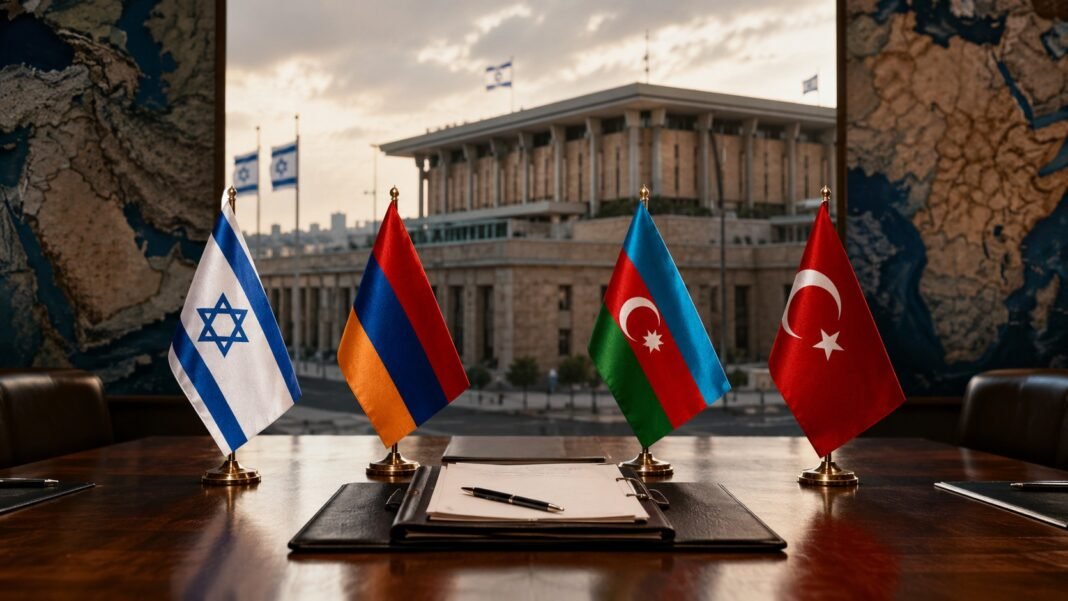
Israel is unlikely to jeopardize its strategic partnership with Azerbaijan for the sake of symbolic political steps benefiting Armenia, according to Sergey Melkonyan, a research fellow at the APRI Armenia analytical center.
Speaking on CivilNet’s Week in Review program, Melkonyan discussed the Knesset’s decision not to place recognition of the Armenian genocide on its agenda and Armenia’s limited role in Israel’s regional strategy.

He argued that the initiative may have been intended to pressure Turkey amid growing tensions between Ankara and Jerusalem, divert attention from Israel’s actions in Gaza and complicate the ongoing normalization process between Armenia and Turkey.
Israeli officials and analysts increasingly regard Turkey’s expanding influence in Syria and the South Caucasus as a potential national security challenge, particularly following the weakening of Iran, Melkonyan said.
However, he noted that Israel’s relationship with Azerbaijan is too strategically important to be endangered for a short-term political objective.
Melkonyan suggested that officials in Baku may have been informed in advance that the Armenian issue could be raised. Azerbaijan and Israel maintain close cooperation in energy, defense, intelligence and advanced technologies.
Reports had claimed that Hikmet Hajiyev, an aide to the Azerbaijani president, contacted the office of Israeli Prime Minister Benjamin Netanyahu after the issue emerged. Melkonyan said it was ultimately not important whether such a call took place.
In his assessment, Israeli officials likely concluded that the initiative had failed to produce the expected political benefits. Reactions in Armenia and the Armenian diaspora were divided, while representatives of Azerbaijan’s Jewish community also expressed opposition.
“Israel apparently decided that nothing positive had come out of the initiative and that it would be better to put the issue on hold,” Melkonyan said.
He stressed that statements by individual ministers or a government decision would not amount to formal state recognition without legislation approved by the Knesset.
“They fired, but the bullet was blank,” Melkonyan said, describing the initiative as a foreign policy instrument that failed to achieve its objectives.
Armenia Has Limited Weight in Israeli Strategy
Melkonyan said Armenia does not occupy a significant place in Israel’s foreign policy calculations, particularly in the South Caucasus.
Israel still does not have an ambassador permanently based in Yerevan, while Armenia maintains an active diplomatic presence in Israel.
According to the analyst, Israel’s regional partnerships are primarily designed to contain Iran. That network includes Gulf states, the United Arab Emirates, Saudi Arabia, Azerbaijan and, increasingly, countries in Central Asia.
Armenia does not play a major role in that system.
Azerbaijan, by contrast, offers Israel substantial strategic value. It supplies oil, purchases billions of dollars’ worth of Israeli weapons and cooperates with Israel in intelligence, cybersecurity, satellite technology and supercomputing.
Melkonyan said Armenia should have pursued a more active and consistent policy toward Israel over the past decade. However, he acknowledged that Yerevan has little to offer that could outweigh Israel’s extensive relationship with Baku.
“Israel is not prepared to put its substantial portfolio of relations with Azerbaijan at risk for a small symbolic gesture toward Armenia,” he concluded.
AZE.US