By AZE.US
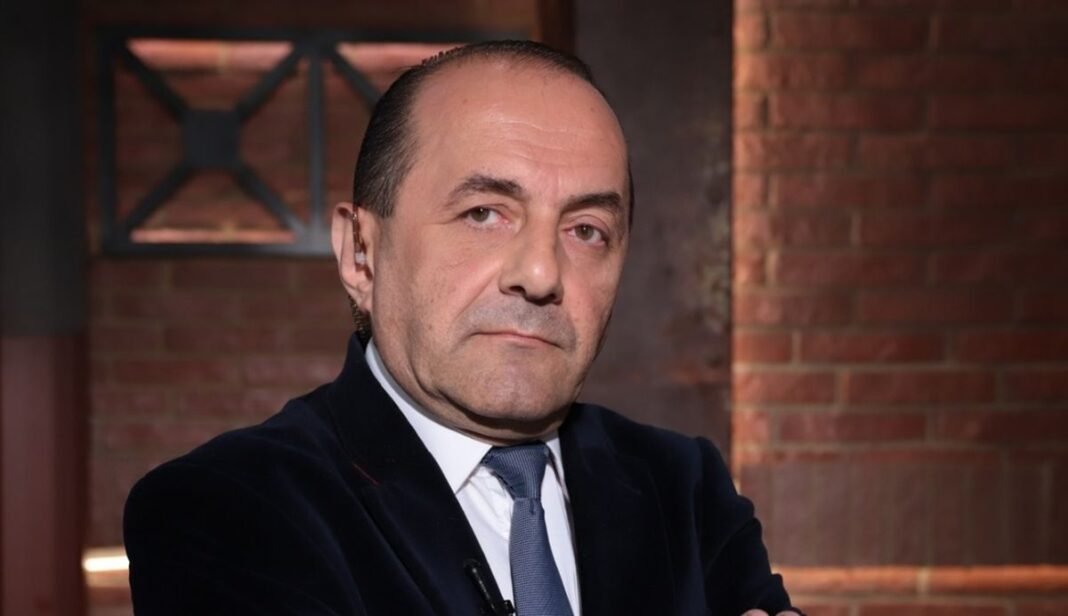
Russia does not regard Armenia as a fully independent actor and continues to view the country as part of its traditional sphere of influence, Armenian politician Ruben Mehrabyan said.
Mehrabyan, vice chairman of Armenia’s For the Republic party, made the remarks during an interview with Noyan Tapan while discussing the recent meeting between Russian President Vladimir Putin and Armenian Prime Minister Nikol Pashinyan in Bishkek.
According to Mehrabyan, the publicly cordial tone of the talks should not obscure the deep disagreements between Moscow and Yerevan.
He argued that the Kremlin continues to view most former Soviet republics - with the exception of the Baltic states - as a security buffer around Russia rather than fully independent partners. This approach, he said, explains Moscow’s sharp reaction to Armenia’s efforts to change its foreign policy orientation.
Mehrabyan described Russia’s position as a product of post-imperial thinking, arguing that Moscow has not abandoned its ambition to restore influence across the former Soviet space.
“Russia is not preparing to leave Armenia voluntarily,” he said.
Railway Control Raises Questions
Mehrabyan pointed to Russia’s continued control of Armenia’s railway system as one example of Moscow’s broader strategic interests.
Armenia’s rail network is operated by South Caucasus Railway, a wholly owned subsidiary of Russian Railways.
Putin has attributed the lack of new railway investment to the low profitability of existing services and the continued closure of regional transport routes. He indicated that investment would become more viable if political conditions changed and connections were restored.
Mehrabyan questioned that explanation.
“If it is unprofitable, if it causes losses and financial damage, then why does Russia continue to hold the concession?” he asked.
The Armenian politician argued that Moscow’s interest in the railway extends beyond commercial returns. Control of the network allows Russia to retain influence over infrastructure that could eventually connect Armenia with Azerbaijan and Turkey.
Mehrabyan said Armenia itself or other interested parties could invest in the railway once regional communications reopen.
“Anyone can make those investments. We can do it as well,” he said.
Diplomatic Language Does Not Remove the Dispute
Mehrabyan also cautioned against interpreting the respectful language exchanged by Putin and Pashinyan as evidence that relations have returned to normal.
Diplomatic compliments, he said, do not resolve disagreements over Armenia’s foreign policy direction, Russia’s military presence or control of strategically important infrastructure.
The central question is whether Moscow is prepared to recognize Yerevan’s right to determine its own foreign policy and independently manage the country’s key assets, Mehrabyan said.
In his assessment, Russia is not yet prepared to do so. Disputes over the railway concession, Russian military facilities and Armenia’s geopolitical orientation are therefore likely to intensify.
The debate also carries wider implications for the South Caucasus. As Azerbaijan and Armenia move toward normalization, transport links are becoming some of the region’s most valuable strategic assets.
The reopening of routes connecting Azerbaijan, Armenia and Turkey could transform regional trade. At the same time, it raises an increasingly important question: who will control the infrastructure carrying the new flow of goods and passengers?
AZE.US