By AZE.US Editorial Team
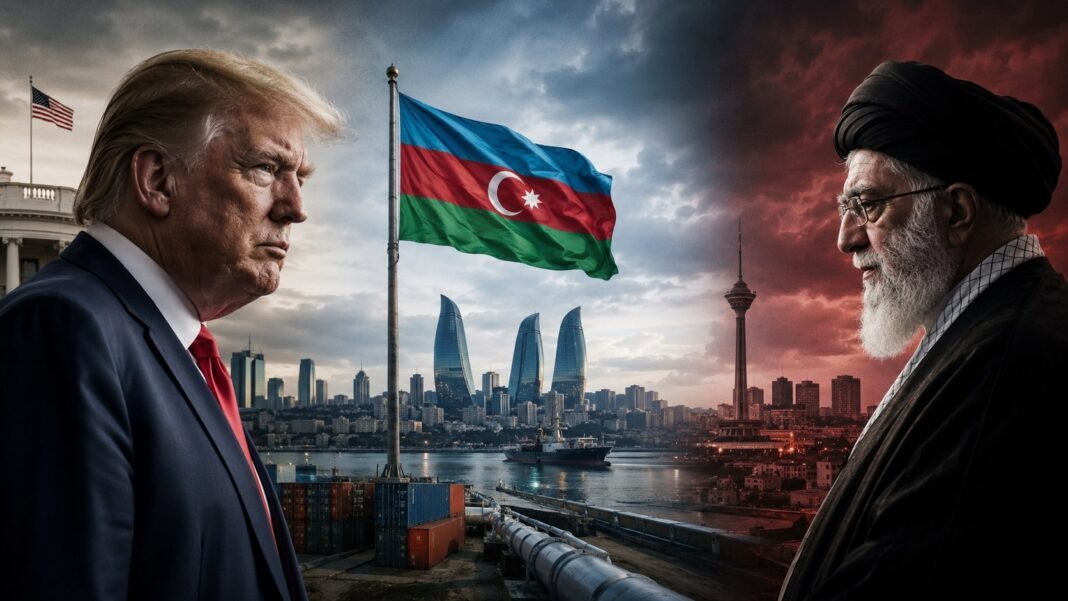
The Trump administration is preparing a new sanctions package against Iran that U.S. Treasury Secretary Scott Bessent has described as the toughest in history.
For Azerbaijan, however, the most consequential message came directly from President Donald Trump: countries providing Iran with “any type of lifeline” could face economic consequences of their own.
For now, this remains a political warning rather than a defined sanctions regime. Washington is expected to disclose the details on August 24. It is not yet clear whether the measures will target broad commercial ties with Iran or focus on energy, banking, shipping and sanctions-evasion networks.
Nevertheless, Baku can no longer treat the issue as an abstract geopolitical dispute.
Azerbaijan Imports 19 Times More Than It Exports
Trade between Azerbaijan and Iran reached $312.6 million in the first half of 2026, up 4.5% from the same period last year.
The relationship is heavily tilted toward Iranian exports:
- Azerbaijan imported $297 million in goods from Iran;
- Azerbaijani exports to Iran totaled only $15.6 million;
- Iran’s share of Azerbaijan’s total imports increased from 2.54% to 3.56%.
In other words, Azerbaijan buys approximately 19 times more from Iran than it sells to its southern neighbor.
The figures do not suggest a critical dependence for the Azerbaijani economy as a whole. They are nevertheless significant for individual importers, banks, transport companies and businesses operating near the border.
If Washington introduces broad secondary sanctions, problems could emerge even for companies that neither trade in oil nor work directly with Iranian state entities.
The consequences could include difficulties processing payments, insuring shipments, financing transactions and transporting goods. Banks seeking to protect their access to the U.S. financial system often impose stricter internal controls than sanctions regulations formally require. As a result, even legally permitted trade could face delays or outright rejection.
Reuters reported the trade figures, citing Azerbaijan’s State Customs Committee.
Baku Faces a Delicate Choice
Azerbaijan has a clear interest in deepening its strategic partnership with the United States. Washington now plays an important role in the Armenia-Azerbaijan normalization process, the proposed Trump Route for International Peace and Prosperity, or TRIPP, and the development of a new transport architecture across the South Caucasus.
At the same time, Iran is Azerbaijan’s immediate neighbor. The two countries are connected by trade, geography, border infrastructure and transport projects that cannot simply be erased by sanctions.
Baku has no interest in an economic confrontation with Tehran. Nor can it afford accusations from Washington that Azerbaijani territory, banks or companies are being used to provide Iran with alternative commercial channels.
This is where Azerbaijan’s most difficult diplomatic and regulatory challenge begins.
Baku may have to draw a much clearer distinction between ordinary trade and transactions that Washington could interpret as economic support for Iran or an attempt to circumvent restrictions. That would require tighter banking supervision, more transparent cargo documentation and stronger scrutiny of companies involved in cross-border payments and transportation.
Turkey and Armenia Are Also Exposed
The problem extends across the region.
Iran’s annual trade with Turkey stands at approximately $5 billion to $6 billion. Iran also supplies about 13% of Turkey’s natural gas imports. Ankara has not indicated that it intends to sever those economic ties.
Armenia’s trade with Iran reached $371.4 million in the first half of 2026. Approximately 20% of Armenia’s foreign trade passes through Iranian territory. The two countries also operate a gas-for-electricity arrangement under which Armenia receives Iranian gas and supplies electricity in return.
Sweeping U.S. restrictions could therefore alter the economic balance of the entire South Caucasus.
Armenia may be more vulnerable than Azerbaijan because Iran is not merely a trading partner for Yerevan. It is also one of Armenia’s only two land connections to the outside world that do not pass through Georgia.
Sanctions Could Also Create an Opening for Azerbaijan
Iran’s growing isolation would increase Azerbaijan’s strategic value as an energy and transportation hub.
The more difficult it becomes to use Iranian routes, the more attractive the Middle Corridor, the Caspian transit network and the planned connection through Armenia to Nakhchivan and Turkey become.
Azerbaijan could attract additional cargo traffic, infrastructure investment and greater Western interest in its role as a bridge between Central Asia and Europe.
But treating the crisis solely as a commercial opportunity would be dangerously simplistic.
Further escalation around Iran could also produce new border-security threats, migration pressures and possible risks to Azerbaijan’s energy infrastructure. Baku would have to protect its economic interests, maintain functional relations with Tehran and ensure that Azerbaijani entities do not violate U.S. restrictions.
The Most Important Details Are Still Missing
Until Washington publishes the sanctions package, it would be premature to conclude that Azerbaijani companies will inevitably face penalties.
The United States has delivered a political warning, but it has not yet established the precise legal boundaries of the new campaign.
Still, the message is unmistakable: Washington wants Iran’s trading partners to weigh continued business with Tehran against access to the American financial system.
That choice will be difficult for China and Turkey. For Azerbaijan, it is particularly sensitive.
The country borders Iran, is strengthening its partnership with the United States and is seeking to become the central link in emerging Eurasian transport corridors. The key question is therefore not whether Baku will end all trade with Tehran.
It is whether Azerbaijan can preserve necessary relations with its neighbor without becoming a target of American economic pressure.
The answer should become clearer when Washington releases the sanctions package. Until then, claims that Azerbaijani businesses are certain to face secondary sanctions would be premature. Preparing for that possibility, however, should begin now.
AZE.US