AZE.US
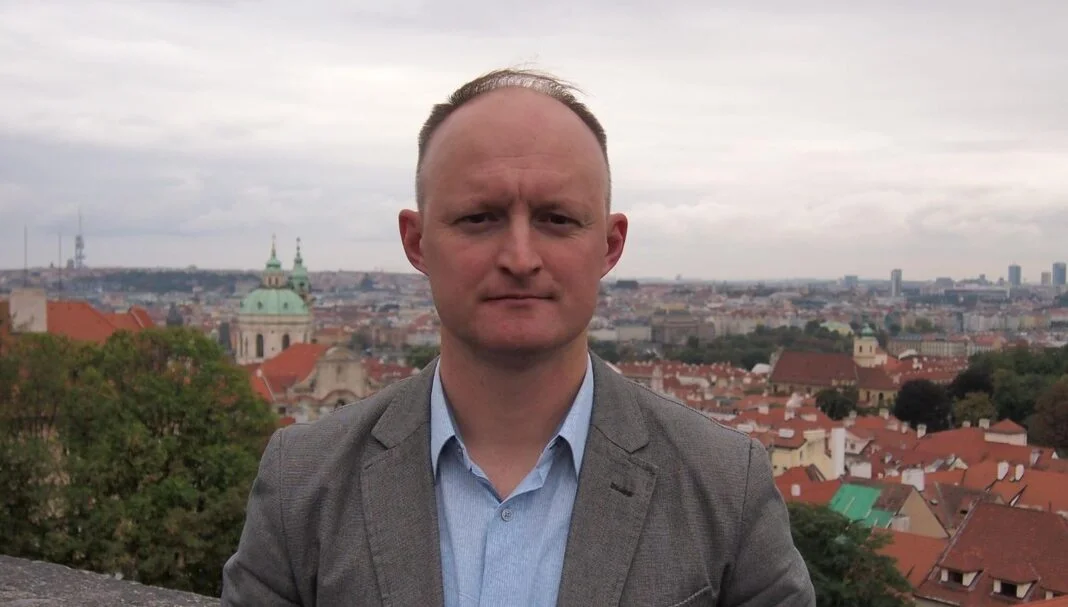
Russia is increasingly being forced to treat Azerbaijan as an independent center of power rather than a country operating within Moscow’s traditional sphere of influence, Ukrainian analyst Vladimir Kopchak said.
Speaking on the Novosti Kavkaza YouTube channel, Kopchak argued that Russian President Vladimir Putin’s July 28 telephone call with Azerbaijani President Ilham Aliyev was significant even though the official account revealed few details.
“The very fact of the call is telling,” Kopchak said.
According to the official Azerbaijani statement, the two leaders discussed bilateral and international issues, described Russia-Azerbaijan relations as constructive and reaffirmed their commitment to expanding mutually beneficial cooperation.
Kopchak said the restrained wording left room for several possible explanations. He suggested Moscow may have sought to slow an Armenia-Azerbaijan peace process advancing without Russian mediation, secure a place for Russian interests in emerging regional transport projects or discuss energy cooperation.
The broadcast also raised the possibility that Russia could be interested in Azerbaijani petroleum products amid Ukrainian strikes on Russian refineries. Kopchak, however, did not consider gasoline supplies alone a sufficient explanation for a presidential-level conversation.
The broader purpose, the discussion suggested, may have been Moscow’s attempt to acknowledge a “new normal” in relations with Baku: Russia would avoid obstructing Azerbaijan’s policies while expecting Baku not to create additional problems for Moscow in the South Caucasus.
Such an informal arrangement would be difficult to sustain, Kopchak said, because Azerbaijan is pursuing a regional agenda based on its own interests rather than Russia’s priorities.
The analyst linked the call to Aliyev’s state visit to Kyrgyzstan just days later.
On July 31, Azerbaijan and Kyrgyzstan signed a Treaty on Allied Relations. The wider package included agreements covering international road transport, freight transportation, shipping, shipbuilding, energy cooperation and petroleum product supplies, according to the official list of documents.
Aliyev also participated in an informal meeting of the leaders of Azerbaijan and the five Central Asian states in Cholpon-Ata. He attended the consultative format as a full member for the first time and said Azerbaijan and Central Asia had effectively become a single geopolitical and geoeconomic space.
“Azerbaijan has its own agenda,” Kopchak said.
He argued that Baku’s growing engagement with Central Asia should not be viewed solely as an attempt to challenge Russia. Azerbaijan and the Central Asian states have an objective need for each other, he said.
Central Asian countries need access through Azerbaijan and the South Caucasus to alternative transport routes and international markets. Azerbaijan, in turn, benefits from deeper political, economic and logistical connections across the Caspian Sea.
Any viable alternative to routes controlled by Russia must involve Baku and the Caspian corridor, Kopchak said. This position is turning Azerbaijan into a bridge linking Central Asia with the South Caucasus, Turkey and European markets.
Turkey could add a security dimension to the emerging partnerships through arms supplies, defense cooperation and joint military exercises, he added. Without such practical steps, formal alliance agreements could remain largely symbolic.
The discussion presented a broader trend in which Azerbaijan is becoming institutionally integrated into Central Asia while Moscow struggles to preserve its remaining influence in the South Caucasus.
The participants stressed that this process has not been completed and should be viewed as a developing trend. However, economic disruptions linked to Russia’s war against Ukraine are encouraging even governments traditionally close to Moscow to seek alternative suppliers, partners and transit routes.
Kopchak also addressed Russia’s declining role as an indispensable intermediary between Azerbaijan and Armenia. He argued that direct contacts between Baku and Yerevan began developing more naturally as Moscow’s ability to control the process weakened.
As a symbolic example, the broadcast cited a recent youth sporting event at which an Armenian coach spoke publicly about having grown up in Baku. Azerbaijani media circulated his comments without turning them into a political controversy. According to Kopchak, such episodes would have been difficult to imagine only a few years ago.
The analyst also referred to Armenia’s debate over the Russian-managed railway system. If the Russian operator is unwilling to invest in routes connecting Armenia with Azerbaijan and Turkey, he said, economic necessity could eventually push Yerevan to reconsider the existing concession.
Kopchak described Moscow’s promotion of the regional 3+3 format as another effort to retain influence and limit the involvement of outside powers. Direct Azerbaijan-Armenia negotiations and Baku’s expanding ties with Central Asia, however, are gradually reducing Russia’s ability to control regional developments.
He also cited Azerbaijan’s reciprocal approach to Russian migration restrictions as an example of Baku’s willingness to respond to Moscow on the basis of parity.
Russia remains an important regional actor, Kopchak concluded, but it can no longer determine the political, economic and transport architecture of the South Caucasus on its own. Azerbaijan, meanwhile, is expanding its strategic room for maneuver on both sides of the Caspian.
AZE.US