AZE.US
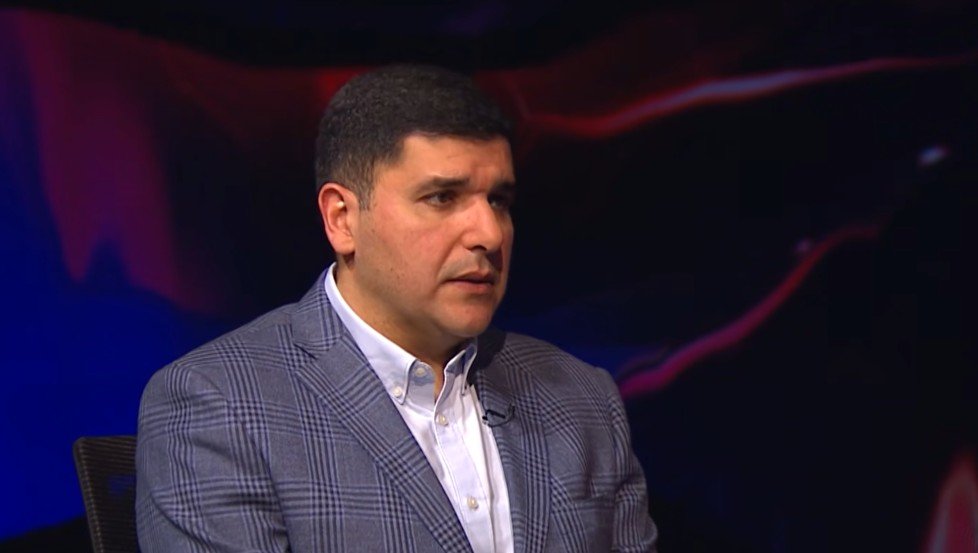
The United States has seriously anchored itself in Armenia and is waiting for Prime Minister Nikol Pashinyan to win the upcoming parliamentary elections, Farhad Mammadov, chairman of the South Caucasus Research Center, said on the YouTube channel “Novosti Kavkaza.”
Mammadov said the recent visit by U.S. Secretary of State Marco Rubio to Yerevan should be viewed not only as a bilateral U.S.-Armenia event, but also as part of a broader regional strategy ahead of Armenia’s June 7 vote.
According to him, Rubio’s role is especially important because he combines two key posts in Washington’s foreign-policy system: secretary of state and national security adviser. That makes the visit more than a routine diplomatic stop, he said.
Mammadov linked the visit to U.S. President Donald Trump’s open political support for Pashinyan. In his view, Rubio created the political and informational basis for Trump’s public backing of the Armenian prime minister.
“The Americans have seriously latched onto Armenia and are trying to pull it out from under Russian influence, and in the future, from under Iranian influence as well,” Mammadov said.
He added that this is a difficult task for Washington because Armenia, unlike Azerbaijan and Georgia, remains institutionally tied to Russia through bilateral arrangements as well as military-political and economic blocs.
Mammadov paid particular attention to the documents signed between Armenia and the United States. He said the agreement on critical minerals and rare earth elements shows that Washington is looking at Armenia not only as a political entry point into the region, but also as part of future transport and resource routes.
He also pointed to references to the Trump Route for International Peace and Prosperity, known as TRIPP. According to Mammadov, the project is no longer limited to a railway or a transport link between mainland Azerbaijan and the Nakhchivan Autonomous Republic.
He said TRIPP is gradually expanding into a broader package of infrastructure projects, including railways, roads, energy facilities, fiber-optic lines, oil and gas infrastructure, and electricity projects.
One of the most sensitive elements, Mammadov said, is the reference to the reconstruction of the Gyumri-Kars railway. He noted that Armenia’s railway system is managed under a concession by a Russian-controlled structure, meaning this issue could become a serious point of friction between Moscow and Washington.
Mammadov also highlighted the defense and security section of the U.S.-Armenia documents. He said the provisions refer to expanded defense cooperation, possible sales of U.S. military products and support equipment to Armenia, regular defense consultations and greater operational compatibility between Armenian and American structures.
In his view, one of the most important points concerns Armenia’s security bodies taking full responsibility for the country’s borders. Mammadov said this could signal a future effort to reduce or remove the role of Russian border guards in Armenia.
The documents also mention mechanisms for exchanging sensitive information, countering “malign foreign propaganda” and creating a strategic partnership commission, he said. Mammadov described these provisions as signs that the United States is trying to institutionalize its presence in Armenia.
At the same time, he said Azerbaijan is maintaining a deliberate silence.
According to Mammadov, Baku is waiting for the results of Armenia’s parliamentary elections before moving to a more specific position on the peace agenda and regional transport projects.
He said Azerbaijan has avoided direct involvement in Armenia’s election campaign and did not make any “gifts” to Pashinyan, despite expectations in some Armenian circles that Baku might release Armenian detainees or take other steps before the vote.
Mammadov said Azerbaijan has largely limited itself to noting that revanchist forces exist in Armenia, while keeping its official position restrained during the campaign.
The key issue for Baku, he said, is the position of Armenian society after the election.
According to Mammadov, Azerbaijan wants to see whether Armenia will confirm the current peace agenda or whether a change in power will require a completely different negotiating approach.
He said Baku is closely watching how Armenian society discusses maps, territorial perceptions and claims about “300,000 Azerbaijanis.”
These issues, he said, are seen in Azerbaijan not as ordinary campaign rhetoric, but as indicators of whether Armenian society is ready for a real peace settlement.
“On all levels – official, public and expert – everyone is waiting for the position of Armenian society,” Mammadov said.
If Pashinyan remains in power, Azerbaijan may move toward more substantive discussions on peace and transport projects, Mammadov said. If power changes in Armenia, many of the current understandings may lose relevance, and Baku’s negotiating position would be shaped by a new political reality.
AZE.US