AZE.US
Azerbaijan has facilitated another cargo shipment from Russia to Armenia, with wheat and fertilizer sent by rail through Azerbaijani territory in a move that highlights Baku’s expanding role as a transit bridge in the South Caucasus.
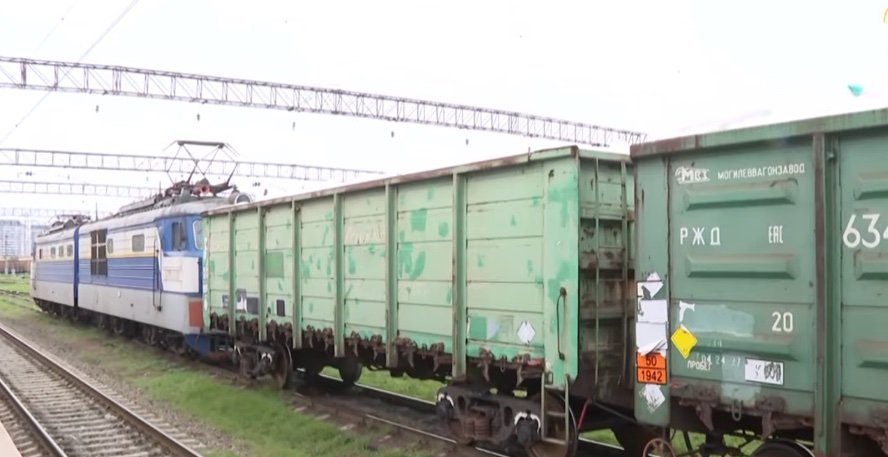
According to Azerbaijan Railways, four wagons carrying 280 tons of wheat and four wagons carrying 277 tons of fertilizer were dispatched from the Bilajari station in Baku toward Boyuk Kesik, near the Georgian border. The shipment is part of a growing transit flow from Russia to Armenia through Azerbaijan.
So far, more than 28,000 tons of grain, over 4,000 tons of fertilizer, 133 tons of aluminum and 68 tons of buckwheat have been transported from Russia to Armenia through Azerbaijani territory, according to figures reported by Azerbaijani media.
The latest shipment is not just a logistical detail. It shows that Azerbaijan has turned the opening of transit routes into a practical policy, allowing goods bound for Armenia to move across its territory despite decades of conflict between the two countries.
That matters politically as well as economically. In October 2025, President Ilham Aliyev said Azerbaijan had lifted restrictions on cargo transit to Armenia, a step Reuters described at the time as a sign of growing peace after years of confrontation. The first shipment of Kazakh grain to Armenia through Azerbaijan was presented by Baku as evidence that regional communications could be reopened in practice, not only in diplomatic language.
For Armenia, the route provides an additional supply channel for basic goods, including grain and fertilizers. For Russia, it offers a southern rail corridor to Armenia. For Azerbaijan, it reinforces the country’s position as a transport and logistics hub linking Russia, Georgia, Armenia, Türkiye, Central Asia and wider trade routes between Asia and Europe.
The development comes at a sensitive moment for Armenia’s foreign policy. Moscow has warned Yerevan that it could lose preferential Russian gas prices if Armenia continues moving closer to Western institutions, while the Russia-led Eurasian Economic Union has also raised the possibility of consequences over Armenia’s European Union ambitions.
Against that backdrop, the Azerbaijani transit route carries a broader message. Baku is showing that regional connectivity can function even in a politically complicated environment. The movement of wheat, fertilizer and other goods through Azerbaijan gives the peace process a concrete economic dimension: railcars, customs procedures, cargo volumes and working routes.
It also supports Azerbaijan’s long-term strategy of becoming one of the key transport centers of the South Caucasus. After years of investing in railways, ports, roads and cross-border infrastructure, Baku is now using that network not only for its own trade, but also as a platform for regional transit.
In practical terms, the latest shipment shows that the post-conflict South Caucasus is slowly moving from slogans about reopening communications to actual movement on the ground. For a region long shaped by closed borders and blocked routes, that is a significant shift.
AZE.US