By AZE.US
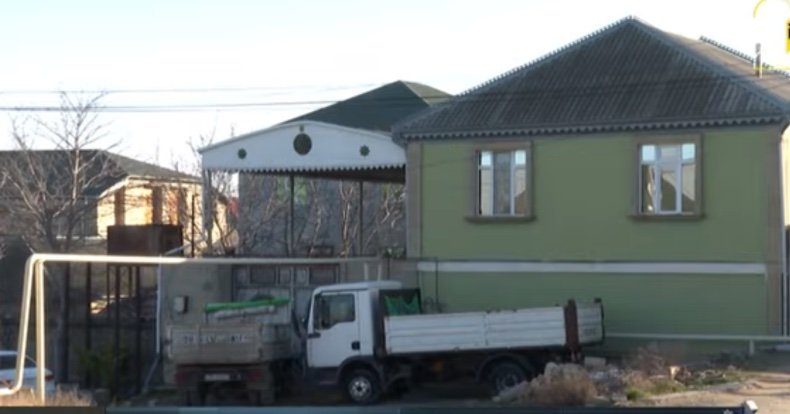
A house without formal ownership documents can complicate property division during a divorce in Azerbaijan. In some cases, the dispute may center on money invested in construction rather than ownership shares in the house itself, and those expenses must be proven.
Attorney Zaur Amrakhov explained the issue in a television report on undocumented homes and divorce.
Under Azerbaijan’s general marital-property framework, assets acquired during marriage with the couple’s common funds are ordinarily treated as joint property. The Constitutional Court has identified both the timing of acquisition and the source of the money as important factors when determining whether property is jointly owned.
An undocumented or unfinished house creates an additional problem: the existence of the building does not necessarily mean that legal ownership of the real estate has been registered.
As a result, a court may not always be able to divide the building between the spouses in the same manner as a registered home with a formal title deed, known locally as a kupcha.
Construction Costs May Become the Main Dispute
In such cases, Amrakhov said, the court may examine the money spent on construction, including the purchase of materials, payments to contractors and other documented expenses.
The spouse making a claim must provide evidence of those contributions. Relevant evidence could include receipts, bank transfers, contracts, written acknowledgments, correspondence and witness testimony, depending on the facts of the case and what the court accepts.
A court may commission an expert assessment to determine the value of the structure or the completed work. Based on that assessment and the surrounding circumstances, the court may decide how the proven investment should be divided and whether one spouse should pay compensation to the other.
The outcome is therefore not necessarily a physical 50-50 division of the house. It can instead involve recognition and allocation of the couple’s proven financial contributions.
A Municipal Paper Does Not Always Replace a Title Deed
Similar difficulties arise when residents have documents issued by a municipality but have not completed registration of ownership of the house.
The court must examine what rights the available documents actually establish, who built or acquired the home and whose funds were used.
A municipal document alone does not automatically mean that each spouse will receive half of the house in a divorce. Its legal effect depends on the document’s contents and on the status of the underlying land and structure.
The Land’s Legal Status Comes First
If spouses acquired a house without full documentation, the legal status of the land beneath it is also critical.
According to Amrakhov, the court will examine whether the land is privately owned, held under a lease or used on the basis of a decision by a municipal or other authorized body.
That status determines which rights can legally be divided and how the spouses’ claims should be evaluated. A building constructed on land that neither spouse legally owns may present a fundamentally different case from a house standing on registered private property.
Evidence Should Be Collected Before Court
There is no single outcome that applies to every undocumented house, Amrakhov said. The result depends on the land documents, the circumstances in which the home was acquired or built, and evidence showing who paid for the work.
Azerbaijan’s State Committee for Family, Women and Children Affairs notes that spouses may divide jointly acquired property through a notarized agreement. If they cannot agree, either spouse may ask a court to divide the property or determine their shares.
The agency says equal shares are the usual starting point for formally recognized marital property, although courts may consider other legally relevant circumstances. The more immediate issue with an undocumented home is establishing what property rights and investments can be legally recognized in the first place.
Amrakhov recommended obtaining legal advice and gathering proof of construction spending before filing a court claim.
The guidance describes general principles and does not determine the outcome of any individual divorce case.
AZE.US