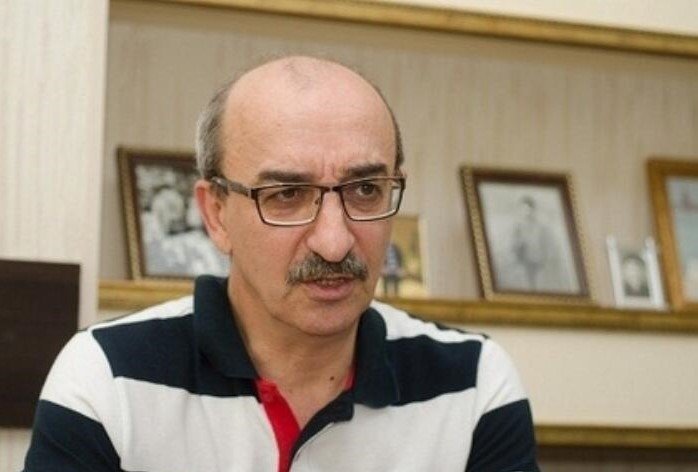
A dispute over historical heritage and the cancellation of a planned visit by Azerbaijani civil-society representatives to Yerevan do not mean the peace process has collapsed, Azerbaijani analyst Azad Isazade said.
But similar crises will recur while both societies continue to interpret one another’s actions primarily through suspicion and the painful experience of conflict, he said in an Echo Baku broadcast.
Isazade said the current escalation was unlikely to turn into a military confrontation. The more important question, he said, is whether Baku and Yerevan can manage disagreements and continue negotiations without allowing every public dispute to slow rapprochement.
A Long Way From a “Peace Bridge”
Meetings between representatives of Azerbaijani and Armenian civil society are useful, Isazade said, but their political importance should not be exaggerated. Such contacts cannot resolve interstate disputes on their own.
Their main role is psychological: gradually helping people become accustomed to citizens of the neighboring country visiting, talking and discussing a shared future.
For now, Isazade said, the process resembles a path rather than a fully built bridge. Many such links will be needed across culture, education, the economy and other fields.
“I do not think it has been completely severed,” Isazade said of the civil-dialogue channel.
However, the reaction to diplomats’ visits to historical and religious sites shows how deep mutual distrust remains, he said. Significant parts of both societies are not yet ready for calm engagement and often view the other side’s actions as an attempt at humiliation or deception.
History Has Become Part of the Political Conflict
Isazade identified the politicization of history as a central problem. Disputes about the origins of monuments, names of cities and ownership of cultural heritage have long moved beyond academic debate.
Each side reacts sharply to the other’s terminology but does not always recognize that its own language provokes a similar response across the border, he said. That creates a chain of retaliation that deepens the conflict.
“If we do not want the other side to mirror us, then we must find ways out of these situations - both sides,” he said.
Isazade proposed discussing sensitive issues and approaches to historical and religious sites in advance, allowing at least some disagreements to be addressed before they turn into public scandals.
Diplomatic Contacts Matter More Than Public Exchanges
Isazade linked President Ilham Aliyev’s sharp response to Armenian Prime Minister Nikol Pashinyan’s failure to publicly state his position on the dispute. That was the analyst’s assessment; he did not present the idea that Armenia’s leadership tacitly agreed with the criticism as an established fact.
At the same time, Isazade described a meeting between the countries’ foreign ministers, discussed during the broadcast, as a positive sign. Continued official contacts show that political dialogue persists despite harsh public statements, he said.
He suggested the dispute may have been addressed through diplomatic channels. If the sides find an acceptable solution, public apologies or another round of high-profile statements may not be necessary.
Transport Projects Could Slow
Isazade said transport projects are advancing slowly, although fully stopping them would be difficult because of U.S. interest.
He rejected as illogical the idea that Baku deliberately engineered the historical-heritage dispute to accelerate the TRIPP project. Azerbaijan has more direct economic and transit tools for discussing its interests, he said.
The principal risk is delay: another dispute could postpone the reopening of communications and the economic benefits that would follow.
Isazade said the episode should be treated as a test of the sides’ ability to negotiate. Disagreements are inevitable, he said, but political leaders will determine whether they remain subjects for talks or become triggers for renewed confrontation.