AZE.US
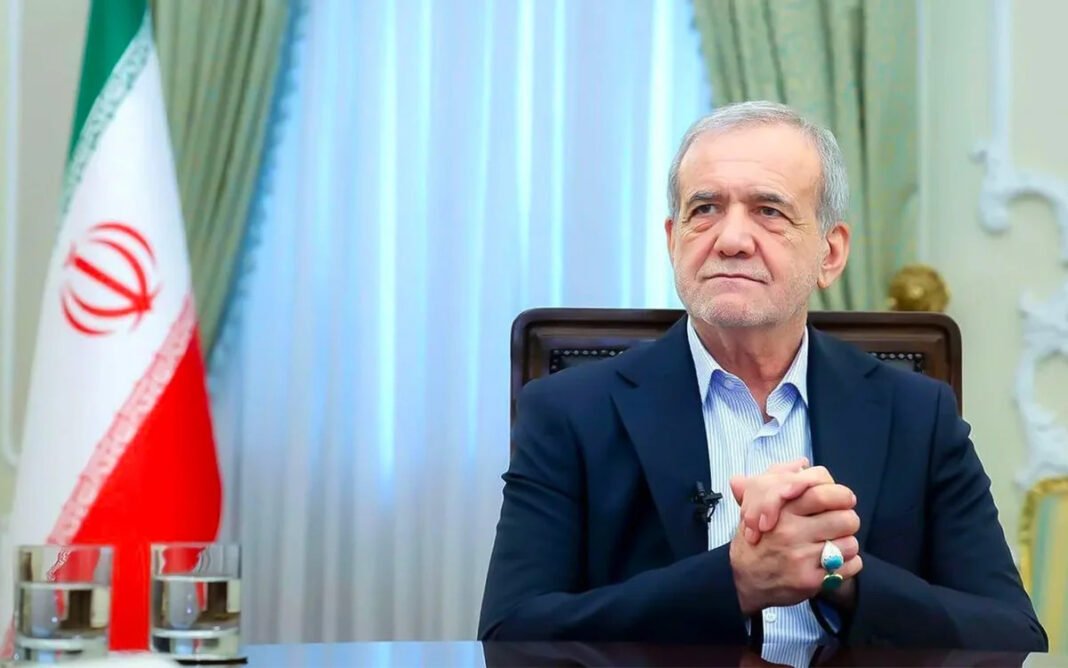
Iranian President Masoud Pezeshkian has said Tehran is ready for a “dignified framework” to end the war and reduce regional tensions, but a proposed U.S.-Iran deal remains unfinished as Washington and Tehran continue to argue over nuclear terms and the Strait of Hormuz.
Pezeshkian made the statement in a phone call with Qatar’s Emir Sheikh Tamim bin Hamad Al Thani, thanking Doha for its mediation role and saying Iran remains committed to diplomacy and international obligations.
According to the Iranian president’s office, Pezeshkian said expert-level work is continuing on documents aimed at creating a more stable regional framework. He said Iran is prepared for a settlement that protects the dignity and rights of the Iranian people while helping end the war and ease tensions.
The message was carefully framed for both foreign and domestic audiences. Tehran is signaling that it wants to keep the diplomatic track open, but not in language that would make it look as if it is accepting terms imposed by Washington.
The talks remain unresolved.
U.S. President Donald Trump held a White House Situation Room meeting with advisers on Friday but did not make a final decision on whether to move forward with a deal to extend the Iran ceasefire and reopen the Strait of Hormuz, according to The Associated Press.
AP reported that the meeting lasted about two hours and ended without a decision. A U.S. official said Trump would sign only an agreement that meets his “red lines” and curbs Iran’s nuclear ambitions.
The proposed deal would extend the fragile ceasefire by 60 days, creating a window for talks on Iran’s nuclear program and other unresolved issues.
Trump has publicly said Iran must agree never to obtain a nuclear weapon. He has also demanded that the Strait of Hormuz be reopened for unrestricted shipping, with no tolls, and that sea mines be destroyed.
Reuters reported that Washington and Tehran are close to an agreement, but that it has not yet been approved. Vice President JD Vance said the United States was “not there yet” with Iran, although the sides were close.
Vance said the remaining sticking points include Iran’s enriched uranium stockpile and the question of enrichment itself. He said the two sides were still going back and forth over the language of a memorandum of understanding.
Iran has pushed back against the idea that the agreement is complete.
Iranian Foreign Ministry spokesman Esmail Baghaei told state media that the agreement has “not been finalized yet.” Tehran has also stressed that any steps by Iran would depend on actions by the other side, not promises.
Al Jazeera reported that Washington and Tehran are nearing a 60-day memorandum of understanding aimed at reopening the Strait of Hormuz and launching new talks on Iran’s nuclear program. But the outlet also noted that deep mistrust remains and that Iran’s semi-official Tasnim news agency said the draft framework had been revised and not formally approved.
The Strait of Hormuz remains one of the most sensitive points in the crisis. The waterway is a vital route for global energy shipments, and any disruption there can quickly affect oil prices, shipping costs and regional security.
Reuters reported that Trump wants the strait opened immediately for unrestricted traffic in both directions. Iranian sources, however, have suggested that the management of the strait is a matter for Iran and Oman, while Iranian media said reopening would occur under Tehran’s conditions after the U.S. lifts its blockade on Iranian ships.
The potential deal is therefore not only about a ceasefire. It is about the shape of regional power after months of war, the future of Iran’s nuclear program and the security of one of the world’s most important energy corridors.
For Azerbaijan and the wider South Caucasus, the outcome matters directly. Any prolonged disruption around Iran and Hormuz can affect energy markets, transport routes and the balance of power between the Gulf, the Caspian region and major outside powers.
For now, both sides are speaking the language of diplomacy, but neither is ready to present a final agreement.
Iran wants a deal that does not look like surrender. Trump wants a deal that can be sold as tough, enforceable and beneficial to the United States.
That gap is still visible.
The next move now depends largely on Trump’s decision. If he approves the framework, the sides could get 60 days for more difficult negotiations. If he refuses, the risk of renewed military escalation around Iran and the Strait of Hormuz will rise again.
AZE.US