AZE.US
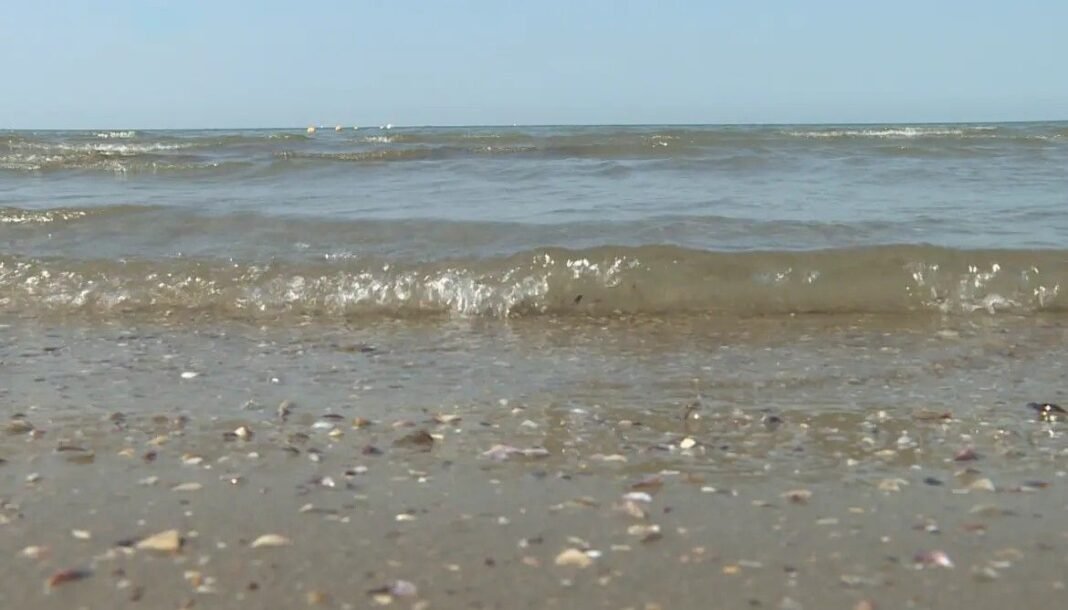
The water level of the Caspian Sea continues to decline, with the drop accelerating in recent years.
According to calculations by Azerbaijan’s State Water Resources Control Service, the sea level has fallen by about 1 meter over the past five years, 1.5 meters over the past decade and 2.5 meters over the past 30 years.
The current rate of decline is estimated at 20 to 30 centimeters per year.
Environmentalist Rovshan Abbasov said similar fluctuations have occurred before. The Caspian’s level also fell sharply in the 1970s, raising fears that the sea could begin drying up. However, the trend reversed in the early 1980s, and water levels continued rising until the mid-1990s.
The current decline has lasted for roughly three decades and is linked to several factors.
Under long-term projections by Kazakhstan’s Ministry of Ecology, the Caspian could fall to minus 29.8 meters by 2030 and minus 32.4 meters by 2050 under an optimistic scenario. Under a more pessimistic outlook, the level could drop to minus 34 meters by mid-century.
Experts caution, however, that long-term forecasts have not always proved accurate in practice.
The falling water level is affecting more than coastal areas. It also threatens port operations, fisheries, biodiversity and the wider regional economy.
Specialists say Caspian littoral states need to prepare adaptation measures and improve the management of water resources.
AZE.US